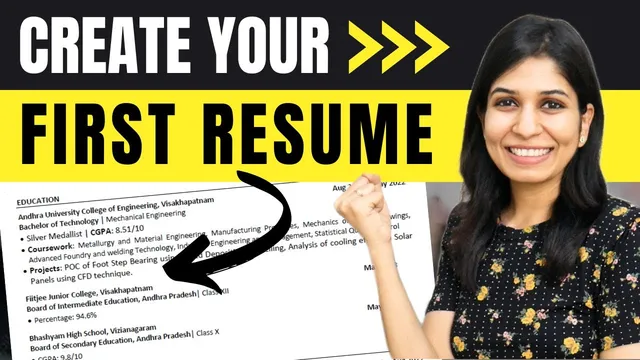
CREATE YOUR FIRST RESUME - Step by step approach with TEMPLATE! 🔥
Based on WiseUp Communications's video on YouTube. If you like this content, support the original creators by watching, liking and subscribing to their content.
Start with a professional resume template to avoid an immediate negative impression from poor aesthetics.
Briefing
For freshers with no work experience, the fastest way to get a resume noticed isn’t adding “fake” experience—it’s building a professional, recruiter-friendly layout and filling it with credible academic signals. The core idea is that recruiters form an immediate impression from resume aesthetics and structure; a polished template can create a false-positive “competent” look, while a cluttered or amateur design can trigger skepticism that persists throughout the read.
The first step is to use a professional resume template—either via free online resume builders or an editable template from a dedicated resume-building course. Once the formatting is handled, the resume’s content can be organized into sections that naturally expand for someone early in college. The education section, for example, should take up more space than the cramped, tabular style often used by experienced candidates. It should list the university or college name, time period, degree, program name, and CGPA (if strong). To add both substance and relevance, the resume should include three to four relevant coursework subjects tied to the internship or program being targeted; these function as “keywords” and demonstrate field familiarity.
Next comes academic projects. Even first-year assignments can be turned into resume-ready bullets by stating the project title, when it was completed, and key details—especially if the work connects to the role. If projects aren’t directly related, they still matter because they show practical exposure.
A leadership section can further fill out the page while signaling initiative. College clubs and societies—technical groups like coding or car racing clubs, or cultural groups like drama, music, or dance—can be listed with the join date and specific roles or responsibilities.
Skills and competencies should balance hard and soft skills. Hard skills can include tools such as Microsoft Office (Word, Excel, PowerPoint) and programming languages learned through coursework. For design-focused tracks, relevant tools like Canva or Adobe Photoshop can be included. Soft skills should be limited to three or four, chosen to match the applicant’s strengths—examples include communication, leadership, teamwork, and problem-solving. Languages can also be added with a proficiency level such as native, bilingual, or limited working proficiency.
To strengthen credibility beyond academics, an achievement section can list test scores (JEE, Olympiads, SAT, IELTS, TOEFL) and rare school accomplishments—like national-level swimming or top classical dance certificates—while avoiding routine intra-house or inter-school activities unless they’re truly one-of-a-kind.
Finally, extracurricular activities can capture participation in college-level events such as competitions, fests, hackathons, cultural events, or sports (winning isn’t required). If space remains, hobbies and interests—like badminton, reading non-fiction, or public speaking—can round out the profile. The overall message: a one-page, recruiter-ready resume for a fresher is achievable immediately by combining a professional template with strategically selected education, projects, leadership, skills, achievements, and activities.
Cornell Notes
A recruiter’s first read often hinges on resume aesthetics and structure, so freshers should start with a professional template to avoid an “inexperienced” visual impression. From there, the resume should expand naturally using sections that fit early-career realities: a detailed education section (including relevant coursework as keyword-rich proof), academic projects (title, timing, and details), and leadership roles from college clubs or societies. Skills should mix hard tools (e.g., Microsoft Office, programming languages, design tools like Canva or Adobe Photoshop) with a short list of soft skills, plus languages with proficiency levels. Achievements can include strong test scores and rare, high-signal accomplishments, while extracurricular participation and hobbies fill remaining space.
Why does resume design matter so much for freshers with no work history?
How should a fresher’s education section be formatted and what should it include?
What makes academic projects useful on a first resume?
How can leadership be demonstrated without prior professional roles?
What’s the right approach to skills for a fresher resume?
Which achievements and extracurriculars should make the cut?
Review Questions
- If a fresher’s resume looks unpolished, what downstream effect can that have on recruiter perception?
- What specific elements should be included in the education section to both fill space and signal relevance?
- How would you decide which projects, achievements, and extracurriculars are “high-signal” enough for a one-page resume?
Key Points
- 1
Start with a professional resume template to avoid an immediate negative impression from poor aesthetics.
- 2
Use an expanded education section for freshers, listing institution, dates, degree/program, and CGPA (if strong).
- 3
Add three to four relevant coursework subjects to strengthen keyword alignment with the target internship or program.
- 4
Turn college assignments into academic project entries with title, timeline, and concrete details; relevance helps but isn’t required.
- 5
Demonstrate leadership through college clubs and societies by listing join dates and specific responsibilities.
- 6
Keep skills focused: include hard tools (e.g., Microsoft Office, programming languages, design tools like Canva or Adobe Photoshop) and limit soft skills to three to four.
- 7
Choose achievements selectively—prioritize test scores and rare, high-impact accomplishments; include extracurricular participation and hobbies only if space allows.