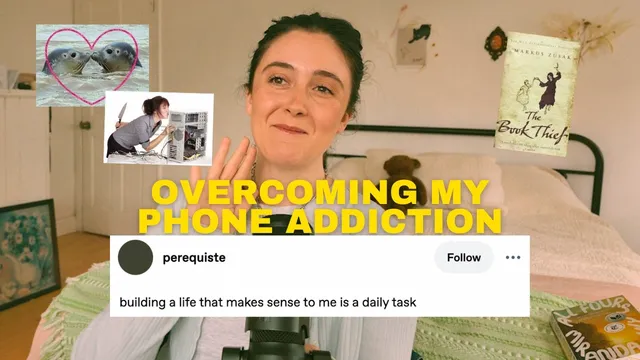
Creating in the Age of Distraction & A.I Slop
Based on Anna Howard's video on YouTube. If you like this content, support the original creators by watching, liking and subscribing to their content.
Howard’s media fast is driven by a mix of personal anxiety and a broader fear that AI and deepfakes will erode trust in what people see online.
Briefing
A short break from social media and other online media is giving Anna Howard a measurable emotional reset—and reframing “create more than you consume” as a practical way to protect attention, reduce anxiety, and rebuild a sense of agency. After only a few days away from scrolling, she reports a calmer body, fewer panic spikes, and more time reclaimed for “care tasks” like cleaning, organizing, and handling delayed bills. The motivation isn’t a moral crusade against screens so much as a growing sense that constant online consumption is draining her capacity to act, especially amid rising uncertainty about the future of the internet.
Howard ties that uncertainty to a specific fear: AI-generated content and deepfakes (including references to Sora) may make it increasingly difficult for ordinary people to tell what’s real from what’s fake. For some, that could turn the internet into pure entertainment; for others, the inability to verify reality could push them away entirely. She describes a “snake eating its tail” dynamic—tech CEOs benefiting from engagement while the same technologies could eventually make online life feel meaningless or unsafe. Her livelihood, and that of many freelancers and business owners, is also bound to online platforms, which adds to the tension. In her day-to-day experience, the dread shows up physically: she catches herself feeling as if a “bear is chasing” her after brief TikTok sessions, even when she’s just doing routine chores.
To test whether consumption is actively undermining her ability to live and create, she runs an imperfect experiment: no scrolling on social media, and no podcasts or music, while still allowing herself to read books. To keep reading from becoming another feed, she restricts it to Substacks she has already saved or previously read. She doesn’t use “gimmicks” like a brick phone; instead, she leans on intention and self-compassion, treating the experiment as something she can break without treating it as total failure.
The early results are concrete. On day one, she switches her wardrobe for winter, clears out a pile of junk, and pays a medical bill she’d been postponing—tasks that often get displaced by quick bursts of scrolling. She also reframes housework as artful caretaking: washing dishes without background audio becomes meditative, and the physical state of her space (like a sink full of dishes) becomes a mirror for where her mind and body are. By day two, energy becomes more scattered again, but she still feels a stronger connection to her body and a clearer ability to choose what to do next.
Howard’s creative lens comes from The Book Thief, a World War II novel narrated by Death and centered on Lisel, Hans and Rosa Huberman, and Max, a Jewish man hiding from Nazis. In the story, art—reading, writing, music—functions as care, connection, and survival. That theme helps her see creation as a gift exchanged between people, not just an output for metrics. She also draws a historical parallel to music technology: the gramophone shifted music from congregational participation toward individual perfection and recording, a change that sparked unease (gramomomania) but also shows how every technological leap alters how people gather and make meaning.
The takeaway is not that online media disappears, but that boundaries will. Howard expects to return in “on and off” patterns, using time away to remember that art already exists in everyday witnessing—something she connects to “poetry watching.” She closes by reading Mary Oliver’s poem “My Work is Loving the World,” emphasizing learning to be astonished and keeping her mind on what matters: mostly standing still and noticing.
Cornell Notes
Anna Howard describes a short, self-directed media fast—no social scrolling, no podcasts or music—aimed at restoring attention and reducing anxiety. After only a few days, she reports calmer emotions, more time for neglected “care tasks” (like organizing, cleaning, and paying bills), and a stronger sense of connection to her body. She links her unease to broader internet fears, including AI slop, deepfakes, and the growing difficulty of distinguishing real from fake online. Her creative framework comes from The Book Thief, where reading, writing, and music operate as gifts of care and survival. The experiment leads her to plan future boundaries rather than permanent abstinence, returning to the internet selectively while protecting time for witnessing and creating.
Why does Howard cut back on media consumption, and what does she hope to change?
How does she connect today’s online anxiety to AI and misinformation?
What rules guide her experiment, and why does she allow some reading?
What changes show up in her day-to-day life during the first two days?
How does The Book Thief shape her view of art and creation?
What broader cultural comparison does she use to explain how technology changes art?
Review Questions
- What specific emotional and behavioral signs convince Howard that media consumption is harming her capacity for action?
- How do her experiment rules (especially the Substack restriction) prevent “reading” from becoming another form of scrolling?
- In what ways does The Book Thief redefine creation as a gift rather than an output for productivity or metrics?
Key Points
- 1
Howard’s media fast is driven by a mix of personal anxiety and a broader fear that AI and deepfakes will erode trust in what people see online.
- 2
She reports a physical pattern: brief TikTok sessions can trigger sudden panic, even when she’s otherwise doing routine tasks.
- 3
Her experiment removes social scrolling and audio media (podcasts/music) while allowing books, with Substack reading limited to previously saved newsletters.
- 4
“Care tasks” become meditative and clarifying when done without background content, and the state of her space mirrors her mental and physical condition.
- 5
The Book Thief provides a creative framework where reading, writing, and music function as care, connection, and survival.
- 6
Howard plans boundaries rather than permanent abstinence, expecting to return to the internet selectively (“on and off” days).
- 7
She ends with Mary Oliver’s “My Work is Loving the World,” emphasizing learning to be astonished and keeping attention on what matters.