Dangerously Honest Advice from History’s Most Controversial Philosopher
Based on Pursuit of Wonder's video on YouTube. If you like this content, support the original creators by watching, liking and subscribing to their content.
Machiavelli’s leadership framework prioritizes effectiveness and power stability over moral ideals when those ideals conflict with survival.
Briefing
Niccolò Machiavelli’s enduring lesson is that political and personal effectiveness often depends less on moral ideals than on how power, fear, and human psychology actually work in practice—and that ignoring those realities can be a fast route to defeat. Written amid the instability of Renaissance Florence, Machiavelli’s most famous work, *The Prince*, treats rule as a problem of staying in control. Goodness, virtue, and honesty matter only insofar as they help a ruler maintain a stable state; when they don’t, they become liabilities. In this darkly pragmatic framework, enemies are not moral opponents but threats to be neutralized, like a predator treating prey as inevitable.
The transcript traces Machiavelli’s path from Florence’s turbulence to his rise in government, including his appointment to the Second Chancery and later his role handling foreign affairs. After the Medici regained power, suspicion of conspiracy led to torture and exile—an experience that shaped the tone of his later writing. *The Prince* (written around 1513, published in 1532) reads like an instruction manual for rulers focused on effectiveness above all else. That emphasis helped trigger backlash: the Catholic Church banned the book for centuries, and Cardinal Reginald Pole famously condemned it as the work of an enemy of the human race.
Central to Machiavelli’s view of leadership is the idea that respect is the safest foundation for authority, and that respect is more reliably sustained through fear than love. Love, in this account, is volatile and difficult to control; hatred is worse; fear is harder to overlook and easier to manage. The transcript also highlights how Machiavelli’s realism clashes with Christian narratives of triumph through humility—arguing that stories of defeat and resurrection don’t map neatly onto political survival, where leaders rarely get a second chance.
Yet the transcript doesn’t leave the discussion there. It frames major philosophical criticisms from later thinkers: Fyodor Dostoevsky’s *Crime and Punishment* warns about rational self-advancement collapsing into torment; Immanuel Kant’s categorical imperative insists moral action must be grounded in universalizable principles rather than outcomes; and broader moral reasoning argues that a world built on clawing for advantage destroys the very possibility of prosperity. Still, an alternate interpretation is offered: *The Prince* can be read not as a how-to for tyrants, but as a warning to the ruled—an anatomy of human behavior that helps people recognize manipulation and protect themselves.
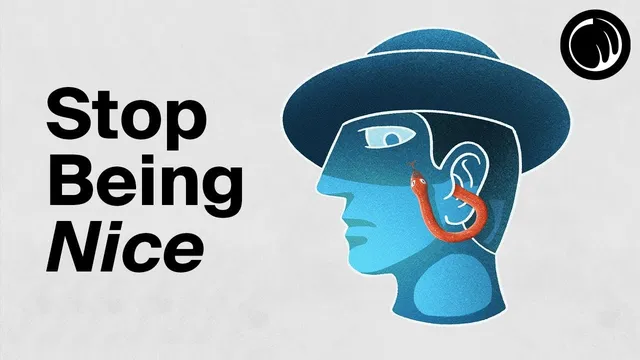
Applied beyond politics, the transcript argues that “being nice” all the time can become a performance that harms relationships, fosters deceit, and ultimately backfires. Life becomes a series of messy trade-offs between ethics and pleasantness. Machiavelli’s practical takeaway is twofold: defend one’s world against exploitation, but don’t become the exploiter. The transcript closes by noting that Machiavelli’s influence outlasted his own lack of later political success, inspiring philosophers and leaders and even shaping villain archetypes in literature—suggesting that the discomfort his ideas provoke may reflect a persistent human desire to build something better while still understanding how power works.
Cornell Notes
Machiavelli’s core claim is that effectiveness—especially the ability to hold power and maintain a stable state—often depends on confronting how fear and human psychology actually shape behavior. In *The Prince*, moral ideals like goodness and honesty matter less than the practical management of respect, which Machiavelli links more reliably to fear than to love. The transcript places this in the context of Machiavelli’s life in turbulent Renaissance Florence, including his rise in government and later exile after the Medici returned. Critics from later moral philosophy challenge the ethics of this approach, but another reading treats *The Prince* as a warning to ordinary people: understanding manipulation helps them protect themselves. The result is a framework for navigating both politics and everyday relationships through realistic trade-offs rather than constant “niceness.”
How does Machiavelli connect leadership to “respect,” and why does fear come out ahead of love?
What historical experiences shaped the tone and content of *The Prince*?
Why did *The Prince* provoke intense backlash from religious authorities?
What are the main ethical objections raised against Machiavelli’s approach?
How can *The Prince* be read as a warning rather than a manual?
What does Machiavelli’s realism imply for everyday life and relationships?
Review Questions
- What reasons does the transcript give for why fear is more reliable than love as a foundation for respect?
- Which later thinkers are used to challenge Machiavelli’s moral framework, and what specific moral principle does each represent?
- How does the “warning to the ruled” interpretation change the way *The Prince* should be read?
Key Points
- 1
Machiavelli’s leadership framework prioritizes effectiveness and power stability over moral ideals when those ideals conflict with survival.
- 2
Fear is presented as the most dependable mechanism for sustaining respect, while love is described as volatile and difficult to control.
- 3
The transcript links Machiavelli’s realism to Renaissance Florence’s instability and to his personal experience of political rise, torture, and exile.
- 4
Major ethical critiques invoked in the transcript argue that self-serving rationality and amoral tactics ultimately corrode human well-being and moral order.
- 5
An alternate reading treats *The Prince* as a warning to ordinary people: understanding manipulation helps prevent exploitation.
- 6
In everyday life, constant “niceness” can become a performance that hides truth, damages communication, and breeds resentment.
- 7
The practical takeaway is a dual obligation: defend one’s world against imposition without adopting the methods of exploiters.