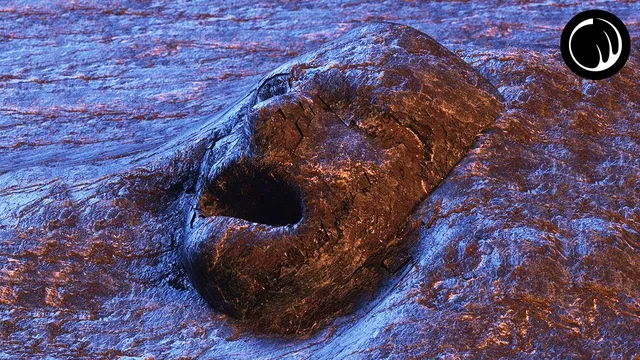
Death is way scarier than you think...
Based on Pursuit of Wonder's video on YouTube. If you like this content, support the original creators by watching, liking and subscribing to their content.
Death is framed as uniquely terrifying because it threatens not only what people know, but the capacity to know and feel.
Briefing
Death is terrifying less because it’s a future event and more because it exposes a limit in human thought: people can imagine death, but they can’t truly know it. The argument leans on a classic Epicurean line—while someone exists, death isn’t present; when death is present, the person no longer exists—so death becomes “nothing” in the only sense that matters to lived experience. From there, the discussion sharpens into a paradox: thinking about death requires projecting oneself toward “nothingness,” yet that “nothingness” includes not only the absence of ideas but the absence of the capacity to ideate. If consciousness depends on brain function, then when the brain (or a sufficient proxy) stops, the subjective individual and experience stop too—leaving death unknowable from the inside.
That unknowability isn’t treated as a temporary gap in knowledge that belief systems can patch. Instead, it’s framed as a structural problem: any attempt to apply subjectivity to death dissolves the truth of it. The discussion invokes Eugene Thér’s view that thought reaches limits when it confronts reality “in itself,” producing torment when an object exceeds comprehension. Humans can only relate to the world by translating it into familiar, graspable terms; death is the most explicit boundary because it threatens not just what’s known, but the very mechanisms of knowing and feeling. The result is a doorway that can be approached in thought but never entered as an experience.
Religious and spiritual consolations are acknowledged as psychologically powerful—beautiful imagery painted over mortality—but the claim is that such imagery can’t represent what lies inside the door. Even if something like a soul exists, it would still be material governed by physical principles, and it would still need the right form to sustain subjective function. When the body dies, the continuity required for a self appears to break. Dualist, materialist, spiritualist, and religious theories are therefore treated as hypotheses or wishes rather than ultimate truths, because the mind and consciousness remain insufficiently understood to justify confident claims about what follows.
Rather than resolving the paradox, the discussion recommends embracing it. Learning comes not from solving death as a problem but from accepting its obscurity and letting it reshape perspective—turning fear into humility and awe. The practical pivot is attention: if death is unknowable through thought, then awareness can be redirected from death toward life. Since people can think about death only while alive, the capacity to imagine, comprehend, and create meaning is what’s available now. Death, on this view, gives life urgency and scarcity, but also widens the sense of possibility by reminding people that an “infinitude of possibilities” lies beyond what they can know. The central takeaway is that the paradox of death isn’t something to crack open intellectually; it’s something to live with—using it to deepen meaning in the present and to expand the limits of how people relate to their own thoughts.
Cornell Notes
The core claim is that death is uniquely terrifying because it’s not just unknown—it’s unknowable from the standpoint of subjective experience. Epicurean reasoning frames death as absent while someone exists and present only when the person no longer does, making “death” effectively “nothing” to lived consciousness. Building on limits-of-thought arguments (including Eugene Thér’s), the discussion says humans can translate reality into familiar concepts, but death threatens the very capacity to know and feel, so it can’t be fully grasped. Instead of resolving the paradox with belief, it encourages embracing death’s mystery and redirecting attention to life now. That shift turns fear into humility and meaning, using mortality to sharpen urgency and expand perspective.
Why does the discussion treat death as “unknowable” rather than merely “unknown”?
How does the Epicurean argument function in the overall reasoning?
What role do “limits of thought” play, and how does Eugene Thér’s idea fit?
Why are religious or spiritual consolations treated as insufficient?
What practical shift does the discussion recommend instead of “solving” death?
How does death supposedly add meaning to life beyond urgency?
Review Questions
- What assumptions about consciousness and brain function are necessary for the claim that death is unknowable from the inside?
- How does translating reality into familiar concepts relate to why death is treated as a special limit case?
- What does it mean to “embrace” the paradox of death, and how does that change what people do with their attention in the present?
Key Points
- 1
Death is framed as uniquely terrifying because it threatens not only what people know, but the capacity to know and feel.
- 2
Epicurean reasoning is used to argue that death is absent while someone exists and present only when the person no longer exists, making it “nothing” to lived experience.
- 3
If subjective experience depends on brain function, then death ends the conditions required for any inner knowledge of death.
- 4
Human thought is portrayed as limited by the need to translate reality into familiar, graspable terms; death is treated as the boundary event that breaks that framework.
- 5
Belief systems are characterized as hypotheses or wishes rather than justified claims about what follows, because ultimate knowledge of mind and consciousness remains incomplete.
- 6
Instead of resolving death intellectually, the recommended response is to embrace the mystery and redirect attention toward life now.
- 7
Mortality is presented as a source of meaning through urgency, humility, and an expanded sense of possibility beyond what can be known.