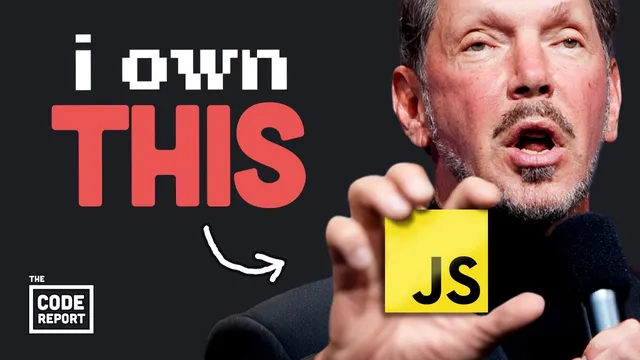
Deno vs Oracle: The ugly custody battle for JavaScript…
Based on Fireship's video on YouTube. If you like this content, support the original creators by watching, liking and subscribing to their content.
The “JavaScript” trademark traces back to 1990s browser-language decisions that shifted from Scheme toward a Java-branded marketing strategy.
Briefing
JavaScript’s ownership fight isn’t about who invented the language—it’s about who controls the trademark, and that control has shaped how the ecosystem talks about itself. The transcript traces how the term “JavaScript” became a legally protected brand tied to Oracle, even though Oracle didn’t create the language and doesn’t maintain it. The practical consequence: developers and companies can end up treating “JavaScript” like a word that can be enforced, not merely a technical label.
The story begins in the mid-1990s, when Netscape Navigator needed a browser language to enable richer client-side interactivity. Scheme was a natural candidate, but Netscape’s plans collided with the rise of Java: Sun Microsystems had a broad distribution and technology exchange agreement with Netscape, and Java’s hype made it the safer path. The language that emerged went through name changes—Mocha to LiveScript—before being marketed as “JavaScript” to ride Java’s momentum. That marketing linkage mattered legally: Sun gained the grounds to trademark “JavaScript,” and later corporate transitions transferred that trademark power.
Sun eventually collapsed after the dot-com bubble and was acquired by Oracle in 2010, giving Oracle control of the “JavaScript” trademark. The transcript highlights the odd downstream effects: the official language spec is called ECMAScript, and “JavaScript” isn’t treated like a neutral, universally owned term. Oracle’s enforcement posture is framed as aggressive enough that using the word without permission could theoretically trigger legal trouble.
That sets up the modern challenge led by Ryan Dahl, creator of Node.js and founder of Deno. Dahl published an open letter in 2022 arguing that Oracle’s trademark is a “dark cloud” over the language and that Oracle’s best use of the trademark would be to release it into the public domain. When Oracle ignored the request, Dahl escalated with a stronger letter in 2023 that added legal arguments, including claims that the trademark should be considered abandoned under U.S. trademark law. The transcript also alleges fraud in Oracle’s 2019 trademark renewal, pointing to Oracle’s submitted evidence of use in commerce—specifically a “no.js” screenshot—while noting that Dahl’s own “no.js” project was not connected to Oracle.
In November 2024, Dahl and Deno formally petitioned the USPTO to cancel the trademark. Oracle responded after delays, disputing the fraud claim and arguing that even if the “no.js” evidence was flawed, Oracle also had other projects (including Oracle JET) demonstrating use. During the proceedings, the Trademark Trial and Appeal Board rejected Dahl’s fraud argument, saying the screenshot alone wasn’t enough to prove fraud without a specific false statement plus knowledge and intent to deceive. Oracle also denied two other claims: that “JavaScript” is generic and that the trademark was abandoned.
Next steps are procedural and lengthy: discovery, evidence gathering, and then trial presentations in summer 2026, with a final decision expected before January 2027. Whatever the outcome, the transcript’s closing note is pragmatic—winning the trademark fight won’t automatically improve code quality, so developers should still focus on tooling and workflow improvements, including the sponsor’s AI-assisted CLI for enterprise teams.
Cornell Notes
The fight over “JavaScript” isn’t about programming language authorship; it’s about trademark control. The transcript links the trademark to marketing decisions in the 1990s, when Netscape’s browser language plans shifted from Scheme toward a Java-branded product, leading to the “JavaScript” name being trademarked by Sun. After Sun was acquired by Oracle in 2010, Oracle gained ongoing control of the trademark even though it didn’t build or maintain the language. Ryan Dahl (Node.js, Deno) and supporters petitioned the USPTO to cancel the trademark, arguing abandonment and alleging fraud tied to Oracle’s 2019 renewal evidence. The USPTO’s Trademark Trial and Appeal Board dismissed the fraud claim, and the case now moves into discovery and a likely decision before January 2027.
How did “JavaScript” become a trademarked term in the first place?
Why does Oracle have leverage over a word developers use constantly?
What legal strategy did Ryan Dahl use to challenge the trademark?
What happened to the fraud claim?
What is the timeline for the rest of the case?
Review Questions
- What historical marketing and corporate agreements does the transcript connect to the creation of the “JavaScript” trademark?
- Which specific elements of the fraud allegation were rejected, and what legal standard did the Trademark Trial and Appeal Board apply?
- How do the transcript’s abandonment and generic-term claims differ from the fraud claim, and what did Oracle argue in response?
Key Points
- 1
The “JavaScript” trademark traces back to 1990s browser-language decisions that shifted from Scheme toward a Java-branded marketing strategy.
- 2
Sun Microsystems obtained trademark grounds for “JavaScript,” and Oracle later inherited control after acquiring Sun in 2010.
- 3
Ryan Dahl (Node.js, Deno) challenged Oracle’s trademark through open letters and then a formal USPTO petition filed in November 2024.
- 4
The petition argued abandonment under U.S. trademark law and alleged fraud tied to Oracle’s 2019 trademark renewal evidence (“no.js”).
- 5
The Trademark Trial and Appeal Board dismissed the fraud claim, ruling that the screenshot alone didn’t establish the required false statement plus intent to deceive.
- 6
Oracle denied that “JavaScript” is generic and denied abandonment, setting up a longer discovery and trial process.
- 7
A USPTO decision is expected before January 2027 after discovery and trial presentations in summer 2026.