Design your research study with AgentGPT
Based on Qualitative Researcher Dr Kriukow's video on YouTube. If you like this content, support the original creators by watching, liking and subscribing to their content.
AgentGPT breaks a research goal into step-by-step subtasks, turning broad questions into an actionable workflow.
Briefing
AgentGPT is positioned as a task-deploying “agent” tool that can generate research workflows—breaking a study goal into step-by-step subtasks and, in some cases, producing usable outputs like interview questions or survey planning. For researchers and students, its core value is not just drafting text, but turning a broad research aim into an actionable sequence: identify what must be done, suggest relevant research directions, and then carry those steps forward toward concrete materials.
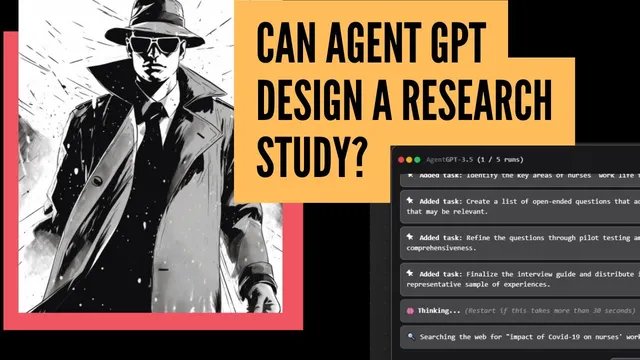
In the demonstration, AgentGPT is used to design a qualitative interview guide about nurses’ experiences working during the COVID-19 pandemic. After the user names the overall task and sets a goal, the agent produces a structured plan that includes researching key areas of nurses’ work life affected by the pandemic. It then moves to generating open-ended questions tied to those key areas, with intermediate guidance such as extracting variables and consulting reliable sources to support the rationale for the interview focus. The workflow continues through refinement steps—like pilot testing with a small group of nurses to check clarity—before finalizing the interview guide. Even when the agent’s output is still “working through” the plan, the intermediate task descriptions function as a practical checklist for how to build the study instrument responsibly.
A second example targets a qualitative research study on parenting styles and beliefs about those styles. Here, AgentGPT again decomposes the goal into major research tasks: identify and review relevant literature, develop a survey questionnaire for self-reported parenting styles, recruit a diverse sample of parents, and analyze the data. The tool’s usefulness is framed as twofold: it can summarize literature and provide links, and it can translate research questions into concrete methodological components such as data collection instruments and analysis steps.
The main constraint highlighted is plan-based limits. The free plan runs out of “loops” quickly, which prevents full completion of longer or more complex study-building tasks. The standard plan allows a limited number of tasks per day (described as five), and a premium plan is suggested for users who want deeper, more reliable completion of complex work. The presenter emphasizes that the tool should not replace scholarly responsibility: researchers still need to verify outputs, avoid overreliance, and ensure ethical and methodological rigor.
Overall, AgentGPT is presented as a research-assistant that converts a study idea into a structured execution plan—useful for scaffolding interview guides, questionnaires, and literature review steps—while requiring human oversight due to output limits and the risk of outsourcing academic thinking.
Cornell Notes
AgentGPT turns a research goal into a sequence of subtasks, often producing draft-ready components such as interview questions or survey-planning steps. In the nurses-and-COVID example, it generates a workflow that includes identifying impacted work-life areas, extracting variables, consulting reliable sources, drafting open-ended questions, and suggesting pilot testing for clarity. In the parenting-styles example, it breaks the study into literature review, questionnaire development, participant recruitment, and data analysis. The tool’s practical value is the checklist-like guidance it provides even when it cannot finish everything. Plan limits (including a free-plan “loops” cap) mean it works best as a scaffold, not a fully autonomous replacement for researcher judgment.
How does AgentGPT help when starting from a broad qualitative research topic?
What does the tool generate for an interview-guide task, and what steps lead to the final questions?
Why is pilot testing included in the workflow, and how is it used?
How does AgentGPT approach a study-design task involving parenting styles?
What limitations affect how much AgentGPT can complete, and how do those limits change usage?
What safeguards are emphasized for responsible use in academic research?
Review Questions
- When designing an interview guide, what intermediate steps does AgentGPT suggest before producing open-ended questions?
- How does the parenting-styles example translate research questions into concrete methodological tasks?
- What specific plan limitation can stop AgentGPT from finishing a longer workflow, and what does that imply for how students should use it?
Key Points
- 1
AgentGPT breaks a research goal into step-by-step subtasks, turning broad questions into an actionable workflow.
- 2
For qualitative interview design, it can generate open-ended question drafts tied to identified key areas and suggest pilot testing for clarity.
- 3
For study design, it can decompose tasks into literature review, questionnaire development, recruitment, and data analysis planning.
- 4
The free plan may stop mid-work due to a “loops” limit, so users should expect partial scaffolding rather than complete studies.
- 5
Standard usage is constrained by a limited number of tasks per day, while premium is positioned for more complex, longer projects.
- 6
Outputs should be verified and used responsibly; the tool is best treated as support for planning and drafting, not a replacement for scholarly judgment.