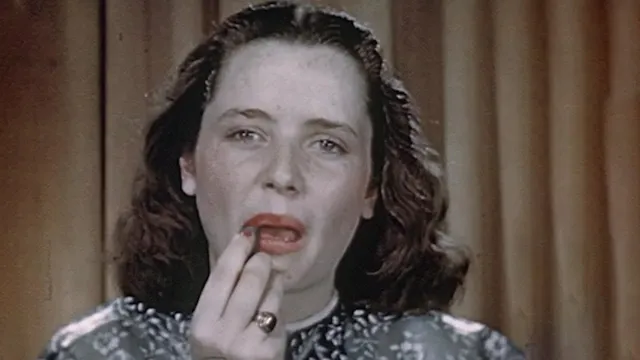
Did People Used To Look Older?
Based on Vsauce's video on YouTube. If you like this content, support the original creators by watching, liking and subscribing to their content.
Humans today show slower aging across multiple health systems, with Yale and USC researchers reporting age-equivalency shifts such as 60 aligning with the “new 56.”
Briefing
People really do look younger for longer than earlier generations—but a big chunk of what feels like “retrospective aging” comes from how style, context, and expectations change over time. A wave of yearbook and family-photo comparisons sparked the question of whether people used to look older. The answer is mixed: biology has shifted, yet perception often runs ahead of the facts.
On the biological side, researchers comparing long-term health markers across eras report that humans today age more slowly than historic counterparts. Yale and USC researchers tracked changes in metabolic, cardiovascular, inflammatory, kidney, liver, and lung function, concluding that people are staying “younger for longer.” Their estimates suggest a reframing of age milestones: between the early 1990s and late 2000s, 60 became the new 56, 40 became the new 37, and 12 and 20 became the new 19. Lifestyle and medical changes—nutrition, smoking rates, health care, early-life conditions, and especially skin care such as sunscreen—are cited as major drivers. Cosmetic dentistry and orthodontics also matter for how faces look, though one magazine-based analysis from the 1930s to today found the only significant facial change across ethnicities was larger lips.
Still, “people looked older” persists because perception is not a neutral measuring tool. Retrospective aging can happen quickly within a single lifetime: when someone is a freshman, seniors seem dramatically older, but later—when roles reverse—the same peers don’t look as old as they once did. That mismatch isn’t only about bodies; it’s about perspective and memory. Even when comparing specific images, people can be misled by non-equivalent snapshots—like using a photo from a later episode or giving a modern makeover that doesn’t truly recreate how someone would look at a younger age.
Style and self-expression amplify the illusion. Clothing, hairstyles, makeup, mannerisms, and even language shift what “age” signals to observers. A gym teacher in Dallas, Texas, accidentally wore the same outfit in consecutive yearbooks—then repeated it on purpose—creating an exaggerated demonstration of how a look that once signaled youth can later read as old. The mechanism is cumulative: the people who adopt a style age themselves, and eventually the style becomes culturally tagged as “for older people,” even if it originally wasn’t.
The transcript also links age perception to broader social psychology. Names can shape expectations and behavior through a “face-name matching effect,” where people guess a stranger’s name from facial features more accurately than chance. That can become self-fulfilling: parents may choose names that fit what they already see, and as children grow, they may carry themselves in ways that align with those expectations. The discussion even gestures at a reverse “Dorian Gray” idea—where a name can influence how someone is perceived and possibly how they present themselves.
Finally, the transcript widens the lens beyond faces to how people experience time and memory. It reports survey findings on when people think old age begins, how desired age shifts with current age, and a separate phenomenon: older adults more often report dreaming in black and white, correlated with whether they grew up with black-and-white TV and movies. Across all these threads, the core takeaway is that aging is partly biological and partly interpretive—shaped by medicine, but also by what society teaches us to read as “old.”
Cornell Notes
Humans today are aging more slowly than earlier generations, with researchers linking the shift to better health care, nutrition, lower smoking, improved early-life conditions, and skin protection like sunscreen. Yet “people used to look older” often reflects retrospective aging—how memory, perspective, and changing styles make past faces seem older than they were. Clothing, hairstyles, and mannerisms can become culturally coded as “old” after the people who wear them grow older, so the same look can carry different age meanings across decades. Psychological effects also matter: people can match faces to names better than chance, and expectations tied to names may influence presentation and treatment. Together, biology and perception explain why the past can look older while still being physically younger than it appears.
What evidence suggests people today are biologically aging more slowly than historic counterparts?
Why do “people looked older back then” impressions persist even when biology has improved?
How do fashion and behavior turn “youth signals” into “old signals” over time?
What is the face-name matching effect, and how does it relate to expectations?
What survey-style findings are given about when people consider someone “old”?
How does the transcript connect TV and dreams to black-and-white dreaming?
Review Questions
- Which health domains (metabolic, cardiovascular, inflammatory, etc.) were used to support the claim that aging is slower today, and what age-equivalence examples were provided?
- Explain how retrospective aging can occur within a single person’s life, and why perspective and memory can distort age judgments.
- Describe two mechanisms—one cultural (style coding) and one psychological (face-name matching)—that can make people appear older or “fit” an age category.
Key Points
- 1
Humans today show slower aging across multiple health systems, with Yale and USC researchers reporting age-equivalency shifts such as 60 aligning with the “new 56.”
- 2
Improved lifestyle and medical conditions—especially lower smoking, better health care, and skin protection like sunscreen—are cited as major contributors to the slower aging pattern.
- 3
Retrospective aging often reflects perception: memory, changing roles, and unequal comparisons (wrong age snapshots or context) can make the past seem older than it was.
- 4
Changing fashion and behavior can re-label the same visual cues over time, so a style associated with youth can later become culturally coded as “old.”
- 5
Cosmetic dentistry and orthodontics can alter facial appearance, but one magazine-based analysis found the most consistent measurable change was larger lips across ethnicities.
- 6
Names can shape expectations through the face-name matching effect, where people guess names from faces better than chance, potentially reinforcing self-fulfilling behaviors.
- 7
Dream color reports correlate with exposure to black-and-white TV and movies, though it remains unclear whether dreams changed or recall changed.