Did We Get the Double Slit Experiment All Wrong?
Based on Sabine Hossenfelder's video on YouTube. If you like this content, support the original creators by watching, liking and subscribing to their content.
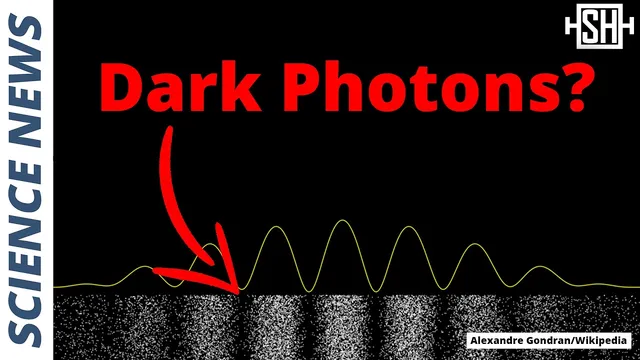
The double-slit experiment shows interference patterns even when photons are emitted one at a time, building up statistically over many detections.
Briefing
The double-slit experiment still produces interference patterns even when light is sent one photon at a time—yet a new interpretation claims the “wave” story is unnecessary. Instead of treating the pattern as interference between two paths, the approach models the light as purely particles while introducing “light photon states” that can trigger a detector and “dark photon states” that cannot. The dark states are said to be part of the quantum state of the laser light, and the observed bright and dark regions on the screen arise because only the light states are detectable.
In the standard setup, a laser beam is directed at a barrier with two microscopic slits. A screen behind the slits shows alternating bright and dark bands. The usual explanation is wave-like: light from both slits overlaps, and where crests meet troughs the amplitudes cancel, producing darkness, while crest-to-crest (or trough-to-trough) yields brightness. Lasers matter because their phase relationships must remain coherent; otherwise, the overlap would average out and the interference pattern would wash away.
When the laser intensity is reduced so that individual photons arrive one by one, the experiment still builds up an interference pattern over many trials. That behavior is commonly taken as evidence that a single photon interferes with itself—an idea often summarized under complementarity, where light exhibits both particle and wave aspects. The new paper, published in PRL, challenges that interpretation by reframing what the photon “does.” Rather than relying on wave interference to explain the pattern, it proposes that the quantum state can be decomposed into components that either lead to detection (light states) or do not (dark states). Crucially, the calculation goes beyond assigning a probability for where a photon lands; it includes a simple detector model—an atom-like absorber—and computes the probability that the detector actually “clicks.”
The interpretation’s key claim is that the dark regions correspond to photon components that pass through the apparatus but fail to be absorbed by the detector. The dark states are not treated as ordinary vacuum; they are embedded in the laser’s quantum state. That framing aims to preserve the particle picture while reproducing the same screen statistics.
Despite the mathematical novelty, the critique offered is that the “all particles” framing may be misleading. Both light and dark components still traverse both slits, which keeps the setup looking path-interference-like rather than purely particle-like. There’s also a consistency check: in the usual double-slit treatment, the energy delivered to the dark regions is effectively zero, which aligns with the idea that the dark components aren’t behaving like ordinary particles carrying energy to those spots. Still, the alternative formalism is presented as potentially useful because it can be more general than the interference-only wave approach, and it comes with proposed experiments to test when the new decomposition matters.
Finally, the discussion links the light/dark-state distinction to practical quantum information goals: if information can leak into undetectable dark states, then controlling that leakage could improve storage and transmission. The bottom line is that the new work offers a fresh way to compute and categorize outcomes in a famous experiment, but it may not make quantum physics feel any less conceptually tangled.
Cornell Notes
The double-slit experiment produces an interference pattern even when photons arrive one at a time, a result usually interpreted as single-photon wave interference. A new PRL-based interpretation reframes the phenomenon as particle-only behavior by decomposing the laser’s quantum state into “light photon states” that can trigger a detector and “dark photon states” that cannot. The calculation explicitly models detection by using an atom-like absorber, not just where a photon might arrive. The observed bright and dark bands then reflect which components lead to detector clicks. While the math is described as sound and potentially more general than standard interference reasoning, the particle-only framing is criticized as potentially misleading because both components still pass through both slits and the dark regions correspond to effectively zero delivered energy.
Why does the double-slit interference pattern require phase coherence, and what happens when intensity is lowered to single photons?
What is the standard wave-based explanation for bright and dark regions on the screen?
How does the alternative interpretation replace “wave interference” with “light” and “dark” photon states?
What changes in the calculation when detection is modeled explicitly?
Why is the “all particles” framing criticized even if the mathematics works?
What practical implication is suggested for quantum information?
Review Questions
- In the standard double-slit explanation, what physical condition ensures a stable interference pattern, and why does incoherence wash it out?
- How does the alternative framework connect the screen’s bright/dark bands to detector clicks rather than to arrival probabilities alone?
- What conceptual tension arises from the fact that both light and dark components still traverse both slits, even under a particle-only interpretation?
Key Points
- 1
The double-slit experiment shows interference patterns even when photons are emitted one at a time, building up statistically over many detections.
- 2
Phase coherence from a laser is essential; without it, the overlap of contributions averages out and the interference pattern disappears.
- 3
A PRL-based interpretation decomposes the laser’s quantum state into detectable “light photon states” and undetectable “dark photon states,” attributing bright/dark screen regions to detector sensitivity.
- 4
The alternative calculation explicitly models detection using an atom-like absorber, separating state components that would trigger a click from those that would not.
- 5
Critics argue the “all particles” framing may be misleading because both light and dark components still pass through both slits, and dark regions correspond to effectively zero delivered energy.
- 6
The formalism is presented as potentially more general than standard wave-interference reasoning, with proposed experiments to test where it matters.
- 7
The light/dark-state distinction could improve quantum information storage and transmission by reducing the risk of dumping information into undetectable dark states.