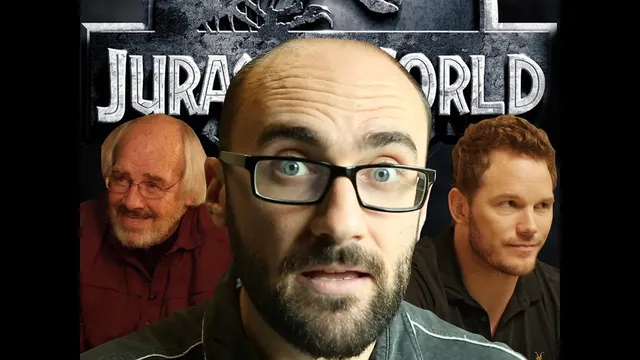
DINOSAUR SCIENCE! feat. Chris Pratt and Jack Horner
Based on Vsauce's video on YouTube. If you like this content, support the original creators by watching, liking and subscribing to their content.
Coprolites (fossilized dung) can preserve direct evidence of what dinosaurs ate and how they processed food, sometimes offering clearer dietary clues than bones.
Briefing
Dinosaurs aren’t just extinct monsters in museum cases—they’re a living scientific clue about how life works, how ecosystems change, and why humans keep imagining the past. The conversation ties that fascination to real evidence: dinosaur fossils, including coprolites (fossilized dung), can reveal what dinosaurs ate and how they processed food, offering more direct dietary information than bones alone. That matters because it shifts dinosaur science from guesswork about appearance to reconstruction of behavior and ecology.
The discussion then draws a hard line between popular myths and geology. Fossil fuels don’t come from dinosaur remains. Oil forms primarily from microorganisms in ancient oceans, preserved over millions of years in sedimentary rocks. Even if dinosaurs had contributed meaningfully, the amount would be far too small to power modern civilization; the chemistry and scale point elsewhere. The result is a reframing of “dinosaur ghosts” as metaphor rather than fuel—our cars run on ocean life, not on squashed dinosaurs.
From there, the extinction story gets more precise. Dinosaurs did not vanish entirely 65 million years ago. A mass extinction event wiped out non-avian dinosaurs, but the avian line survived and evolved into birds. The key idea is evolutionary continuity: dinosaurs are a broader group (Dinosauria) that includes descendants, so birds are not merely related to dinosaurs—they are dinosaurs. Shared traits such as feathers, hollow bones, and wishbones appear in both groups, supporting the hypothesis that birds are the surviving dinosaur branch.
That evolutionary survival also changes how people think about “bringing dinosaurs back.” Jurassic Park-style cloning is treated as a dead end: cloning can’t recreate historical dinosaurs because the genetic and developmental pathways aren’t recoverable from fossils. Any future “made” dinosaurs would likely be retro-engineered from birds—building fictional creatures that resemble dinosaur forms without restoring the true historical animals.
Finally, the conversation connects science to psychology. Dinosaurs captivate children because they’re real, terrifying, and grounded in fossils—unlike ghosts or Dracula. The thrill comes from morbid curiosity: watching a dangerous creature “flip out,” then enjoying the tension of humans overcoming it. Yet the story ends with a sobering cosmic perspective. The same kind of impact that ended non-avian dinosaurs could recur on a geologic timescale, but modern technology offers a chance to predict and possibly avoid catastrophe. The punchline lands on a space-program lesson: dinosaurs went extinct without one, while humanity may need to keep looking outward to protect itself.
Cornell Notes
Dinosaurs remain scientifically relevant because fossils—especially coprolites (fossilized dung)—can reveal diet and feeding behavior more directly than bones. Fossil fuels are not powered by dinosaur remains; oil mainly comes from microorganisms in ancient oceans and accumulates in sedimentary rocks. The 65-million-year extinction event killed off non-avian dinosaurs, but avian dinosaurs survived and evolved into birds, meaning birds are living dinosaurs. Attempts to “bring dinosaurs back” through cloning are unrealistic; any future dinosaur-like creatures would likely be retro-engineered from birds and would still be fictional. The enduring appeal of dinosaurs blends real evidence with fear, curiosity, and the drama of survival against extinction-scale threats.
What can coprolites (fossilized dung) tell scientists that bones might not?
Why doesn’t oil come from dinosaur poop or dinosaur remains?
How can dinosaurs be both extinct and still alive today?
What traits link birds to dinosaurs?
Why is cloning dinosaurs considered a dead end?
What explains the strong appeal of dinosaurs to kids?
Review Questions
- How do coprolites improve reconstructions of dinosaur behavior compared with skeletal remains?
- What geological and biological processes produce fossil fuels, and how does that contradict “dinosaur fuel” myths?
- Explain how the avian/non-avian split after the 65-million-year extinction event leads to birds being classified as dinosaurs.
Key Points
- 1
Coprolites (fossilized dung) can preserve direct evidence of what dinosaurs ate and how they processed food, sometimes offering clearer dietary clues than bones.
- 2
Fossil fuels form mainly from microorganisms in ancient oceans and accumulate in sedimentary rocks, not from dinosaur remains.
- 3
The 65-million-year extinction event eliminated non-avian dinosaurs but left the avian dinosaur line intact.
- 4
Birds are living dinosaurs because they are descendants of avian dinosaurs and share core traits like feathers and hollow bones.
- 5
Cloning can’t recreate historical dinosaurs; any future dinosaur-like creatures would likely be retro-engineered from birds and remain fictional reconstructions.
- 6
Dinosaurs’ popularity comes from a mix of real fossil evidence and the thrill of fear and survival narratives.