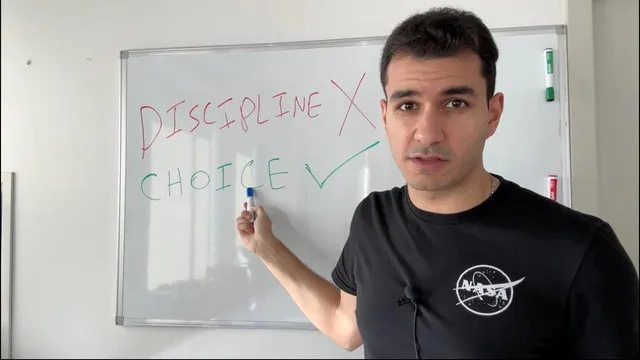
Discipline is for Losers
Based on Ali Alqaraghuli, PhD's video on YouTube. If you like this content, support the original creators by watching, liking and subscribing to their content.
Replace willpower-based discipline with system design that makes the right actions the default choices.
Briefing
Discipline often backfires because it relies on willpower, while day-to-day behavior is heavily shaped by the environment. The core claim is that people—especially those who feel more affected by external cues—don’t consistently “choose” their best actions through sheer self-control. Instead, they default to whatever is most visible, convenient, or emotionally soothing. The practical fix is to replace discipline with deliberate “choice architecture”: design external systems that make the right action the easiest action.
The argument starts with a personal contrast. Success didn’t come from being naturally disciplined; it came from building conditions that steer behavior. Without those conditions, the speaker says they would likely fall into unproductive patterns—poor food choices, long phone sessions, and hours of games—because those options are simply more available. Past attempts at discipline worked only briefly, then produced resentment and self-hatred. That led to a different philosophy: life is mostly the journey, and the outcome is ultimately death—so the point is to pursue goals while still enjoying the process.
To ground the idea, the transcript frames “choice” as something influenced by external circumstances. A simple example compares a cookie and a radish at 11:00 p.m.: if the cookie is “in your face,” it’s more likely to win even if the radish would be eaten when it’s the only option and hunger is high. The takeaway is that behavior follows cues and context more than identity.
One concrete example is removing temptations from the physical setup. The speaker describes having a desk for work and music, plus instruments and a kitchen—but no couch. The reasoning is straightforward: a couch and TV would create an automatic third option—sit down, watch, and doomscroll—especially during low-energy evenings. Rather than trying to resist those impulses through discipline, the speaker says they “relentlessly delete” what doesn’t serve their goals, while keeping what they genuinely enjoy: making music, cooking, quality sleep, workouts, meeting friends, and calling family. The method is iterative: identify what’s in the periphery, decide what supports the desired life, and remove what doesn’t.
The transcript then argues that choice beats discipline not only because it works with human psychology, but because it’s more fun. In business, the speaker describes scaling quickly to around $100K per month, then hiring seasoned leaders to create leverage. The new managers’ approach reduced the speaker’s enjoyment—more meetings, less “ruthless problem solving,” and less needle-moving work. Fun dropped, and so did motivation. The solution was structural: reconfigure the company so the speaker manages sales, marketing, and product directly, while “amplifiers” handle departments with highly skilled people. The result is a business that feels enjoyable again, eliminating the need to force attendance.
A final operational example shifts meeting times to match the speaker’s night-owl schedule. Instead of disciplining early mornings, meetings move to 4:00 p.m.–6:00 p.m., protecting mornings for meaningful work and improving decision quality.
Overall, the advice is to pause when “guru” voices demand pushing through. Urgency can justify occasional grit, but repeated reliance on discipline leads to burnout and lower-quality output. The better path is designing external systems that guide behavior toward the right work—so productivity comes from choice, not coercion.
Cornell Notes
The transcript argues that discipline is unreliable because daily behavior is strongly driven by external cues and environment. Instead of forcing willpower, the speaker recommends building systems that make the desired actions the default choices—like removing a couch to prevent TV and doomscrolling. The same principle is applied to business: hiring and meeting schedules that reduce enjoyment and autonomy lead to lower motivation, so the company is restructured and meetings are moved to evening hours to match a night-owl rhythm. The central payoff is that choosing the right actions can be both more effective and more enjoyable, reducing burnout and improving decision quality.
Why does the transcript claim discipline “fails” for most people?
How does the cookie-versus-radish example support the choice-over-discipline idea?
What physical-environment change is used as a productivity system?
How does the transcript connect fun to business performance?
What scheduling system replaces the need to wake up early?
Review Questions
- What does the transcript mean by “choice” being driven by external cues, and how does that change the way someone should plan behavior?
- Give two examples from the transcript where removing or redesigning an environment reduced the need for discipline.
- How does the transcript define the relationship between enjoyment (“fun”) and business outcomes like growth or revenue?
Key Points
- 1
Replace willpower-based discipline with system design that makes the right actions the default choices.
- 2
Treat daily behavior as cue-driven: what’s visible, convenient, and emotionally soothing often determines outcomes more than intention.
- 3
Remove or reduce environmental triggers for unproductive habits (e.g., eliminating a couch/TV setup to prevent late-night doomscrolling).
- 4
Keep and amplify what genuinely supports your goals and enjoyment (music, cooking, sleep, workouts, friends, family).
- 5
Optimize business structure for enjoyment as well as performance; if management changes reduce fun and focus, motivation and execution can drop.
- 6
Align schedules with your natural energy patterns (e.g., shifting meeting times to evening for a night-owl) to improve decision quality.
- 7
Use “push through” only as an occasional tool for urgency; repeated reliance on discipline increases burnout risk and lowers work quality.