DISTORTIONS
Based on Vsauce's video on YouTube. If you like this content, support the original creators by watching, liking and subscribing to their content.
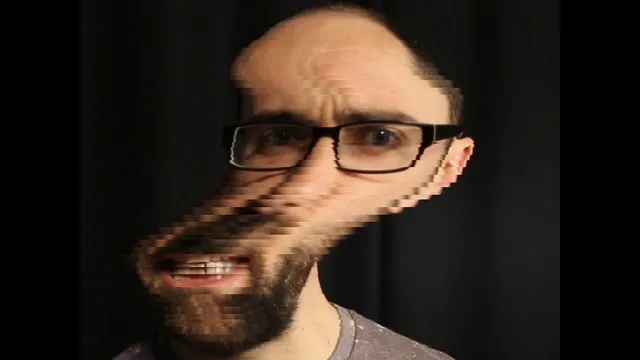
Rolling shutter distortion occurs because cameras scan frames in strips, so fast motion gets recorded across slightly different times.
Briefing
A familiar camera glitch—rolling shutter distortion—turns out to be a useful lens for understanding a deeper, unavoidable fact: appearances are always slightly “time-displaced” because light takes time to travel. In rolling shutter cameras, the sensor doesn’t capture the whole frame at once; it scans strips quickly. If the scene changes faster than the scan, different parts of the image effectively come from different moments, producing the recognizable “jelloey wobble” effect. Fast, repetitive motion like vibrating guitar strings and airplane propellers often triggers it, but even people can become victims when their motion outpaces the scan.
That practical artifact becomes a gateway to a broader category of distortions. The discussion distinguishes hallucinations (perceived without an external stimulus) from illusions (misreadings of real stimuli). Optical phenomena sit in a different bucket: they arise from the physical properties of light and matter before perception even begins. Constellations, for example, look like coherent patterns even though their stars sit at wildly different distances; the sky’s “Big Dipper” is a geometric illusion created by our single vantage point. The night sky also looks smaller and dimmer than it truly is because distant objects lose brightness through red shifting, the inverse-square law, and light extinction. The Helix Nebula, despite being about 700 light-years away, spans roughly 3 light-years across—so if it were bright enough for long exposure, it would appear far larger in our sky.
Light’s speed then sets the ultimate constraint. Even though light moves at about 300,000 kilometers per second, cosmic distances dwarf that speed. The Andromeda Galaxy is millions of light-years away, and its apparent image is also “tilted” in time: light from the near side reaches us earlier than light from the far side. Because Andromeda rotates—parts of it spinning at hundreds of kilometers per second—the lag between near and far light can, in principle, skew what we see, much like a rolling shutter skews a spinning object into a skewed, funhouse-mirror shape.
Still, the cosmic version is mostly negligible. The key reason is scale: galaxies take hundreds of millions of years to rotate once, so the time difference across a galaxy’s width is tiny compared with the timescale of its motion. For Andromeda, correcting for light-travel-time lag would shift the most extreme points by only about a 10,000th of the width of an image—less than a pixel—so the effect can be ignored for ordinary viewing. Yet the underlying principle remains: every observation is slightly delayed. Your feet, for instance, are about 5 to 6 light-nanoseconds away from your eyes, meaning you see them as they were a few nanoseconds ago. The takeaway is not that vision is “wrong,” but that reality reaches perception through time, making appearances inherently relative to where you stand in space and time.
Cornell Notes
Rolling shutter distortion happens because cameras scan an image in strips rather than capturing everything at once; fast motion makes different parts of the frame correspond to different moments, creating the “jelloey wobble.” The same time-displacement idea connects to optical phenomena, where physical properties of light and matter shape what we see before perception even starts. Distant constellations and nebulae look the way they do because of perspective and dimming effects like red shifting and the inverse-square law. On cosmic scales, light-travel-time lag can skew views of rotating galaxies, but for galaxies like Andromeda the correction is so small (about a 10,000th of an image width) that it’s effectively negligible. Still, every observation is delayed by light’s finite speed, even within a human body.
What exactly causes the rolling shutter “jelloey wobble” effect?
How do illusions, hallucinations, and optical phenomena differ?
Why do constellations look like coherent patterns even though their stars aren’t actually arranged that way?
What role does dimming play in how large nebulae and galaxies appear?
How does light-travel-time lag relate to a cosmic rolling shutter effect?
Why is the light-travel-time distortion for Andromeda effectively negligible?
Review Questions
- How does scanning strips in rolling shutter cameras create a time-displaced image, and what kinds of motion make the distortion visible?
- What physical factors make distant astronomical objects appear both dimmer and smaller than their true sizes?
- Under what conditions would a “cosmic rolling shutter” effect become noticeable for an extended, rotating object?
Key Points
- 1
Rolling shutter distortion occurs because cameras scan frames in strips, so fast motion gets recorded across slightly different times.
- 2
Optical phenomena arise from the physics of light and matter, not from perception “failing,” and include perspective-based effects like constellations.
- 3
Distant objects appear smaller partly because dimming mechanisms—red shifting, the inverse-square law, and extinction—limit how much light reaches the eye.
- 4
Light-travel-time lag means extended objects are observed as they were at different moments across their depth.
- 5
For rotating galaxies such as Andromeda, the light-travel-time lag is too small relative to the galaxy’s slow rotation to matter at normal image resolution (about a 10,000th of an image width).
- 6
Even within the human body, finite light speed creates a measurable delay: your feet are seen as they were about 5 to 6 nanoseconds ago.