Divergent Minds
Based on Vsauce's video on YouTube. If you like this content, support the original creators by watching, liking and subscribing to their content.
Blindsight shows that conscious vision depends on the visual cortex, but some visual-guided behavior can still occur through other brain pathways.
Briefing
Atypical brains don’t just produce unusual abilities—they reveal how the mind is built, what parts of the brain do specific jobs, and how perception can be rerouted when wiring goes off-script. From blindsight to language disorders, the central thread is that changing or damaging particular brain regions can selectively alter function, while other pathways still operate. That matters because it turns “mystery” into testable biology: if a specific deficit reliably follows a specific injury (or a temporary disruption), researchers can map mental processes more precisely than observation alone.
The story begins with a tray of brains and the idea that simply looking at brain tissue can’t tell what each region does. Yet rare cases show that the brain can separate conscious experience from unconscious processing. In blindsight, people whose visual cortex is damaged can’t consciously see objects in part of their field of view, but they still detect motion and respond as if something is there—suggesting that other brain areas receive visual input without producing conscious vision. That same logic underpins “divergent minds,” a research approach arguing that people who differ from neurotypical patterns expose hidden components of normal cognition.
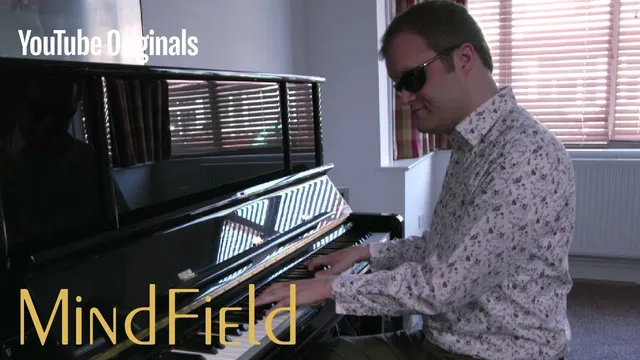
The program then spotlights Derek Paravicini, a blind autistic musical savant whose abilities are far beyond what’s considered typical. Derek’s musical gift is framed as both extraordinary and instructive: he can learn music by listening, and he processes pitch extremely quickly—reportedly reacting to an eight-note chord in about 0.4 seconds. His “prodigious” status is emphasized by how rare such high-level savant skills are, and by the fact that his musicality would be enviable even among trained neurotypical musicians. The account also ties his development to early life conditions: Derek was born extremely premature (26 weeks) and later experienced blindness and learning difficulties. His mentor, music psychologist Adam Ockelford, links Derek’s strengths to a combination of early sensory experience and autism-related “categorical perception,” where most children shift away from raw sensory detail, but autistic children may cling to absolute qualities longer.
That strength comes with everyday limitations. Derek finds self-care tasks difficult—getting dressed and washing—yet music becomes an intuitive domain where complex coordination seems to run automatically. The contrast is used to argue that the brain can route around weaknesses: abilities that look impossible in daily life can become effortless when the right perceptual and cognitive scaffolding is in place.
The narrative broadens again to acquired savant syndrome, where adult brain injury unlocks new skills. Jason Padgett describes being attacked and suffering damage to his visual cortex, after which he perceives the world in discrete “frames,” like real-time paused TV. The perceptual shift pushes him toward geometry and math; he says he began drawing triangles and straight lines because that was the only way to describe what he saw, eventually pursuing formal math and interpreting his new abilities as something that may exist in everyone but can be revealed when the brain is forced to reorganize.
Together, Derek and Jason serve a larger claim: a complete science of the brain must account for diverse minds. If some patterns remain unexplained, the full map of how humans think and perceive will stay incomplete.
Cornell Notes
The core idea is that atypical brains reveal how specific mental functions depend on particular neural systems—and how perception can be reorganized when those systems are altered. Blindsight illustrates a split between conscious vision (tied to the visual cortex) and unconscious visual processing in other brain areas. Derek Paravicini’s blind autistic savant abilities show how early sensory experience and autism-related perceptual focus can produce extreme musical pitch and rapid processing, even while everyday tasks like self-care remain difficult. Jason Padgett’s acquired savant syndrome suggests that adult brain injury can unlock new mathematical intuitions by changing how the world is perceived. These cases argue that understanding “divergent minds” is essential to building a brain science that explains all human cognition, not just neurotypical patterns.
How does blindsight challenge the assumption that the visual cortex is the only route to seeing?
What did Paul Broca’s and Wernicke’s discoveries suggest about brain “modules” for language?
Why was transcranial magnetic stimulation (TMS) used, and what happened when it targeted Broca’s Area?
What factors are linked to Derek Paravicini’s musical strengths, and what limits persist in daily life?
How does Jason Padgett’s acquired savant syndrome connect injury, perception, and math?
What broader conclusion is drawn from Derek and Jason about brain science?
Review Questions
- What evidence from blindsight supports the idea of unconscious visual processing outside the visual cortex?
- Compare Broca’s Aphasia and Wernicke’s Area in terms of speech production versus language comprehension.
- How do Derek Paravicini and Jason Padgett illustrate different pathways to exceptional abilities (developmental divergence vs. acquired savant skills)?
Key Points
- 1
Blindsight shows that conscious vision depends on the visual cortex, but some visual-guided behavior can still occur through other brain pathways.
- 2
Language functions can be separated into specialized regions: Broca’s Area is linked to speech production, while Wernicke’s Area is linked to comprehension.
- 3
TMS offers a causal test by temporarily disrupting targeted brain activity, but individual brains may respond differently, making results inconsistent.
- 4
Derek Paravicini’s musical abilities are tied to early sensory experience, extreme pitch processing speed, and autism-related persistence of absolute sensory qualities.
- 5
Derek’s case highlights a common pattern in savant profiles: exceptional performance in a narrow domain can coexist with significant everyday challenges.
- 6
Acquired Savant Syndrome can emerge after adult brain injury, with altered perception (like Jason Padgett’s frame-by-frame vision) driving new mathematical intuitions.
- 7
A full brain science must explain diverse minds; ignoring atypical cases leaves major parts of cognition unexplained.