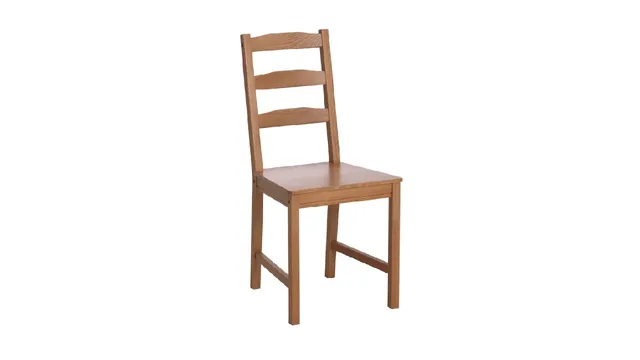
Do Chairs Exist?
Based on Vsauce's video on YouTube. If you like this content, support the original creators by watching, liking and subscribing to their content.
The transcript distinguishes constitution from composition to separate “made of” relations from strict identity.
Briefing
Chairs don’t need to be treated as extra physical entities sitting “over and above” atoms. The central claim is that ordinary objects are best understood as patterns—collections of simples (or “stuff”) that are organized in specific ways—while the paradoxes that arise from taking chairs as fully independent things come from confusing different meanings of “is” and from trying to force vague boundaries into exact, mind-independent facts.
The argument starts with ontology: ordinary objects like chairs are the kind of “things” philosophers debate under the umbrella of existence. Skepticism about chairs can take extreme forms—dreams, hallucinations, or simulated worlds—but the deeper issue is structural: what does it mean for one thing to be “made of” another? The transcript distinguishes constitution (paper constitutes a crane) from composition (paper is ultimately made of many fundamental parts). That sets up ontological reductionism, the view that wholes are nothing more than their parts, and then challenges it with the intuition that “being made of” isn’t the same as “being identical to.”
From there, the discussion turns to competing views about what exists. Ontological realists argue there’s a mind-independent answer to what objects exist, while anti-realists say any way of carving reality into objects is just one useful scheme among others. The “special composition question” asks when multiple things compose a further thing at all. Peter van Inwagen’s options include contact, fixation/melding, or even a more radical eliminativism: no ordinary objects like chairs exist—only simples arranged “chair-wise” in a way that doesn’t yield a true chair. Mereological universalism goes the opposite direction, claiming any assortment of stuff composes something, no matter how scattered or temporally separated.
The transcript then attacks composite objects using several classic problems. Composites face causal redundancy: if every chair action can be fully described by the behavior of its atoms, chairs add no causal work. They also risk over-counting: if a chair contains 100 sextillion atoms, does that mean there are at least 100 sextillion plus one things? Sorites sequences intensify the trouble: removing tiny amounts from a chair seems not to change it step-by-step, yet enough removals should eliminate the chair entirely—implying an arbitrary cutoff. The “problem of the many” adds that, near boundaries, there may be countless candidate “chairs” depending on which atoms count as part of the chair. Ship of Theseus then pressures identity over time: replacing parts raises the question of whether it’s the same object, a new one, or two.
A deflationary move tries to dissolve the dispute by claiming all sides agree chairs are just simples arranged chair-wise. The transcript argues that the real sticking point is not whether chairs are useful labels, but whether they are additional entities. The proposed rescue comes from Amie Thomasson’s distinction between a “neutral” sense of “thing” and a “sortal” sense that includes application conditions—criteria for counting. On that view, chairs exist relative to the conditions that make something count as a chair; the universe doesn’t supply a single objective boundary, but language and practice do.
Finally, the transcript reframes ordinary objects as “ontological parasites”: holes require hosts, and properties can be “object-fixed” into nouns that look like independent things. Confusing the “is” of predication (“this cheese is floppy”) with the “is” of identity (“this chair is atoms”) fuels the paradox. Chairs, like people, are treated as disturbances in stuff—patterns that matter can host—rather than extra physical objects that can be touched as distinct from their underlying simples.
Cornell Notes
The transcript argues that “chairs” are not additional physical entities beyond the underlying simples (or “stuff”) arranged chair-wise. Many philosophical puzzles—causal redundancy, over-counting, sorites vagueness, the problem of the many, and Ship of Theseus—arise when chairs are treated as fully independent objects with precise, mind-independent boundaries. A key fix comes from Amie Thomasson’s idea that “thing” can be used neutrally (without counting conditions) or in a sortal sense (with application conditions). Chairs exist insofar as the relevant application conditions are satisfied; the universe doesn’t need to provide a single exact cutoff for what counts as a chair. This approach preserves the everyday usefulness of “chair” while deflating the demand for an objective, extra entity over and above atoms.
What’s the difference between constitution and composition, and why does it matter for chairs?
Why do causal redundancy and over-counting push against composite objects?
How do sorites sequences create trouble for “chair” as a precise object?
What is the problem of the many, and how does it relate to boundaries?
How does Ship of Theseus test identity over time?
What does Amie Thomasson’s “neutral” vs “sortal” sense of ‘thing’ contribute?
Review Questions
- Which specific paradoxes in the transcript are meant to show that treating chairs as independent composites leads to contradictions or arbitrariness?
- How does the transcript use Thomasson’s application-conditions framework to explain why vagueness doesn’t require vague objects in the universe?
- What would change in the argument if one insisted that “chair” must refer to a single mind-independent entity with a precise boundary?
Key Points
- 1
The transcript distinguishes constitution from composition to separate “made of” relations from strict identity.
- 2
Ontological realists and anti-realists disagree on whether there’s a mind-independent fact about which objects exist.
- 3
The special composition question asks what conditions make multiple things compose a further thing like a chair.
- 4
Composite objects are challenged by causal redundancy, over-counting, sorites vagueness, the problem of the many, and Ship of Theseus.
- 5
A deflationary approach treats chairs as patterns of simples rather than extra entities over and above their parts.
- 6
Amie Thomasson’s neutral-vs-sortal distinction reframes “chair existence” as dependent on application conditions for counting.
- 7
The transcript argues that many paradoxes come from confusing the “is” of predication with the “is” of identity.