Dodging the Crap - The Behavioral Science of Great Gamification
Based on Robert Haisfield's video on YouTube. If you like this content, support the original creators by watching, liking and subscribing to their content.
Gamification should be grounded in behavioral science and game design principles that shape behavior, not in copy/paste mechanics like points and badges.
Briefing
Gamification fails when it copies shallow game mechanics instead of engineering behavior change. A behavioral-science lens—anchored in how people voluntarily pursue goals, how they interpret progress, and how they recover from failure—offers a practical blueprint for building products that people actually want to use.
The argument starts with a behavioral principle attributed to Kurt Lewin: behavior is a function of the person and their environment. In digital products, the “environment” is the interface and its rules, meaning designers shape user behavior whether they intend to or not. Games have long treated rules, incentives, and feedback as tools for steering behavior, and that same logic should guide gamification. Yet the field has drifted toward copy/paste implementations—points, badges, and leaderboards—without the subtler design work that makes those elements meaningful in context.
A widely cited warning from Gartner is used to frame the stakes: by 2014, 80% of gamified applications were expected to miss business objectives due to poor design. The critique is specific—teams focus on obvious mechanics rather than balancing competition and collaboration, defining a meaningful “game economy,” and aligning the system with what users care about. The fix is not to abandon game mechanics, but to broaden the “tool belt” and ground each mechanic in behavioral science.
From there, the talk builds a shared foundation between game design and behavioral science. Games tend to share four qualities: clear goals, rules that constrain and empower, feedback that links actions to progress, and voluntary participation. Voluntary participation is the hinge for product design: users can always choose not to play, so the system must align with their goals and make engagement feel like the path of least resistance from their default state.
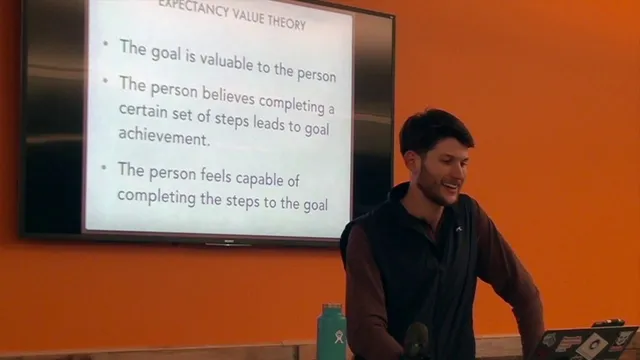
Expectancy-Value Theory becomes the main mental model for designing goals people accept and can achieve. It boils down to three questions: do users value the goal, believe their actions lead to goal achievement, and feel capable of completing the steps. “Capability” can be strengthened through usability (removing friction) and empowerment (making progress feel reachable). Examples include Opus Magnum’s comparative histograms that show how a user stacks up against others in meaningful ways, Noom’s personalized projections based on onboarding answers, Hollow Knight’s early “small win” moments that move players past obstacles, and LinkedIn’s profile-completion bar that teaches rules through visible progress.
Feedback systems translate goal pursuit into ongoing monitoring. Progress bars, skill trees, and experience points express where someone is relative to a target. The talk distinguishes goal states—target goals (moving toward a distinct future), past-performance goals (personal leaderboards and streaks), and social-comparison goals (scoreboards that motivate through comparison).
Finally, the talk treats failure as inevitable and designs around it rather than punishing it. Hollow Knight lets players regain lost resources by returning to a spirit marker; Celeste minimizes demoralization by restarting instantly; roguelikes like Ziggurat and Slay the Spire-style streak perks reward each attempt with future power. Difficulty matching and “flow” are used to keep tasks challenging but not frustrating or boring, with dynamic difficulty and onboarding-based placement tests offered as practical methods.
The closing case study direction applies these ideas to Guided Track, a coding language for behavioral scientists. Skill trees are proposed as goal-named pathways that personalize onboarding, make requirements explicit, and surface relevant learning when users hit errors or blank screens—turning failure moments into guided next steps. The overall takeaway: effective gamification is less about badges and more about engineering motivation, clarity, capability, and recovery so users keep choosing to return.
Cornell Notes
Gamification works best when it treats user engagement as a voluntary choice and designs for goal pursuit, not just points and badges. The talk uses Expectancy-Value Theory to frame three requirements: users must value the goal, believe their actions will lead to success, and feel capable of completing the steps. Game design principles—clear goals, rules, feedback, and voluntary participation—map directly onto product design through progress indicators, skill trees, and goal-state comparisons (target, past performance, and social comparison). Just as important, failure is inevitable; strong systems reduce demoralization and offer redemption, support, or a fresh start. Difficulty matching and flow help keep users challenged enough to feel progress without frustration or boredom.
Why does voluntary participation matter more than points, badges, or leaderboards?
How does Expectancy-Value Theory translate into concrete product requirements?
What’s the difference between target, past-performance, and social-comparison goal states?
How do progress signals build “capability” in practice?
What does “failure recovery” look like when gamification is designed well?
How does difficulty matching relate to motivation and flow?
Review Questions
- Which parts of Expectancy-Value Theory are most likely to break when a product adds points and badges without changing the underlying user journey?
- Pick one progress mechanic (progress bar, skill tree, streak, or leaderboard). Explain which goal-state type it supports and what feedback it provides after each action.
- Describe two different failure-recovery strategies from the examples and explain how each one reduces demoralization while still encouraging persistence.
Key Points
- 1
Gamification should be grounded in behavioral science and game design principles that shape behavior, not in copy/paste mechanics like points and badges.
- 2
Digital interfaces function as the user’s environment, so designers inevitably influence behavior through rules, feedback, and constraints.
- 3
Users engage voluntarily; sustainable gamification aligns product goals with user goals so using the app feels like a better choice than not using it.
- 4
Expectancy-Value Theory can be operationalized as: goal value, belief in action-to-outcome links, and perceived capability to complete steps.
- 5
Progress feedback should make the relationship between actions and goal movement explicit using mechanisms like progress bars, skill trees, and experience points.
- 6
Failure is inevitable; effective systems provide redemption, support, fresh starts, or future rewards so users bounce back instead of quitting.
- 7
Difficulty matching and flow help keep users motivated by keeping tasks challenging but not frustrating or boring, using onboarding placement and adaptive difficulty where needed.