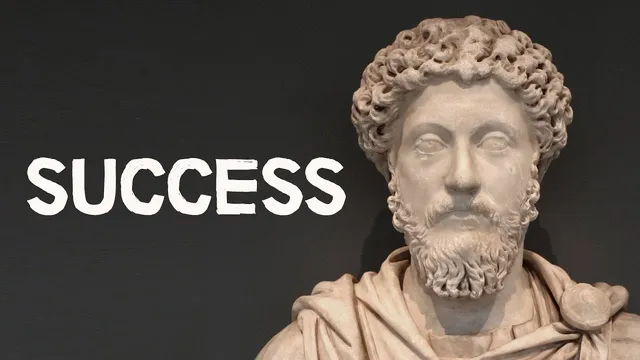
Don’t Be “Distracted by Their Darkness” | Marcus Aurelius on Success
Based on Einzelgänger's video on YouTube. If you like this content, support the original creators by watching, liking and subscribing to their content.
Stoic success is defined as living virtuously and staying aligned with nature, not as winning social approval.
Briefing
Stoic success, as framed through Marcus Aurelius’ Meditations, isn’t about winning external approval—it’s about building a life of virtue while staying mentally unhooked from other people’s negativity. The core message is practical: create conditions that protect tranquility, focus effort on what matters, and interpret setbacks in a way that keeps progress moving.
A first step is to “create your teachers” by mining the people around you for usable lessons instead of treating them as rivals. Marcus Aurelius learned from close family and even from figures beyond the human sphere, drawing specific virtues from each: generosity from his mother, discipline around education from his great-grandfather, refusal to waste time on nonsense from Diognetus, and self-control from Maximus. The takeaway is not that only formal mentors count. Anyone—family, philosophers, public figures, religious figures, even “toxic” people—can offer something admirable worth cultivating. This turns social life into a training ground: less fault-finding, more selective learning, and a shift from competing with others to benefiting from them.
The second teaching sharpens the boundary between personal direction and social noise: stop caring what others say, think, or do. Marcus’ warning—“don’t be distracted by their darkness”—targets the way skepticism, envy, and sabotage can derail momentum. Advice can be useful, but the final authority over one’s path is the self, especially when others lack the full context of one’s goals and knowledge. The emphasis is on emotional insulation: when people try to slow you down, their motives often reflect insecurity rather than your actual shortcomings.
Third comes a minimalist discipline: do what’s essential. Without a clear picture of what advances a goal, people drift, then burn out. The Stoic prescription is to ask at every moment whether an action is necessary, and to remove both unnecessary tasks and unnecessary assumptions that lead to them. The payoff is double: doing less and doing it better—more time, more calm, and less wasted energy. Even simple routines, like writing tomorrow’s tasks the night before, can create clarity that supports sleep and blocks distractions.
Fourth, success depends on changing perception of hardship. Marcus Aurelius endured plague, betrayal, and personal humiliation, yet treated these events as part of nature and beyond his control. What matters is not the event itself but the interpretation that determines whether it feels harmful. That logic aligns with cognitive behavioral therapy: emotions are tied to thoughts, so neutrality toward an undesirable event prevents the “harm” response and makes resilience easier.
Finally, following nature’s way means taking the shortest, easiest route—but not as a shortcut to comfort. It’s about speaking and acting in the healthiest, most fitting manner for one’s nature, then evaluating success ethically. Stoicism demands that personal achievement be a contribution to humanity; a “successful” act that harms others—like drug dealing—cannot count as true success. The measure is whether “good” benefits both the individual and the wider community.
Cornell Notes
Marcus Aurelius frames “success” as living virtuously and in accordance with nature, with tranquility protected from other people’s negativity. He recommends building a personal learning system by treating many people as “teachers,” extracting virtues even from unlikely sources. Progress also requires emotional boundaries: stop caring what others think or do, especially when skepticism or envy tries to derail plans. To avoid burnout, focus on what is essential, and use perception to neutralize hardship—an approach that parallels cognitive behavioral therapy’s idea that thoughts drive emotions. True success must also be ethical: it should benefit both the individual and the wider community, not just personal gain.
How does “create your teachers” change the way someone relates to other people?
Why does Marcus Aurelius advise “stop caring,” and how is that different from ignoring advice?
What does “do what’s essential” look like in daily life?
How does “change your perception” connect Stoicism to modern psychology?
What does “follow nature’s way” mean, and why is ethics part of it?
Review Questions
- Which virtues does Marcus Aurelius associate with specific people in his life, and how does that support the idea that anyone can be a “teacher”?
- How do the teachings “stop caring” and “do what’s essential” work together to protect momentum and reduce burnout?
- What is the CBT-like mechanism described here for handling setbacks, and how does it change the emotional impact of hardship?
Key Points
- 1
Stoic success is defined as living virtuously and staying aligned with nature, not as winning social approval.
- 2
Turn everyday relationships into a learning system by extracting virtues from many people, including those you might otherwise dismiss.
- 3
Maintain tranquility by limiting how much other people’s opinions and actions can steer your decisions—seek advice, but keep final authority within.
- 4
Reduce stress and drift by focusing on what is essential and cutting unnecessary tasks and assumptions.
- 5
Treat hardship as a test of perception: emotional harm depends on interpretation, not only on events.
- 6
Use “follow nature’s way” to choose actions that fit your strengths and context, while applying an ethical standard that personal success must benefit others too.