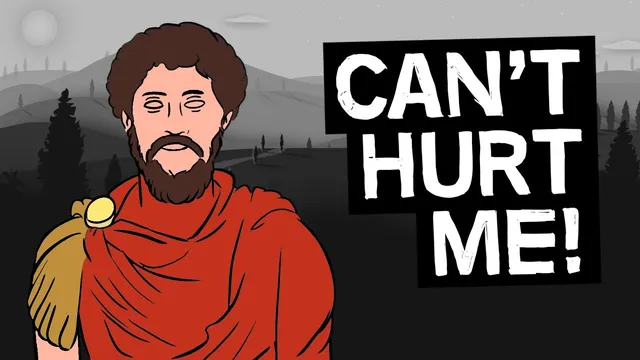
Don’t Feel Harmed, And You Haven’t Been | The Philosophy of Marcus Aurelius
Based on Einzelgänger's video on YouTube. If you like this content, support the original creators by watching, liking and subscribing to their content.
Stoic “harm” is largely produced by judgment: events trigger sensations, but beliefs determine the suffering layered on top.
Briefing
Marcus Aurelius’ core claim is stark: what people call “being harmed” is largely created by judgment, not delivered by events. Even when circumstances are severe, the mind can choose how to interpret them—so suffering becomes optional. That matters because it shifts resilience from controlling the world (often impossible) to training the inner “ruler of the soul,” the only domain fully under personal control.
Stoic thinking frames human suffering as unevenly distributed: fate’s blows land on everyone, but the degree of harm varies by person. Some people are less affected because their emotional well-being depends less on outside conditions. Others carry old wounds for years, while some shake off negative experiences and keep the present and future intact. A particularly corrosive pattern is chronic worry—pain that comes from imagining harm that hasn’t happened yet. In all these cases, the outside world isn’t the direct cause; thoughts, memories, and fantasies about events are.
Meditations offers a practical distinction between sensation and suffering. Physical pain, for instance, may be unavoidable, but resisting it and adding fearful predictions can multiply the damage. Marcus urges the mind to stay “unstirred by agitations of the flesh,” treating bodily sensations as natural while preventing judgment from labeling them “good” or “bad.” The point isn’t to deny pain, but to stop the mind from turning sensation into catastrophe. A related Stoic maxim captures the logic: pain is inevitable, suffering is optional.
The same mechanism applies beyond injuries. Insults don’t automatically harm; they harm when beliefs grant other people the power to violate one’s sense of entitlement. If someone thinks insults are intolerable, agitation follows. If instead insults are treated as part of human social life—something no one can fully control—then the emotional shock is reduced. Marcus also draws a line between what happens in the world and what happens in perception: harm is found in the “capacity to see it,” not in other minds or shifting events.
A second pillar is refusing to ask the impossible. Stoicism ties this to providence: from a Stoic view, nothing occurs outside nature’s intention, so “defects” are part of the intended order. That doesn’t mean endorsing cruelty; it means recognizing that vice, illness, death, and imperfection are built into life. When people demand a universe without shamelessness, sickness, or loss, disappointment becomes predictable because reality never complies. Lowering expectations and aligning wishes with how things actually unfold reduces the mind’s constant friction with the world.
Finally, adversity can be reinterpreted rather than merely endured. Marcus’ writings highlight nature’s charm in decay and imperfection—cracks in old walls, crooked trees, the ridges on bread—suggesting that misfortune can also carry a kind of beauty. Hardship may inspire creativity, sharpen perspective, remind people of fragility, and increase compassion. The Stoic conclusion is not that fate can be controlled, but that Fortuna cannot harm unless the mind grants permission. People can’t stop others from hating, yet they can practice equanimity, treating misfortune as harmful only when judgment turns it into suffering. The result is the repeated instruction: choose not to be harmed, and the felt harm won’t take root.
Cornell Notes
Stoicism, through Marcus Aurelius, treats “harm” as something the mind manufactures through judgment rather than something events deliver directly. Physical pain and other unpleasant experiences may be inevitable, but extra suffering grows when people resist sensations, label them as intolerable, or fear that they will worsen forever. The philosophy also urges people to stop asking the impossible—because illness, death, vice, and imperfection are part of nature’s order (providence). By lowering expectations, aligning beliefs with reality, and practicing equanimity, people can reduce vulnerability to Fortuna’s unpredictability. The practical takeaway is that resilience depends on what is within control: perception, beliefs, and the stance toward what happens.
What’s the Stoic difference between sensation and suffering, and why does it matter?
How does Stoicism explain why insults or other social slights can feel so damaging?
Why does Stoicism emphasize “asking the impossible,” and what does it have to do with resilience?
What does “providence” mean in this Stoic framework, and how does it change the interpretation of “defects”?
How does chronic worry fit into the Stoic account of harm?
If fate can’t be controlled, what can be controlled according to Marcus Aurelius?
Review Questions
- How does Stoicism distinguish between pain as a sensation and suffering as a judgment, and what mental steps reduce suffering?
- What does it mean to “ask the impossible,” and how does providence reshape expectations about illness, death, and vice?
- In what ways do beliefs about entitlement or control change how insults and other social harms are experienced?
Key Points
- 1
Stoic “harm” is largely produced by judgment: events trigger sensations, but beliefs determine the suffering layered on top.
- 2
Physical pain may be unavoidable, yet resisting it and adding fearful interpretations can multiply distress beyond the original sensation.
- 3
Chronic worry is treated as harm without an event—thoughts, memories, and fantasies can generate suffering even when nothing has happened.
- 4
Different people experience the same circumstances differently because emotional well-being varies with how dependent it is on external conditions.
- 5
Resilience grows by stopping demands for a universe that never includes sickness, insult, death, or vice—an approach Stoics call refusing to ask the impossible.
- 6
Providence frames so-called defects as part of nature’s intended order, making disappointment less likely when expectations match reality.
- 7
People can’t control others’ actions, but they can practice equanimity and choose how to position themselves toward Fortuna’s unpredictability.