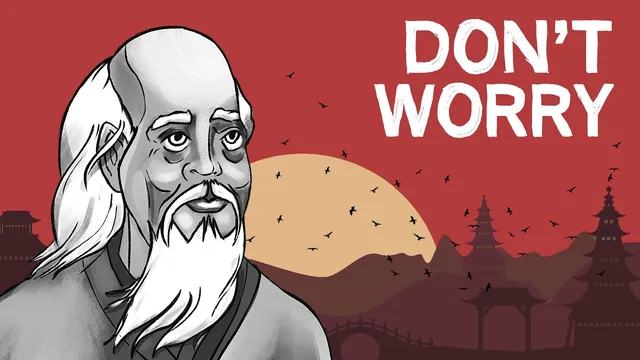
Don’t Worry, Everything is Out of Control | Taoist Antidotes for an Insane, Stressful World
Based on Einzelgänger's video on YouTube. If you like this content, support the original creators by watching, liking and subscribing to their content.
Taoist “forcing” increases stress by interfering with natural processes and trying to control fate and circumstances that can’t be controlled.
Briefing
Stress and burnout are treated as symptoms of a deeper habit: trying to force life, control outcomes, and chase happiness through external targets. Taoist texts—especially the Tao Te Ching, Zhuangzi, and Liezi—offer a consistent antidote: stop interfering with what naturally unfolds, loosen attachments to status and approval, and redirect attention inward. The payoff is not just calmer feelings, but a different way of living—one that reduces worry because it stops treating the uncontrollable as something that must be managed.
From a Taoist perspective, forcing things is the root problem. People push against nature by trying to accelerate growth, engineer results, and dominate fate and circumstances that cannot be controlled. Zhuangzi’s “do nothing” is not laziness; it’s restraint from interference. The transcript uses a cautionary example tied to wu-wei (effortless action): a farmer pulls crops to make them grow faster, only to damage them and fail to improve outcomes. The lesson is practical—when interference replaces trust in natural processes, stress rises, progress can be sabotaged, and the mind stays stuck on what should have been left alone. Letting things run their course also reframes setbacks: bad luck may become a blessing, and outcomes that feel like curses can later look different.
A second antidote targets the pursuit of happiness. Zhuangzi observes that people chase happiness so intensely that their lives become grim, and the chase itself creates a lose-lose pattern: exhaustion without guaranteed results. Wealth, fame, and power may feel rewarding at first, but they bring new fears—especially the fear of losing what has been gained. The transcript quotes Zhuangzi’s warning that clinging to revenues, distinction, or power keeps people afraid while they hold on, and grieved when they let go. Contentment becomes possible when well-being is no longer treated as a prize to obtain; happiness is enjoyed more when the need to secure it is released.
Liezi’s contribution shifts the focus to “emptiness.” Instead of seeking praise and validation, Liezi argues that attachment to credit and approval increases stress. Much of what earns praise depends on circumstances and traits outside a person’s control—so the “accomplishment” is partly borrowed from genetics, timing, and social standards. The transcript illustrates this with Instagram models, whose recognition is tied heavily to appearance and beauty norms. Seeing the emptiness of such pursuits—recognizing that they carry value mainly through attribution—supports stillness and peace.
Other antidotes reinforce the same inward turn. Lao Tzu and Zhuangzi warn against stretching beyond capacity, likening overreaching to standing on tiptoes: it looks tall but cannot hold steady. Zhuangzi also distinguishes between a “law within himself” and one governed by external approval; when mood depends on outside events, worry becomes automatic. Finally, the transcript addresses fate directly: worrying about fate drains power, as shown through an archer who performs well in practice but falters when a prize becomes the focus. Liezi’s story about fearing the sky falling ends with a pragmatic conclusion—if the worst happens, it’s beyond control; if it doesn’t, there’s nothing to fear. The central Taoist message is clear: reduce worry by letting go of control, loosening external attachments, and treating the mind—not the world—as the place where steadiness is built.
Cornell Notes
Taoist teachings treat stress as a consequence of forcing life—trying to control nature, outcomes, and fate, while clinging to external sources of happiness, praise, and approval. Zhuangzi’s “leaving things alone” (wu-wei) argues that interference often backfires, as in the example of a farmer damaging crops while trying to make them grow faster. Zhuangzi also links misery to chasing happiness as a prize; wealth, fame, and power create fear of loss and grief when attachment loosens. Liezi adds that seeking credit and validation is inherently stressful because many “achievements” depend on factors outside a person’s control, making them “empty.” The practical direction across these texts is inward: cultivate stillness, accept uncertainty, and stop standing on tiptoes for control that can’t be held.
Why does Taoism treat “forcing” as a driver of stress rather than a solution?
How does the pursuit of happiness create a “lose-lose” cycle in Zhuangzi’s view?
What does “seeing emptiness” mean, and why does it reduce worry?
What is the “inner law” lesson, and how does it relate to mood and worry?
Why does Taoism say worrying about fate is the real problem, not fate itself?
Review Questions
- Which forms of “forcing” in daily life most resemble the farmer example, and what would “leaving things alone” look like instead?
- How do Zhuangzi’s ideas about chasing happiness change the way you interpret setbacks or delayed results?
- Pick one external attachment (praise, wealth, approval, winning). What factors outside your control shape it, according to Liezi’s logic of emptiness?
Key Points
- 1
Taoist “forcing” increases stress by interfering with natural processes and trying to control fate and circumstances that can’t be controlled.
- 2
Wu-wei (“effortless action”) is framed as non-interference—attempts to force outcomes often backfire and can even damage progress.
- 3
Chasing happiness as a prize creates exhaustion and fear of loss; contentment grows when well-being is no longer treated as something to secure externally.
- 4
Praise and validation are described as “empty” because many outcomes depend on circumstances and traits outside a person’s control.
- 5
Overreaching beyond capacity leads to instability; standing on tiptoes symbolizes the strain of trying to force control.
- 6
Mood becomes a worry engine when it depends on external approval; shifting attention inward supports steadier contentment.
- 7
Worrying about fate drains power because it doesn’t change uncertain outcomes; acceptance reduces wasted mental effort.