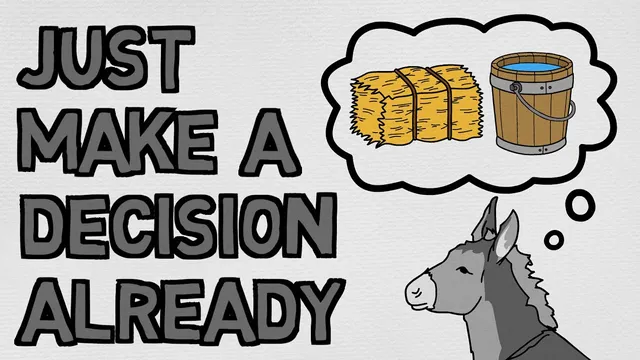
Don't Be a Donkey - Make a Decision
Based on Better Than Yesterday's video on YouTube. If you like this content, support the original creators by watching, liking and subscribing to their content.
When two options look equally good, indecision is often the biggest risk—action creates information.
Briefing
A donkey dies because it can’t choose between two equally distant options—water and hay—despite having the ability to take both by going back and forth. That parable becomes a blunt lesson for everyday life: when choices feel equally compelling, paralysis is the real danger, not picking “wrong.” The donkey spends its final moments analyzing which option is better instead of acting, and the same pattern shows up when people repeatedly cycle through possibilities like college majors, dating decisions, career paths, or where to live.
The core prescription is simple: make a decision, then adjust later. Many life decisions aren’t truly permanent, the argument goes, because people can change direction once they learn what they actually prefer. Someone trying to earn extra money might consider stock trading, real estate, or an online store. If each option looks equally attractive, indecision turns into endless re-checking—“Stocks, real estate, online store” repeated without commitment. The alternative is to pick one path and test it. If stock investing doesn’t fit after a year, the person can switch to real estate or another approach. The worst-case outcome isn’t irreversible damage; it’s gaining information about personal fit.
Indecision isn’t the only trap. Another failure mode is trying to commit to everything at once—working on five business opportunities simultaneously, for example—so progress stalls because attention gets scattered. The message borrows a familiar metaphor: chasing two rabbits means catching neither. The takeaway is that momentum requires sequencing: choose one “rabbit” first, then pursue the next once the first is underway.
Time also factors into the advice. If someone is in their 20s or 30s, they likely have decades to experiment, so the pressure to get it perfect immediately is misplaced. The argument acknowledges that people rarely have all the information needed for a flawless decision. Still, the best practical approach is to gather what can be learned, choose one direction, and commit long enough to evaluate it—often framed as about a year for career or skill-building. Mastery and feedback matter: learning the ins and outs of a chosen path reveals whether it’s genuinely right. If it isn’t, that’s not failure; it’s clarity about what doesn’t work.
In the end, the parable’s warning is direct: don’t be a donkey. Acting beats overanalyzing, and committing beats scattering—because learning comes from trying, not from endless comparison.
Cornell Notes
A donkey dies because it can’t decide between two equally distant needs (water and hay) and never takes action. That story mirrors everyday indecision, where people repeatedly compare options—like career paths or side hustles—without committing, often out of fear of choosing wrong. The recommended fix is to pick one option, try it for a meaningful stretch (often about a year), and then change course based on what’s learned. Wrong choices are treated as learning opportunities, not permanent mistakes. Progress also requires focus: chasing too many “rabbits” at once prevents catching any.
Why does the donkey’s situation matter beyond the literal story?
What’s the practical alternative to overanalyzing choices that seem equally compelling?
How does the transcript redefine “wrong choices”?
What’s the difference between indecision and trying to do everything at once?
Why does time reduce pressure to make the “perfect” decision immediately?
Review Questions
- What specific behavior causes the donkey’s failure, and how does that map to human indecision?
- Why does the transcript recommend committing for a longer period (e.g., a year) instead of constantly switching?
- How does the “two rabbits” metaphor support the idea that focus beats trying to do everything at once?
Key Points
- 1
When two options look equally good, indecision is often the biggest risk—action creates information.
- 2
Many life choices aren’t permanent; switching later is a normal part of learning what fits.
- 3
Treat wrong choices as data: they reveal preferences and help narrow future decisions.
- 4
Focus beats scattering—working on multiple paths at once can stall progress in all of them.
- 5
Commit to one direction long enough to evaluate it (the transcript suggests around a year).
- 6
Perfect information is rarely available; the best approach is to choose with the knowledge at hand and adjust after feedback.
- 7
If a chosen path doesn’t work, changing course is not failure—it’s re-adjusting your course based on what you learn.