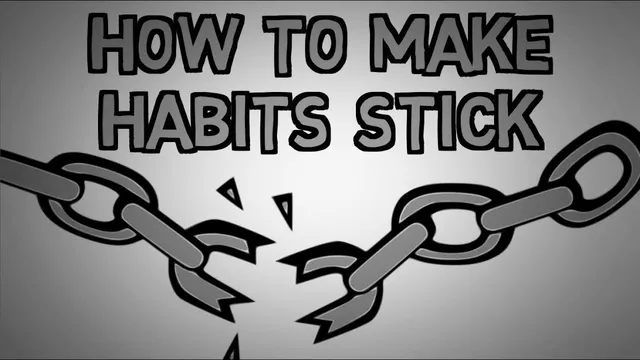
Don't Break The Chain - Make Habits Stick
Based on Better Than Yesterday's video on YouTube. If you like this content, support the original creators by watching, liking and subscribing to their content.
Use a visible streak system (calendar or app) so daily completion is easy to track and hard to ignore.
Briefing
Sticking to a new habit often fails not because people lack motivation at the start, but because they miss a day and then lose momentum. The “don’t break the chain” method tackles that failure point directly: track daily completion on a calendar (or app) and treat the only rule as keeping the streak alive. The visual chain—built by marking an X each day the habit is done—turns consistency into something you can see grow, making it harder to rationalize skipping.
The approach traces back to comedian Jerry Seinfeld, who advised an aspiring comedian to write new jokes every day, regardless of quality. The key wasn’t inspiration; it was a system. Seinfeld’s prescription was simple: put a large wall calendar where it’s always visible, and after each day’s work, mark it with a big X. Over time, the X marks form a chain. The habit’s success then hinges on one job: don’t break the chain. That single constraint reframes the goal from “be perfect” to “show up daily,” which is especially powerful once initial enthusiasm fades.
Practical examples make the method concrete. The creator describes inconsistent piano practice—playing for hours one day, then going a week without touching the instrument. The fix was to set a daily minimum: play for 30 minutes every day, no matter what. With the chain method reinforcing the streak, the habit became regular, and after the 30-minute mark, most days continued anyway. The transcript emphasizes why this works: mental resistance rises when the task feels open-ended or too large (“two hours or more”), but an easy time limit lowers the barrier to starting. Even when the full session doesn’t happen, the minimum still counts, and the daily accumulation beats occasional bursts.
The same logic applies beyond music. Short, frequent practice—like studying in smaller blocks—tends to improve retention compared with infrequent long sessions. For fitness, going to the gym for 20 minutes daily is framed as more sustainable than one weekly two-hour workout, reducing burnout and injury risk that can come from inconsistency. The method also includes a pacing warning: start with no more than two or three habits at once to avoid overwhelm.
Timing matters too. The transcript cites an average of 66 days for a behavior to become a habit, with some taking less and others stretching up to a year depending on the effort required. Consistency is what moves the behavior toward automaticity.
For people who don’t want a wall calendar, the transcript recommends habit-tracking apps that preserve the same “chain” concept. For iPhone users, it suggests “Momentum,” which tracks up to three habits on the free version. For Android users, it recommends “Habithub,” which tracks up to five habits for free and includes daily reminders to check in. The takeaway is straightforward: whether using paper or a phone, the system only works if the streak stays unbroken—don’t break the chain.
Cornell Notes
The “don’t break the chain” method turns habit-building into a visible streak. Inspired by Jerry Seinfeld’s advice to write jokes daily, it uses a large calendar (or an app) where each completed day earns an X, forming a growing chain. The central rule is simple: don’t break the chain—so the goal becomes showing up daily rather than relying on motivation. Setting a small, non-negotiable minimum (like 30 minutes of piano) lowers the mental barrier to starting, and even partial completion still counts. Over time, small daily improvements accumulate into larger gains, and the transcript notes that habits often take about 66 days to form (sometimes longer).
Why does motivation fade after the first few days of a new habit?
How does the “don’t break the chain” method work in practice?
What role does setting an easy time limit play?
Why are short, frequent sessions often better than occasional long ones?
How many habits should someone start at once, and how long does habit formation take?
What digital tools preserve the “chain” idea without a wall calendar?
Review Questions
- What is the single rule at the heart of the “don’t break the chain” method, and how does a visible streak change behavior?
- How does choosing a small daily minimum (like 30 minutes) affect the likelihood of starting and continuing a habit?
- Why does the transcript recommend limiting the number of simultaneous habits, and what timeline does it give for habit formation?
Key Points
- 1
Use a visible streak system (calendar or app) so daily completion is easy to track and hard to ignore.
- 2
Make the goal “don’t break the chain,” shifting focus from motivation to consistency.
- 3
Set a small, non-negotiable daily minimum to reduce mental resistance and make starting easier.
- 4
Prefer short, frequent sessions over occasional long ones to lower burnout and improve retention.
- 5
Start with only two or three habits at once to avoid overwhelm and early dropout.
- 6
Expect habit formation to take time—about 66 days on average, sometimes up to a year—so plan for persistence rather than quick results.
- 7
If you don’t want a wall calendar, use a chain-tracking app such as Momentum (iPhone) or Habithub (Android).