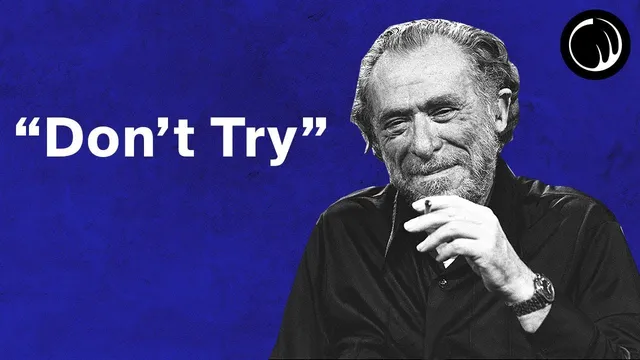
Don't Try - The Philosophy of Charles Bukowski
Based on Pursuit of Wonder's video on YouTube. If you like this content, support the original creators by watching, liking and subscribing to their content.
Bukowski’s late success underscores that creative recognition can arrive decades after persistence begins.
Briefing
Charles Bukowski’s life runs on a paradox: years of relentless writing and eventual literary success—yet a gravestone message that reads “Don’t Try.” The tension matters because it reframes “purpose” and creative drive as something less like a goal you force and more like a compulsion you recognize. Bukowski’s career suggests that the most durable creative work doesn’t come from chasing approval, money, or status, but from writing that feels inevitable—painful, stubborn, and personal enough that it keeps happening even when success refuses to arrive.
Bukowski’s early years were marked by abuse and isolation. His father beat him regularly starting at age six, and Bukowski later described that education in pain as “pain without reason.” He was also ridiculed for being an immigrant from Germany, ostracized at school, and further withdrawn by severe acne that covered his face. Those experiences shaped a worldview that treated suffering as raw material rather than a detour—something that could be turned into language once he found the nerve to express himself.
In his twenties, Bukowski quit college after about two years and tried to become a professional writer, taking blue-collar jobs while producing hundreds of short stories. Only a couple were published, and they brought little success. After another period of disappointment, he largely stopped writing, then returned to blue-collar work for years. A near-death moment arrived in 1955, when a serious bleeding ulcer nearly killed him. Soon after, he quit his post office job and began writing again—only to return to the post office when publishing still didn’t pay. This time, he wrote before his shifts, continuing for years while pieces appeared in underground magazines. The breakthrough came late: not until his fifties, after a publisher agreed to fund his work and an audience finally caught up with the voice he’d refused to dilute.
That long delay is central to the “Don’t Try” idea. Bukowski’s own letter to publisher William Packard warns against writing for the wrong reasons—fame, money, or sex—arguing that when writing is right, it isn’t chosen like a hobby; it “chooses you.” He compares it to picking a favorite color: in low-stakes choices, people can declare preferences easily, but deeper drives aren’t fully controllable. Purpose, in this view, isn’t manufactured through effort; it’s recognized when something aches to come out.
So “Don’t Try” doesn’t mean giving up. It means refusing to try to be someone else, or to force desire. Bukowski’s approach was to keep writing without modifying his voice to satisfy external demands, even when rejection and hardship were constant. The practical takeaway is conditional: if writing feels like a compulsion—if not doing it is more frightening than enduring the process—then the right response is to commit fully. If the work doesn’t feel worth the pain, then the “try” that comes from obligation may never become real purpose.
Cornell Notes
Bukowski’s career turns a common motivational slogan upside down. After years of abuse, rejection, and financial struggle, he kept writing—often while working at the post office—until his work finally found an audience in his fifties. Yet his gravestone reads “Don’t Try,” a line that matches his belief that writing shouldn’t be pursued for fame, money, or status. In a letter to William Packard, he argues that writing works best when it “chooses you,” like an involuntary preference rather than a deliberate choice. The message is not to quit, but to stop forcing a self or a desire that isn’t truly yours.
Why does Bukowski’s gravestone message “Don’t Try” feel at odds with his life story?
What early experiences shaped Bukowski’s outlook on pain and writing?
How did Bukowski’s writing attempts unfold before success arrived?
What does Bukowski mean by writing “choosing you” rather than being chosen?
How does “Don’t Try” function as advice about purpose and creative drive?
Review Questions
- What specific life events delayed Bukowski’s success, and how did he keep writing during those delays?
- According to Bukowski’s letter to William Packard, what are the “wrong reasons” for writing, and why does that matter for creative authenticity?
- How does the favorite-color analogy support the claim that purpose is not always a deliberate choice?
Key Points
- 1
Bukowski’s late success underscores that creative recognition can arrive decades after persistence begins.
- 2
His childhood abuse and social isolation helped form a worldview where pain could become language rather than silence.
- 3
Bukowski’s early publishing failures didn’t stop him; he kept writing even while working the post office, using pre-shift time.
- 4
His “Don’t Try” message targets forcing writing for external rewards like fame or money, not the act of writing itself.
- 5
In a letter to William Packard, Bukowski argues that writing works best when it feels involuntary—“writing chose you.”
- 6
Purpose is portrayed as something felt and recognized, not manufactured through willpower or performance.
- 7
The advice is conditional: if not doing the work is more painful than the process, then full commitment is warranted.