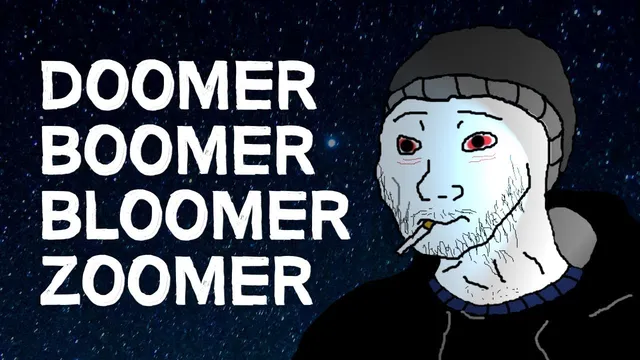
Doomer Boomer Bloomer & Zoomer | Who Are They?
Based on Einzelgänger's video on YouTube. If you like this content, support the original creators by watching, liking and subscribing to their content.
“Doomer, Boomer, Bloomer, Zoomer” are treated as meme-based lifestyle patterns shaped by generational internet exposure, not fixed personality types.
Briefing
The “Doomer, Boomer, Bloomer & Zoomer” meme framework reframes generational stereotypes as lifestyle patterns shaped by the internet—especially how each cohort processes information, suffering, and technology. The core claim is that these labels aren’t fixed personality types; they’re internet-born ways of describing how different age groups tend to live, cope, and interpret the world.
“Doomer” is portrayed as a modern, “enlightened” version of the “involuntary celibate” archetype—someone steeped in negativity and isolation, marked by Weltschmerz, or “world pain”: a deep melancholy triggered by perceived flaws in the world. The transcript links this mindset to a kind of distorted “enlightenment,” where the person doesn’t seek long-term solutions and instead leans on short-term relief through drugs, sensory stimulation, video games, and pornography. Doomers are also described as leaning toward a cynical, almost masochistic relationship with their own misery—rejecting the idea that there’s an exit from the cycle of suffering.
“Boomer” is treated less as an age and more as a stance: a stubborn inability to accept that the world has changed. The transcript ties the meme to the baby boomer generation (born 1946–1964), but argues the label can apply to younger people too. Boomer behavior is characterized as living in the past, offering outdated advice, and being “blind” to the harsh realities of life—an attitude the transcript contrasts with younger cohorts raised on the internet’s constant flow of information.
“Bloomer” is presented as the most “positive” of the four meme lifestyles. Unlike the Doomer, Bloomer’s optimism isn’t rooted in ignorance; it comes from having learned hard truths about life and still choosing to live well. The Bloomer mindset is described as problem-focused and solution-oriented—turning negativity into positivity, drawing inspiration from obstacles, and prioritizing love and constructive action over hatred.
“Zoomer” is traced to the late-1990s-and-up generation (often overlapping with Gen Z), shaped by early and intensive internet exposure. The transcript emphasizes digital habits—video games like Fortnite and Minecraft, plus strong interest in cryptocurrencies—and suggests Zoomers are more vulnerable to internet addiction, pornography, and overstimulation. It also proposes a pathway from Zoomer to Doomer when someone can’t withstand the “poison” of information overload. As a counterforce, the transcript points to movements like No Fap and frames Bloomer culture as another example of “anti-tech excess” moderation.
Overall, the meme taxonomy functions as a generational coping map: Doomers spiral into despair and short-term escape, Boomers cling to outdated assumptions, Bloomers practice constructive moderation, and Zoomers navigate a high-stimulation digital world that can either energize or corrode them.
Cornell Notes
The transcript treats “Doomer, Boomer, Bloomer, Zoomer” as meme-based lifestyle patterns tied to generational internet exposure, not fixed personality types. Doomers are depicted as isolated and trapped in Weltschmerz (“world pain”), seeking relief through drugs, sensory stimulation, and porn rather than long-term solutions. Boomers are defined by an inability to accept that the world has changed, often giving outdated advice and living in the past. Bloomers are framed as the constructive alternative: they know hard truths but convert negativity into problem-solving and optimism. Zoomers, raised on constant internet input, are portrayed as more prone to addiction and overstimulation, sometimes drifting toward Doomer-like despair; counter-movements like No Fap are offered as resistance.
What does Weltschmerz mean in this framework, and how does it shape “Doomer” behavior?
Why is “Boomer” described as a stance rather than a strict age group?
What distinguishes “Bloomer” from “Doomer” and “Boomer”?
How does the transcript connect “Zoomer” culture to addiction risk?
What role do counter-movements like No Fap play in the overall generational story?
Review Questions
- Which coping mechanisms does the transcript associate with Doomers, and why are they framed as short-term rather than transformative?
- What specific behaviors or attitudes define Boomers and Bloomers in this meme system?
- How does early internet exposure function as both a benefit and a risk for Zoomers in the transcript’s model?
Key Points
- 1
“Doomer, Boomer, Bloomer, Zoomer” are treated as meme-based lifestyle patterns shaped by generational internet exposure, not fixed personality types.
- 2
Doomers are linked to Weltschmerz (“world pain”)—a deep melancholy about life’s flaws—paired with isolation and short-term relief through drugs, games, and pornography.
- 3
Boomers are defined by an inability to accept that the world has changed, often resulting in outdated advice and a past-focused mindset.
- 4
Bloomers are portrayed as the constructive alternative: they know hard truths but convert negativity into solutions, optimism, and prosocial action.
- 5
Zoomers are described as late-1990s-and-up internet natives whose early exposure increases susceptibility to addiction and overstimulation.
- 6
The transcript suggests a possible drift from Zoomer to Doomer when information overload becomes unmanageable.
- 7
Counter-movements like No Fap are offered as examples of moderation culture pushing back against digital excess.