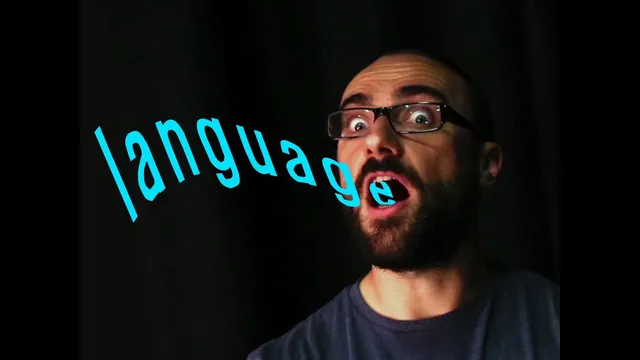
Dord.
Based on Vsauce's video on YouTube. If you like this content, support the original creators by watching, liking and subscribing to their content.
A Webster’s dictionary typo turned “D” (density) into the accidental word “dord,” which lasted thirteen years before being removed.
Briefing
A single dictionary typo—“D” for density misread as a word—created “dord,” an accidental entry that survived for thirteen years before being revoked. The episode sets up a broader theme: English word forms and meanings often arise from quirks, not logic, and those quirks can be tested, gamed, and even exploited.
The transcript then pivots to why “first” and “second” don’t follow the expected pattern of “oneth” and “twoth.” The answer lies in English’s “collateral adjectives”: adjective forms that come from different roots than the nouns they describe. “Friendly” and “poetic” follow one kind of derivation, while “lunar” comes from a different root than “moon,” and “apian” from “bee.” Even when multiple adjective forms exist for the same noun—like “fatherly” versus “paternal”—English keeps both, often with different shades of origin.
From there, the discussion tackles rhyme. “Orange doesn’t rhyme with anything” is treated as a myth that depends on pronunciation and accent. Perfect rhymes require matching stressed vowel sounds and everything after them, like “tickle” and “pickle.” Even so, “orange” does have perfect rhymes—just with obscure words such as “blorenge” (a hill in Wales)—and “silver” has a perfect rhyme in “chilver,” a female lamb. The transcript also notes that many words seem unrhymable at first glance, but rhyme counts shift dramatically when you consider words of different lengths and accents.
The wordplay escalates into “identical rhymes,” where the consonant sound before the final stressed vowel also matches. Examples include “sun” and “gun,” and “gun” with “begun.” It then introduces “police police…” as a grammatical loop: repeating “police” in multiples of three preserves a coherent sentence structure, culminating in a tongue-twisting line that can be extended (with practical limits like what fits on Twitter).
Several other linguistic tricks follow. “Jamais vu” is framed as the reverse of déjà vu—familiarity that suddenly feels new. “Gramograms” are described as letter-name sounds that resemble words. “Phantonyms” are words that look like they mean one thing but actually mean another, such as “enervate” (to drain energy) and “noisome” (offensive smell). The transcript also recounts “esquivalience,” a dictionary “copyright trap” allegedly designed to catch copycats; it argues that facts themselves can’t be copyrighted, while the selection and arrangement of information can be.
Finally, the discussion lands on irony—especially the confusion around Alanis Morissette’s “Ironic.” The transcript distinguishes situational irony (a reversal of expectations) from dramatic irony, where the audience understands something the characters don’t. It argues Morissette’s lyrics fit dramatic irony more than the situational kind fans often debate, reframing the song’s “cruddy scenarios” as a structured mismatch between what life knows and what people think they need. The closing note ties the wordplay back to real-world science trivia: dog origins traced to domestication events in Southwestern China, delivered with the same playful, pun-friendly tone that runs through the whole segment.
Cornell Notes
A dictionary typo created “dord,” an accidental word for density that stayed in Webster’s for thirteen years before being removed. The transcript uses that mistake to explore how English forms adjectives from different roots (“collateral adjectives”), why “first/second” don’t follow regular counting patterns, and why the claim that “orange has no rhymes” depends on pronunciation. It then deepens rhyme theory with “perfect rhymes” and “identical rhymes,” and shows how repetition can even produce grammatically valid phrases like “police police police…” in multiples of three. The segment also covers phantonyms, dictionary “copyright traps” like “esquivalience,” and a debate about irony in Alanis Morissette’s “Ironic,” arguing it’s mainly dramatic irony rather than situational irony.
Why do “first” and “second” break the pattern suggested by “third” and “fifth”?
What makes a rhyme “perfect,” and how does that change the “orange” myth?
How do “identical rhymes” differ from “perfect rhymes”?
What is the “police police…” sentence trick, and why is it grammatically notable?
What are phantonyms, and how do “enervate” and “noisome” illustrate them?
Why does the transcript argue Alanis Morissette’s “Ironic” is mostly dramatic irony?
Review Questions
- What role do “collateral adjectives” play in explaining irregular forms like “first” and “second”?
- Give one example of a perfect rhyme and one example of an identical rhyme, and state what extra condition identical rhymes satisfy.
- How does the transcript distinguish situational irony from dramatic irony, using Morissette’s “Ironic” as the test case?
Key Points
- 1
A Webster’s dictionary typo turned “D” (density) into the accidental word “dord,” which lasted thirteen years before being removed.
- 2
English irregular ordinals can be understood through historical root differences, reflected in “collateral adjectives” like “lunar” (moon → lunar) and “paternal” (father → paternal).
- 3
The claim that “orange has no rhymes” depends on pronunciation and accent; perfect rhymes exist but may be extremely obscure (e.g., “blorenge”).
- 4
Perfect rhymes match the final stressed vowel and everything after; identical rhymes add a matching consonant sound before that stressed vowel.
- 5
Rhyme and wordplay can be extended into grammar tricks, such as repeating “police” in multiples of three to preserve a coherent sentence pattern.
- 6
“Phantonyms” are misleading-looking words whose meanings don’t match their apparent sound or spelling (e.g., “enervate” and “noisome”).
- 7
Copyright-trap entries like “esquivalience” raise a legal distinction: facts aren’t protected, but the selection/arrangement of information may be.