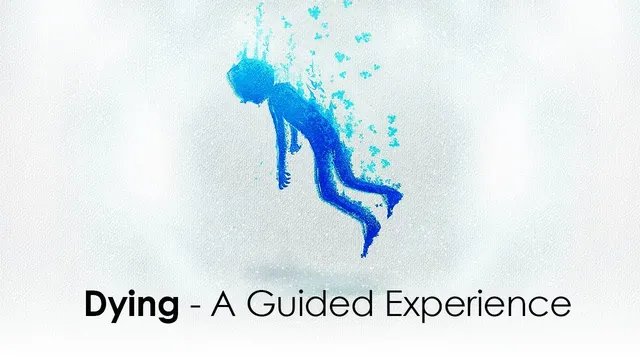
Dying - A Guided Experience
Based on Pursuit of Wonder's video on YouTube. If you like this content, support the original creators by watching, liking and subscribing to their content.
The narrator’s “life review” is portrayed as emotionally driven rather than orderly, surfacing regret, sensory imaginings, and missed chances instead of a clear timeline.
Briefing
A near-death experience turns a familiar cliché—“your whole life flashes before your eyes”—into something less like a movie montage and more like a raw, emotionally charged reckoning. As the narrator bleeds out on the side of the road, the mind doesn’t deliver an orderly recap of events so much as a rapid sweep of feelings: regret over people never told how they felt, chances never taken, time wasted on self-hatred and unhappiness, and even mundane sensory losses—sunsets, brushing teeth, the air on skin—that suddenly feel irreplaceable.
What follows isn’t only sadness. The narrator describes a shift from panic and self-judgment into a kind of stunned clarity when consciousness “ceases speed,” like a camera flash that stops everything. In that pause, the usual inner critic dissolves. Thinking continues, but without the rational, judgmental overlay that had shaped a lifetime. The experience reframes identity: the narrator distinguishes between a conscious mind and an unconscious mind, then argues that the self isn’t simply one or the other. Instead, the “puppet” and “puppeteer” metaphor becomes central—consciousness is not the sole controller, and the unconscious isn’t the enemy. Both are part of a single system that generates the very tensions the narrator spent a lifetime trying to escape.
That realization lands with a paradoxical calm. Earlier regrets—about having “ruined” life—give way to indifference, not because the narrator feels better in a conventional sense, but because the self no longer believes it can defend itself. The “strings” of personality and behavior are described as biologically written: in DNA, and even “in the DNA of my DNA.” Pulling against those strings, the narrator says, was never a route to freedom; it was the mechanism of the struggle itself. The lifelong effort to become happier or better is recast as part of the “show,” a dance rather than a mistake.
The most consequential claim is that regret depends on the belief that the self chose how things went. In this final framing, the narrator argues that choice was far more limited than it felt. Identity, fears, anxieties, and habits arise from factors the person didn’t select—parents, brain wiring, bodily conditions—so the narrator concludes that “there was nothing to regret” in the usual sense. The closing note is acceptance: the same force that produced misery becomes the source of self-discovery, and the final moment is described as both surrender and clarity—finding peace not by rewriting the past, but by understanding what the self actually is.
In short, the experience replaces a dramatic life review with an existential audit: regret, then dissolution of the inner judge, then a new model of selfhood where unconscious drives and conscious awareness are intertwined rather than at war. The significance lies in how it turns self-loathing into a systems problem—one that can be met with acceptance rather than combat, even at the edge of death.
Cornell Notes
The narrator’s near-death moment produces a “life review” that feels less like a fast, orderly montage and more like an emotional sweep of regret, missed connections, and wasted time spent hating oneself. As consciousness abruptly “ceases speed,” judgment collapses and thinking continues without the usual critical overlay. Identity is reframed through a puppet-and-puppeteer metaphor: the self is not just the conscious mind fighting an unconscious enemy, but an integrated system where both parts generate the tensions the narrator tried to escape. The narrator concludes that regret assumes choice where there may have been none—personality and behavior are shaped by DNA and inherited wiring. Acceptance becomes the final insight: the same “strings” that fueled misery also enable self-discovery.
Why doesn’t the narrator experience the life review as a neat sequence of memories?
What changes when the narrator describes a sudden “pause” like a camera flash?
How does the puppet-and-puppeteer metaphor reshape the narrator’s idea of self?
What role do DNA and inherited wiring play in the narrator’s rejection of regret?
Why does the narrator say the lifelong struggle was still part of the “show” or “dance”?
Review Questions
- How does the narrator distinguish between an emotional life review and a chronological memory montage?
- What does the narrator claim changes about thinking after the “camera flash” pause?
- According to the puppet-and-puppeteer metaphor, why does the narrator argue that self-loathing and regret may be based on a mistaken model of choice?
Key Points
- 1
The narrator’s “life review” is portrayed as emotionally driven rather than orderly, surfacing regret, sensory imaginings, and missed chances instead of a clear timeline.
- 2
A sudden cessation-like pause marks the shift from self-judgment to a state where thinking continues without the usual critical overlay.
- 3
Identity is reframed as an integrated system: conscious and unconscious processes are not separate enemies but interdependent parts of one self.
- 4
The puppet-and-puppeteer metaphor is used to argue that the self both experiences and generates the “strings” of behavior and desire.
- 5
The narrator links the “strings” to inherited biology, describing them as written in DNA and beyond, limiting the role of personal choice.
- 6
Regret is challenged on the grounds that it assumes control over outcomes that the narrator believes were not actually chosen.
- 7
Acceptance becomes the final insight: the same forces associated with misery are also described as the source of self-discovery.