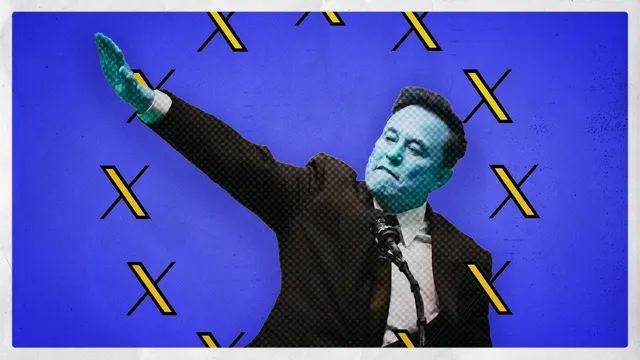
Elon's Plan For Europe
Based on Second Thought's video on YouTube. If you like this content, support the original creators by watching, liking and subscribing to their content.
Musk’s European political activity is portrayed as aligning with far-right parties through relationships and public support, including AfD, Viktor Orban’s Hungary, and Italy’s Georgia Meloni.
Briefing
Elon Musk’s growing involvement in European politics is framed as a high-stakes effort to help far-right forces gain power—while also weakening European regulations that could restrain his companies. The central concern is not just that Musk is courting right-wing leaders, but that his influence aligns with a broader push: make immigration, LGBTQ rights, and climate policy central battlegrounds, and use U.S.-style political leverage to pressure European governments into backing off.
A key thread ties Musk’s outreach to specific European far-right figures and parties. Musk has publicly supported Germany’s Alternative für Deutschland (AfD) in the context of opposition to campaigns aiding migrants arriving across the Mediterranean. He has also built relationships with Hungary’s Viktor Orbán, described as leading an “illiberal” government closer to Russia, and with Italy’s Prime Minister Georgia Meloni, whose party is traced to fascist roots. The argument extends to the UK, where Musk’s activity is portrayed as intensifying after Sir Keir Starmer and the Labour Party returned to power—through direct criticism and conspiracy-style narratives that link “woke” policies and immigration to national decline.
The transcript also places Musk’s European push inside a wider political shift: far-right parties in the EU are no longer merely echoing Donald Trump or comparing themselves to him. At the Patriots for Europe Summit in Madrid, major far-right groups signaled a new willingness to invite Republicans into European political life. That matters because it suggests a more direct transfer of U.S. tactics—especially the strategy of making “quiet parts” explicit, hardening stances on immigration and LGBTQ people, and embracing climate denialism.
Beyond ideology, the transcript argues that Musk’s interests are structural. It claims the U.S. weakened the EU’s antitrust enforcement over two decades, making it easier for American tech firms to consolidate power through mergers and acquisitions. In that environment, social media and online advertising are dominated by a handful of companies, with Google cited as an example of vertical integration (including the DoubleClick acquisition). The EU, however, still retains leverage over platform behavior—especially around user treatment and algorithmic practices.
That regulatory leverage is portrayed as a direct target. The EU is described as pursuing an investigation into X, with potential penalties up to 10% of global revenue, demands for algorithm and search-related transparency, and even the ability to inspect corporate offices. Similar enforcement actions are said to have hit Google, Meta, and Apple. The transcript links this pressure to a broader tech-and-politics alliance: U.S. political actors and tech executives are depicted as pushing back against European rules on AI and digital governance.
Finally, the transcript argues that far-right politics offers tech billionaires a convenient coalition. It frames the far-right message as “sovereignty” and “self-determination” while shifting blame onto Brussels and using anti-immigrant and anti-LGBTQ politics to win voters. The payoff, in this telling, is less accountability for powerful platforms, greater broadcasting reach for reactionary narratives, and a political environment more favorable to monopolistic tech expansion—though it also notes that Musk’s presence alone does not guarantee electoral victory, citing Germany’s AfD performance as a cautionary example.
Cornell Notes
Musk’s European political involvement is presented as part of a broader alignment between U.S. tech power and Europe’s far-right. The transcript links Musk’s support and relationships—AfD, Viktor Orbán’s Hungary, and Italy’s Georgia Meloni—to a strategy of hardening anti-immigrant and anti-LGBTQ politics and intensifying climate denialism. It also argues that this ideological push pairs with economic incentives: the EU’s antitrust and platform-regulation muscle remains one of the few constraints on U.S. tech monopolies. As a result, EU investigations (including into X) become a focal point, with U.S. political pressure framed as a way to slow or block regulation. The stakes are democratic governance, platform accountability, and the future of AI and digital rulemaking in Europe.
What specific European far-right connections are attributed to Musk, and what political themes are tied to them?
Why does the transcript argue Musk’s influence matters beyond speeches and endorsements?
How does the transcript connect U.S. antitrust changes to today’s tech dominance in Europe?
What does the transcript say the EU can still do to platforms like X, and why is that a threat to tech executives?
What coalition logic is described between far-right politics and tech billionaires?
Does the transcript claim Musk’s involvement guarantees far-right electoral success?
Review Questions
- Which European political figures and parties are cited as part of Musk’s network, and what policy themes are associated with them?
- How does the transcript connect antitrust enforcement changes to the current concentration of power in social media and online advertising?
- What enforcement tools does the transcript attribute to the EU in cases involving X, and why are those tools portrayed as especially threatening to tech executives?
Key Points
- 1
Musk’s European political activity is portrayed as aligning with far-right parties through relationships and public support, including AfD, Viktor Orban’s Hungary, and Italy’s Georgia Meloni.
- 2
The transcript frames far-right strategy as hardening positions on immigration, LGBTQ rights, and climate policy while borrowing U.S.-style tactics.
- 3
A major structural claim is that U.S. influence weakened EU antitrust enforcement over decades, enabling tech consolidation through mergers and acquisitions.
- 4
EU platform regulation remains a key constraint, with the transcript highlighting an investigation into X that could involve large fines and algorithm-related demands.
- 5
The transcript argues tech executives and far-right politics reinforce each other: anti-regulation messaging helps platforms, while reactionary politics helps far-right parties gain reach and power.
- 6
U.S. political pressure is described as a way to deter or slow European AI and tech regulation, potentially benefiting U.S. monopolies.
- 7
Electoral success is not guaranteed; the transcript uses Germany’s AfD results as a reminder that influence does not automatically translate into control.