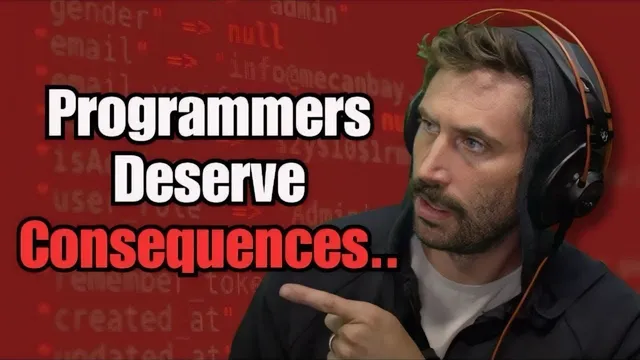
Engineers Should Be Held Liable
Based on The PrimeTime's video on YouTube. If you like this content, support the original creators by watching, liking and subscribing to their content.
The strongest pro-liability argument treats software outages as life-safety failures when they disrupt hospitals, airlines, and critical infrastructure.
Briefing
The debate centers on whether software engineers should face personal consequences—up to termination or legal liability—when critical systems fail, using CrowdStrike’s widely reported outage as the flashpoint. The most consequential thread is the analogy to regulated professions: anesthesiologists and structural engineers can be held to strict standards because their work directly affects life-or-death outcomes, and their licenses create clear accountability. In that framing, software failures that disrupt hospitals, airlines, banks, and other critical infrastructure should trigger similarly serious responsibility.
But the counterargument draws a hard line between “impact” and “legal enforceability.” Unlike licensed medicine or engineering, software development lacks universally enforced, legally codified safety requirements that define what “defect-free” means and what specific practices are mandatory. Participants argue that without such enforceable standards—analogous to what only licensed professionals can sign off—individual developers risk being scapegoated for systemic failures driven by management decisions, release processes, and inadequate QA. Even when a developer presses “go” to production, the responsibility may still be shared across the chain: product leadership, change management, testing culture, and rollout discipline.
The discussion also pushes back on simplistic severity comparisons. A structural engineer’s mistake can be evaluated against safety factors and engineering calculations with clear thresholds. Software, by contrast, is often a moving target: different paradigms (OOP vs functional), different testing strategies (unit vs fuzz vs end-to-end), and different definitions of risk make it hard to assign a single “coefficient” of negligence. Critics argue that turning software into a regulated engineering discipline would be disruptive—potentially requiring extreme measures like 100% test coverage, which could be impractical at scale and could even be counterproductive if automated testing (including AI-generated tests) locks in incorrect assumptions or fails to catch unknown unknowns.
Still, there’s agreement that accountability should exist somewhere. Several comments concede that consequences already happen in practice—people can be fired for outages—and that the specific CrowdStrike incident could plausibly have caused real harm through delayed medical care or other downstream effects. The disagreement is less about whether harm matters and more about where liability should land: on individuals without licensing frameworks, or on corporations and processes that can be legally compelled to meet standards.
By the end, the most concrete proposal is not “punish coders,” but “make responsibility real up the chain.” That means holding organizations accountable through legal proceedings and enforceable requirements, while avoiding the idea that software developers should be treated like licensed professionals in the absence of codified, enforceable safety rules. The conversation repeatedly returns to a central tension: software’s real-world stakes demand seriousness, yet the field’s current lack of enforceable standards makes personal blame both legally and practically complicated.
Cornell Notes
The discussion uses the CrowdStrike outage to ask whether software engineers should face personal consequences similar to licensed professions like anesthesiology and structural engineering. One side argues that when software failures can disrupt hospitals, airlines, and critical infrastructure, negligence should carry weight and potentially legal exposure. The opposing side counters that software lacks legally enforced “codes” and licensing requirements, so individual developers shouldn’t be scapegoated for process failures driven by management, release practices, and inadequate QA. The emerging compromise is that accountability should be real, but it should target organizations and enforceable standards rather than treating developers as if they were licensed engineers. The core issue becomes enforceability: impact alone doesn’t automatically translate into legal liability for individuals.
Why do some participants insist software engineers should face consequences comparable to licensed medical or engineering professionals?
What is the main objection to blaming individual developers in the CrowdStrike scenario?
How does the discussion challenge the idea that severity can be compared with a simple “multiplier” across professions?
What concerns arise if software safety is forced into strict, universal requirements like 100% test coverage?
Where does the conversation converge on accountability, even while disagreeing about individual blame?
What does “not unit testing or QA is negligent” mean in this debate?
Review Questions
- What’s the difference between “impact” and “legal enforceability” in the argument about holding software engineers liable?
- Why do participants think 100% test coverage could be both impractical and potentially misleading?
- In the debate, what kinds of accountability are favored: individual termination, corporate legal liability, or enforceable professional standards—and why?
Key Points
- 1
The strongest pro-liability argument treats software outages as life-safety failures when they disrupt hospitals, airlines, and critical infrastructure.
- 2
A central rebuttal says software lacks licensing and legally codified safety standards, making individual scapegoating more likely.
- 3
Severity comparisons are contested: engineering risk can be calculated with safety factors, while software risk often depends on architecture and unknowns.
- 4
Strict universal requirements like 100% test coverage are argued to be impractical at scale and could even entrench bugs if tests are wrong.
- 5
Accountability is not rejected; it’s redirected toward organizations and processes that can be legally compelled to meet standards.
- 6
Even when a developer pushes code to production, responsibility may still be shared across management, rollout practices, and QA culture.
- 7
The discussion repeatedly frames the goal as making negligence carry consequences “up the chain,” not just punishing the nearest individual.