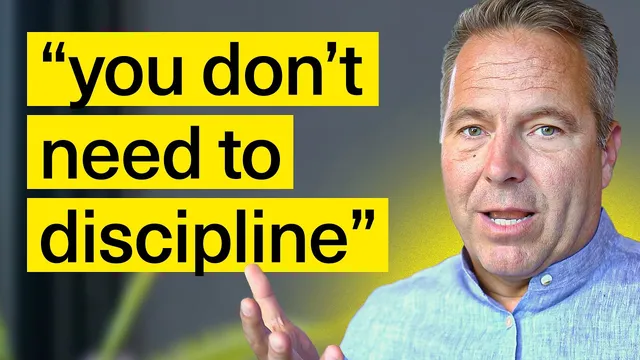
Enjoyment is the Ultimate Hack: Joe Hudson's Radical Approach to Business & Life
Based on Tiago Forte's video on YouTube. If you like this content, support the original creators by watching, liking and subscribing to their content.
Enjoyment is treated as a leading indicator of efficiency because it reflects how effectively people are using energy rather than merely how fast they operate.
Briefing
Enjoyment functions as a practical “efficiency metric” for both businesses and families: when people genuinely enjoy their work, energy use improves, output rises, and teams fall into a self-reinforcing cycle of better performance and better morale. Joe Hudson frames efficiency less as speed and more as energy management—like comparing a high-performance car to a fuel-sipping one. In that view, enjoyment is a leading indicator of company health, product quality, and whether people can sustain effort without burning out.
Hudson’s core leadership move is also counterintuitive: empowerment doesn’t come from managers “giving” autonomy. Instead, people feel empowered when the leader is clear about what they want and then grants real freedom on how to achieve it. He describes a shift from a paternal stance—where the leader becomes the bottleneck and employees wait for direction—to a stance where the leader’s clarity becomes the constraint that makes autonomy possible. In his experience, employees become more capable and motivated when they understand the leader’s wants, and when the leader treats the work as something employees should naturally want to do. He even draws a hiring rule: don’t hire people to do tasks they don’t want to do.
A related theme is “energetic exchange.” Hudson argues that support that flows one-way—whether in philanthropy or workplace care—can create dependency and guilt. The healthier pattern is mutual exchange: leaders show up consistently, care about employees as whole humans, and set expectations that preserve dignity and agency. He emphasizes that it’s not the leader’s job to make people happy or healthy; it’s the leader’s job to be present and then let people come forward with what they need.
Hudson extends the enjoyment principle into how founders align with their companies. The founder’s interests are most aligned because the founder is closest to the company’s overall needs, while other roles focus on their own domains. He rejects the idea of hierarchy as “one person running the whole machine,” instead treating companies as a set of roles—each a “cog.” When role-specific enjoyment conflicts with the founder’s enjoyment, he says the solution isn’t compromise-by-sacrifice; it’s refining solution criteria until both sides can genuinely enjoy the outcome.
That same logic shapes his approach to parenting. Hudson argues that kids’ job is to develop autonomy (“will”), and that discipline is less useful than boundaries paired with emotional containment. He distinguishes boundaries from punishment: boundaries prevent harm and create safety, while emotions are allowed to move through the child without shaming. When young children hit, lash out, or act out, Hudson recommends staying close and insisting on safety—so the child can return to connection. He also offers a developmental lens for “will”: kids may appear rebellious because they’re still learning to be embodied and regulated, not because they’re morally bad.
Hudson’s emotional pathway is central: people often can’t feel their bodies or emotions because early emotional safety was missing, leading to shutdown or shame. He describes a personal route from suppressed crying to learning emotional fluidity—moving from controlling emotions, to noticing them, to letting them flow without reactivity. In practice, he advises parents to name their own feelings (“I’m getting frustrated”) and to avoid turning emotions into identity (“you’re naughty”). The result, he says, is more connection, fewer power struggles, and a calmer home—because children naturally seek alignment when they feel safe enough to be fully human.
Cornell Notes
Enjoyment is presented as a measurable indicator of efficiency and organizational health. Hudson links enjoyment to energy management: when people enjoy their work, they produce better results, and that improved performance feeds back into more enjoyment. Leadership empowerment, in his framing, comes from the leader being clear about wants and then granting autonomy on execution—rather than trying to “empower” people directly. He extends the same principles to parenting: kids need boundaries and emotional containment so emotions can move through them and they can return to connection. The throughline is alignment—between leader and team, and between parent and child—so people can act from their own will without shame or dependency.
How does Hudson define “efficiency,” and why does enjoyment matter to it?
What does “empowerment” look like when Hudson says he doesn’t think about empowering people?
Why does Hudson emphasize “energetic exchange” rather than one-way giving?
How does Hudson handle misalignment between a founder’s enjoyment and a role-holder’s enjoyment?
What’s Hudson’s distinction between boundaries and discipline in parenting?
Why does Hudson say some people can’t feel their emotions or body sensations?
Review Questions
- How does Hudson’s “energy management” definition of efficiency change what a leader should measure day-to-day?
- What practical steps does Hudson recommend to create autonomy without losing clarity in a team setting?
- In Hudson’s parenting framework, what should a parent do during a child’s outburst to support connection without shaming or punishment?
Key Points
- 1
Enjoyment is treated as a leading indicator of efficiency because it reflects how effectively people are using energy rather than merely how fast they operate.
- 2
Empowerment comes from leader clarity about wants plus autonomy in execution, not from the leader “giving” empowerment directly.
- 3
Support that lacks energetic exchange can produce guilt and dependency; dignity and agency matter as much as care.
- 4
Founders align best with the company when their overall wants are clear and role-specific enjoyment can be reconciled through shared solution criteria rather than sacrifice-compromise.
- 5
Parenting should prioritize boundaries and emotional containment over discipline, so emotions can move through the child and connection can return.
- 6
Emotional numbness or difficulty sensing feelings is often traced to early emotional unsafety and shame, which can be undone through awareness and emotional fluidity.
- 7
Naming a parent’s own feelings can help children regulate and stay connected, reducing the need for coercion or moral labeling.