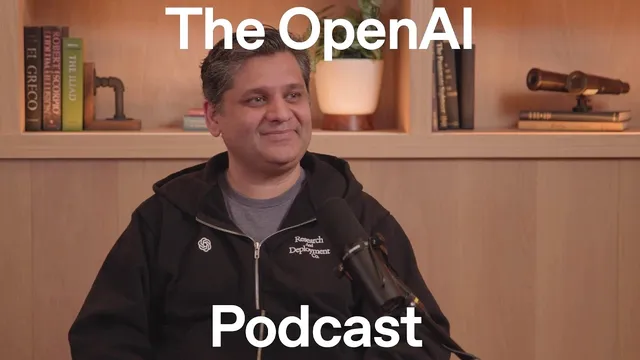
Episode 13 - The Thinking Behind Ads in ChatGPT
Based on OpenAI's video on YouTube. If you like this content, support the original creators by watching, liking and subscribing to their content.
Ads are planned for free-tier users, while Pro, Plus, and Enterprise users are promised no ads.
Briefing
Ads in ChatGPT are set to arrive with a strict trust-first design: free-tier users will see ads, while Pro, Plus, and Enterprise users will not. The core rationale is pragmatic and mission-driven—ads are viewed as a proven way to fund broad access to high-quality AI while keeping usage limits high for consumers—paired with guardrails meant to prevent the common “creepy” failure modes that erode confidence.
Assad Awan frames the decision around OpenAI’s central business premise: winning and maintaining user trust. That trust shows up in multiple layers. First, answers must remain independent from ads—both visually and in how the underlying models are trained and operate—so users can reliably judge what they’re getting. Second, sensitive conversations are treated as a hard boundary: if a chat is classified as sensitive (including categories like health, politics, and violence), it will never have ads in it and the content won’t be used for ad matching.
A key operational claim is that the model itself does not “know” an ad is present. If a user asks about what an ad is saying, the system should respond that it doesn’t know. Instead, users must explicitly opt in to connect an ad to the conversation by pressing a button such as “ask ChatGPT about this ad.” Even then, the interaction is designed to resemble asking about an external link—making the ad a downstream, user-initiated context rather than something the model quietly blends into its reasoning.
The trust approach also extends to incentives and product metrics. Rather than optimizing for time spent, the system aims to show ads only when they are genuinely useful and additive. The company expects that this will keep ad volume low during early rollouts and will avoid paying for random impressions—reducing both user annoyance and advertiser waste.
Personalization is positioned as a double-edged sword that must be paired with transparency and control. Users are expected to be able to see what data is used for ads, choose which parts of past chats can be used, clear their data, and even turn off personalization fully. For users who want the strongest boundary, upgrading to Pro or Plus is described as a way to stop ads entirely.
On governance and decision-making, the transcript emphasizes internal culture and a rubric that ranks “user trust” above “user value,” above “advertiser value,” and above revenue. That rubric is said to guide product changes through rigorous internal debates, privacy and safety forums, and enforcement mechanisms that classify sensitive content with high precision.
Finally, the discussion looks beyond the present: ads are expected to evolve toward more conversational and agentic formats—aggregating deals and discounts behind the scenes, using user preferences to surface relevant products, and improving discovery in both directions (users finding products and products finding niche audiences). The throughline remains consistent: relevance, controllability, understandability, and trust as the foundation for scaling AI access.
Cornell Notes
ChatGPT’s ad plan is built around a trust-first rubric: free-tier users will see ads, while Pro, Plus, and Enterprise users will not. Ads are designed to be downstream of the model—answers stay independent from ad content, sensitive conversations are excluded from ad matching, and the model should not “know” what an ad says unless a user explicitly opts in. Users are promised transparency and control over ad personalization, including viewing what data is used, choosing which past chats can be used, clearing data, and turning off personalization. The company also says it will avoid optimizing for time spent, aiming instead for ads that are genuinely useful and rare when no good match exists. This matters because it targets the main risk of ads in AI: blending persuasion with private or sensitive reasoning.
Why introduce ads at all, given the risk to user trust?
What does “separation” between the model and ads mean in practice?
How are sensitive conversations handled?
What controls are offered so personalization doesn’t feel invasive?
How does the company plan to prevent ad incentives from degrading the product?
What might ads look like in the future as systems become more agentic?
Review Questions
- What specific mechanisms are described to keep ad content from contaminating the model’s answers (both visually and behaviorally)?
- How does the transcript define “sensitive” content, and what happens to ads and personalization when a chat is classified as sensitive?
- Which product tiers are promised to have no ads, and what alternative controls are offered to users who remain on free tiers?
Key Points
- 1
Ads are planned for free-tier users, while Pro, Plus, and Enterprise users are promised no ads.
- 2
Answers are designed to stay independent from ads, with clear visual separation and a model that should not “know” ad text unless a user explicitly opts in.
- 3
Sensitive conversations (including health, politics, and violence) are excluded from ad display and from ad matching, enforced via policy-based classification.
- 4
Personalization is paired with transparency and user controls, including viewing used data, selecting which past chats can be used, clearing data, and turning off personalization.
- 5
The ad strategy avoids optimizing for time spent, aiming instead for rare, high-quality ads that are genuinely useful.
- 6
Internal governance relies on a trust-first rubric that ranks user trust above user value, advertiser value, and revenue.
- 7
Future ad formats are expected to become more conversational and agentic, surfacing deals and products through behind-the-scenes matching.