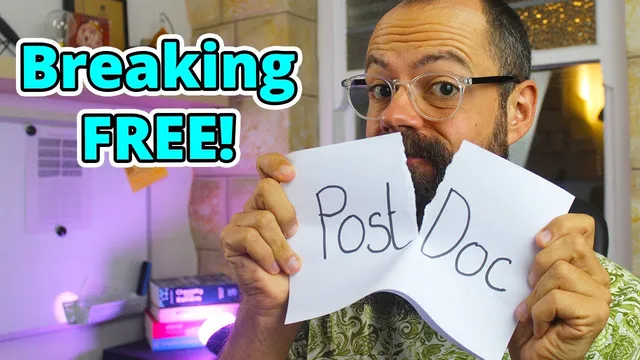
Escaping the PostDoc trap: Your ONLY options
Based on Andy Stapleton's video on YouTube. If you like this content, support the original creators by watching, liking and subscribing to their content.
Academic competitiveness is assessed through four concrete areas: publications, funding impact, departmental fit, and public reputation for the university.
Briefing
Escaping the postdoc “trap” comes down to a blunt choice: either build a track record strong enough to win an academic job at a university, or leave the postdoc and pursue a career outside academia. The academic route is not vague or hopeful—it hinges on measurable competitiveness. If a postdoc fails to stand out in most of four areas, landing a permanent position becomes an uphill battle.
The first reality check is publications. A postdoc’s output needs to match what the field is doing now, and it should be strong enough to place the researcher among the top tier—described as being in the top 10 at minimum. Second is money. Universities want evidence of funding impact, whether through bringing in funds directly or succeeding on grants as a named investigator or co-investigator. Third is fit with a department’s priorities. Even talented researchers can struggle if their niche doesn’t align with what a department needs; the best path is carving out a specialty that complements departmental research, including collaborations and skills other groups can’t easily replicate. Fourth is reputation and visibility for the university—building recognition through outreach to communications teams and science journalists, so the researcher becomes a known entity rather than relying only on papers, relationships, and grant activity.
If a researcher isn’t excelling in at least three of these four areas, the message is direct: permanent academic employment will be difficult, and it may be time to move on. Promotion within the current institution or finding a university where the metrics line up are the two academic “outs,” but the bar remains high.
The alternative—leaving the postdoc—is framed as harder emotionally but ultimately more liberating. The decision often feels like failure because leaving can look like abandoning years of work, even when it’s actually the start of something better. Practical barriers also exist: many non-academic roles still require highly skilled, educated people, but the transition demands earlier job searching, networking, and a willingness to explore options before funding dries up.
A key dynamic is psychological. Postdocs can become passive when career security depends on other people’s grants. That dependence can turn research from something exciting into something like “begging” for continued support. The recommended countermeasure is to take control early—start looking for roles at the first hint of doubt, build networks, and find genuine interest in outside positions rather than treating the move as a last resort.
The career path described after leaving begins with science communication, including writing for Cosmos magazine, then freelance work, and later launching a startup. The broader point is that the first non-academic job doesn’t have to be the final one; careers outside academia can evolve through experimentation. Uncertainty and feelings of letting others down may be paralyzing, but the uncertainty can be managed by committing fully to the outside search.
Success is ultimately defined by personal priorities. For some it may mean maximizing income; for others it means freedom, helping people, and working on one’s own terms. The core takeaway is that a better life outside academia is possible, and waiting for perfect certainty can prolong the pain.
Cornell Notes
Escaping a postdoc “trap” usually requires choosing between two paths: becoming competitive for an academic job or leaving academia and building a career elsewhere. Academic success is tied to four measurable areas—strong publication output, evidence of bringing in money, tight alignment with a department’s research needs (including collaborations and niche fit), and growing a public reputation for the university through outreach. If a researcher isn’t excelling in at least three of these, landing a permanent role becomes unlikely. Leaving the postdoc is emotionally difficult, but it can restore agency when career security stops depending on other people’s grants. Once outside, careers can shift and improve through networking, experimentation, and finding work that matches what “success” means personally.
What four criteria determine whether a postdoc is competitive for an academic job?
Why does “money” matter so much for academic hiring decisions?
How does departmental alignment affect even highly talented researchers?
What makes leaving a postdoc difficult beyond the job-search logistics?
What practical steps help someone leave earlier and reduce the pain of uncertainty?
How can a career outside academia evolve after leaving?
Review Questions
- Which of the four academic competitiveness criteria are you currently strongest in, and which ones are weakest?
- What emotional story makes leaving feel like “failure,” and how could you reframe it to support earlier action?
- What would “success” mean in your case if it weren’t tied to promotions inside academia?
Key Points
- 1
Academic competitiveness is assessed through four concrete areas: publications, funding impact, departmental fit, and public reputation for the university.
- 2
A publication record that doesn’t clearly outperform peers (e.g., not top-tier) makes academic hiring harder.
- 3
Funding evidence matters—bringing in money or contributing to grants as a named investigator/co-investigator is a major signal.
- 4
Departmental alignment can outweigh raw talent; researchers need a niche that matches what a department actually needs.
- 5
Leaving the postdoc requires earlier job searching and networking, not waiting for perfect certainty.
- 6
Career dependence on other people’s grants can erode motivation; taking control restores agency.
- 7
Success is personal—define it in terms of freedom, impact, income, or autonomy, then keep iterating until it fits.