Essentialism
Based on Better Than Yesterday's video on YouTube. If you like this content, support the original creators by watching, liking and subscribing to their content.
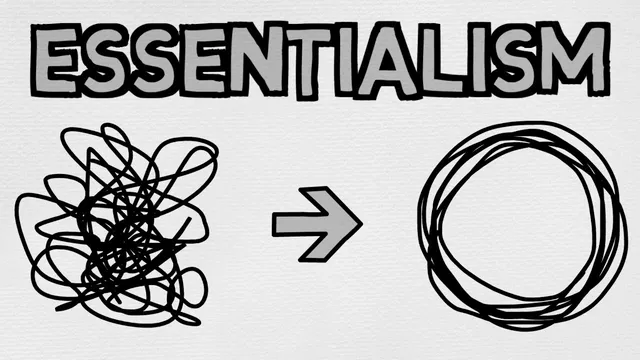
Essentialism shifts the goal from doing more to doing the right things by investing time and energy where it produces the biggest results.
Briefing
In a world where “busy” has become a badge of honor, essentialism reframes the goal: stop trying to do more and start doing the right things. The core claim is blunt—most activities people cram into their schedules are trivial, and working harder only multiplies wasted effort. Essentialism is presented as a way to make the wisest investment of time and energy so outcomes improve without burning out on low-value work.
The foundation for that shift is the reality of trade-offs. Saying “yes” to one opportunity automatically means declining several others, even if that cost stays invisible. Accepting a colleague’s invitation for drinks, for instance, quietly blocks time that could go to building a business, exercising, or reading. The same logic applies in reverse: refusing one request frees capacity for other priorities. The problem, the transcript argues, is that when people don’t deliberately choose what deserves their focus, other forces—friends, bosses, family—end up choosing for them. That’s why it calls for stopping the reflex to say “yes” to everything and learning to say “no” to requests that steal time from what actually matters.
Saying “no” is acknowledged as uncomfortable. Guilt, fear of disappointing others, and concern about damaging relationships can make refusal feel risky. But the transcript contrasts that short-term sting with the longer-term regret of agreeing to things that weren’t truly wanted. It describes a personal pattern: agreeing mainly to please someone, then growing resentful because time and energy were being wasted. The lesson is not just that refusal is sometimes necessary, but that prioritizing one’s own life is a responsibility—otherwise someone else will set the agenda.
To decide what deserves a “yes,” the transcript leans on the Pareto 80/20 principle: roughly 80% of results come from 20% of efforts, while the remaining 20% of results come from the other 80% of effort. Many capable people, it says, get stuck because they treat everything as important, chasing the remaining 20% and never finding time to identify the high-leverage actions. Essentialism therefore treats “what you don’t do” as equally important as “what you do,” arguing that more effort doesn’t automatically produce more results—working on the right things does.
The transcript also warns that success itself can create a trap. As progress brings more opportunities—partners, clients, new projects—people may accept trivial work that crowds out the essential activities that originally drove their wins. That’s framed as a paradox of success: more options can lead to less focus. The remedy is ongoing reassessment and deliberate trade-offs.
Finally, it targets a common attempt to escape trade-offs by manufacturing more time, such as cutting sleep. The transcript calls this a “fool’s bargain,” arguing that sleeping fewer than six hours can impair mental capacity to the level of being “legally drunk,” leading to poorer decisions and reduced productivity. Essentialism, by contrast, repeatedly identifies what’s vital, eliminates the trivial, and refuses to sacrifice what matters—because without that discipline, people simply don’t have enough time and energy to waste on low-value pursuits.
Cornell Notes
Essentialism is presented as a discipline for choosing the right priorities rather than maximizing busyness. The transcript argues that every “yes” creates hidden “no’s,” so people must deliberately decide what deserves their time and energy. Using the Pareto 80/20 principle, it emphasizes that a small fraction of actions produces most results, while treating everything as important wastes effort. The approach is ongoing: as success brings more opportunities, trivial projects can crowd out the essentials unless priorities are reassessed. It also warns against “creating time” by cutting sleep, claiming that too little sleep severely reduces mental capacity and decision quality.
Why does saying “yes” to one request automatically reduce options elsewhere?
What makes refusal (“no”) necessary in an essentialist mindset?
How does the Pareto 80/20 principle support essentialism’s focus on “the right things”?
Why can success become a cause of failure?
What is the transcript’s argument against cutting sleep to gain productivity?
Review Questions
- How does the transcript define trade-offs, and how does that definition change the way someone should respond to new opportunities?
- What role does the Pareto 80/20 principle play in deciding which tasks to prioritize, and what common mistake does it warn against?
- Why does the transcript argue that success can reduce performance unless priorities are reassessed regularly?
Key Points
- 1
Essentialism shifts the goal from doing more to doing the right things by investing time and energy where it produces the biggest results.
- 2
Every “yes” carries hidden opportunity costs, so deliberate prioritization is required to avoid letting others set priorities.
- 3
Saying “no” to non-essential requests protects important work, even if refusal feels uncomfortable in the moment.
- 4
The Pareto 80/20 principle is used to identify the small set of actions that generate most outcomes and to stop chasing low-leverage effort.
- 5
Essentialism treats “what you don’t do” as a core strategy, not an afterthought.
- 6
Success can create distraction through an influx of new opportunities, so priorities must be reviewed repeatedly.
- 7
Cutting sleep to create more time is portrayed as counterproductive because it reduces mental capacity and decision quality.