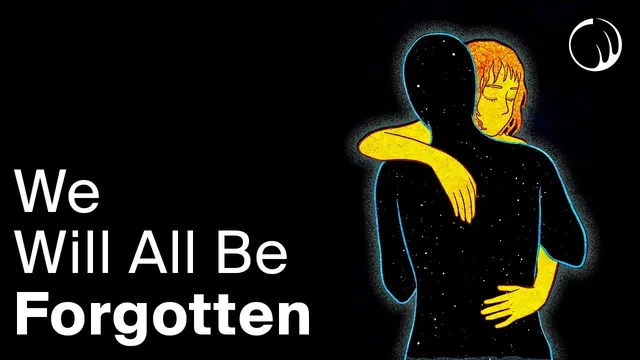
Eventually, Everyone We Know Now Won't Be Known By Anyone
Based on Pursuit of Wonder's video on YouTube. If you like this content, support the original creators by watching, liking and subscribing to their content.
The desire to be remembered after death is treated as a paradox because the person can’t experience that recognition.
Briefing
A future museum exhibit frames a simple question—“How would you like to be remembered?”—and uses it to argue that legacy is less about being known after death than about how people live while they’re alive. In a 3855 setting, a restored early Internet laptop lets visitors stumble across an archived, anonymously sourced video essay from the late 20th to early 22nd century. The clip’s central voice treats remembrance as a paradox: it’s tempting to want a lasting identity, yet no one can know how they’ll be perceived, and the only time that matters is the present.
The voice rejects grand, measurable ambitions like fame, wealth, power, or “changing the world,” calling them too dependent on unclear definitions and on a world that offers no stable direction. Instead, it proposes a more grounded answer: being remembered as someone who tried—who cared, helped, loved, and leaned toward sympathy and compassion. The ideal is not certainty about greatness, but honesty about character: being a good friend, son, father, and husband; living honestly with conviction while staying willing to adapt; contributing to what one enjoys because it’s meaningful in the moment.
That shift doesn’t come with a claim that remembrance is pointless. The essay notes that history is full of people who embodied these qualities yet remain unknown. Even when someone is remembered—Einstein is used as the example—the world remembers the work, not the person as a whole. The voice challenges the comfort of hero narratives by suggesting that “greatness” may be a byproduct of lived experience rather than the root cause of achievement. It also questions whether celebrated figures were happy, sought recognition, or simply wanted to understand more than their era allowed.
Ultimately, the essay lands on a practical ethic: since nothing lasts forever and everyone loses what they care about, the only real “celebration” of a life happens while the person is still alive. Planning for posthumous recognition is likened to throwing a birthday party on a day you can’t attend. The takeaway is to dedicate oneself now—to causes, passions, and a good heart—not because future strangers will remember, but because those commitments shape what the life is for.
The museum scene ends with a small, human coda. After the archived voice finishes, Asher and Alexa move on, but the question lingers in a new form: Asher asks, “And who’s Einstein?” Alexa guesses he must have been a scientist. The moment underscores the essay’s premise—knowledge fades, names blur, and what endures is uncertain—while reinforcing the message that meaning can’t be outsourced to posterity. The final effect is quiet but pointed: the future may not know the past, yet people still have to decide what to do with the time they have.
Cornell Notes
A restored early-Internet video essay from centuries earlier centers on a paradox: people want to be remembered, but no one can know how they’ll be remembered, and death makes that desire impossible to experience. The essay rejects ambitions like fame, wealth, and power as vague or even misleading, arguing that “influence” and “success” lack clear meaning in a world without direction. Instead, it proposes a character-based legacy—trying to care, help, love, and practice sympathy and compassion—while staying adaptable and living honestly. Even when history preserves names (Einstein is the example), it often preserves contributions more than the person. With nothing lasting forever, the essay concludes that the only real celebration of a life is what one dedicates to now.
Why does the essay treat “being remembered” as a paradox?
What kinds of legacy goals does the essay dismiss, and what does it replace them with?
How does the essay use Einstein to complicate the idea of greatness?
What does the essay claim about why people still care about being remembered?
What is the essay’s practical conclusion about how to live?
How does the museum ending reinforce the essay’s theme?
Review Questions
- What does the essay suggest is the emotional or psychological source of the desire to be remembered?
- How does the Einstein example shift the focus from personal identity to measurable contributions?
- Which commitments does the essay recommend making “now,” and why does it say timing matters more than posterity?
Key Points
- 1
The desire to be remembered after death is treated as a paradox because the person can’t experience that recognition.
- 2
Grand legacy goals like fame and power are criticized as vague and dependent on unclear definitions.
- 3
A character-based legacy—trying to care, help, love, and practice compassion—is presented as more meaningful than status.
- 4
Even when history preserves names, it often preserves work more than the individual behind it, as with Einstein.
- 5
The essay argues that contributions may come from lived experience rather than from a single drive for greatness.
- 6
Since nothing lasts forever, the only real “celebration” of a life happens while the person is still alive.
- 7
Cultural memory is fragile, illustrated by the future characters not knowing who Einstein is.