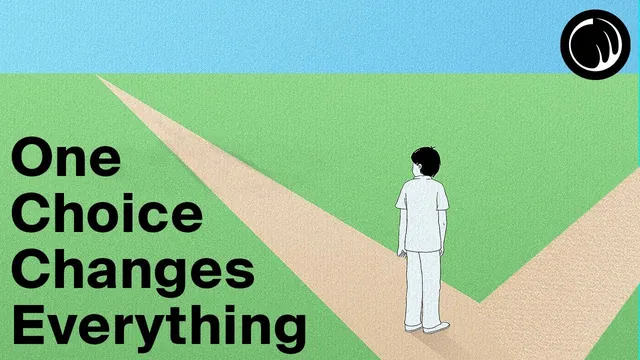
Every Person Is One Choice Away From Everything Changing
Based on Pursuit of Wonder's video on YouTube. If you like this content, support the original creators by watching, liking and subscribing to their content.
Karl’s indecision comes from competing obligations—family grief, fear of damaging his father, relationship uncertainty, and the tradeoff between stable employment and entrepreneurial risk.
Briefing
A single, life-altering decision—whether to move to Australia with a best friend or stay in Boston—gets reframed as something no one can truly “solve” in advance. The story turns on two near-identical moments when an older stranger offers the same method: treat the choice like a coin flip with a “brain,” then live with the consequences as they arrive. Over decades, the two Karls end up in very different lives—one building a sustainable farming life with financial strain and later regret, the other climbing a corporate ladder with stability but a lingering sense of hollowness—yet both discover that meaning comes less from avoiding the wrong path and more from owning the decision.
In the first timeline, Carl (Karl) agonizes for days after his best friend Novak announces he and his girlfriend will move to Australia to launch an eco-friendly agrotech business. The pitch is compelling: local organic food demand, a sustainable model, and a clear role for Karl in sales, marketing, outreach, and finances. But Karl’s hesitation is personal and layered. His mother has died, leaving him unusually close to his father; his brother’s strained relationship adds fear of further fracture. His girlfriend Stephanie is only a year into dating, and long-distance feels like a likely failure. His Boston job offers benefits and momentum, and leaving would mean giving up a more prudent career bet. He also admits he’s always wanted the countryside—and Australia—yet the decision feels impossible because each option carries different risks with no numeric way to compare them.
After consulting multiple people and receiving contradictory, equally “rational” answers, Karl walks at night, overwhelmed by the idea that humans can choose but can’t know outcomes. On a secluded harbor bench, an older man asks if he’s okay and listens to the full dilemma. When Karl asks what to do, the stranger suggests deciding immediately based on what he chooses—“like flipping a coin, but the coin has a brain.” Karl follows the instruction: “Alright, you’re going.” Five weeks later, he moves to Australia. The relationship with Stephanie collapses within months. The business lasts about six years before regulations and operational problems force closure. Karl later starts an indoor farming operation, which becomes profitable but financially limited and stressful. He marries Natalie, has two boys, and finds purpose through local sustainable food—yet the cost is constant financial pressure, minimal free time, and a life that never fully feels happy.
In the second timeline, Karl stays in Boston after the same harbor encounter. He becomes a chief financial officer, marries Stephanie, and remains close to his father. Money is never a major problem, and his life is comparatively stress-free. Yet the corporate path brings bureaucratic tedium, boredom, and social isolation. On his 40th birthday, Novak visits from Australia and describes a thriving business helping thousands of families—plus pride in his children. Karl feels doubt and regret again, but the story’s final turn is philosophical: the older man later interrupts a different Karl’s attempt to “solve” the decision and argues that some choices aren’t hard because one option is better; they’re hard because there may be no objectively right answer. The only regret that truly matters is not choosing for oneself. The ending lands on a middle ground between chance and certainty: do his best, pick one, and move on—because the future will always contain both love and dread, regardless of the path.
Cornell Notes
Karl faces a high-stakes choice: move to Australia with best friend Novak to build an eco-friendly agrotech business, or stay in Boston with a stable job and his girlfriend Stephanie. After days of indecision and conflicting advice, an older stranger offers a “coin flip with a brain” approach—decide immediately based on his choice. In one outcome, Karl goes to Australia, loses Stephanie, later builds a small farming business, and finds purpose through sustainable food but lives with financial strain and stress. In the other outcome, Karl stays, gains career stability and a marriage with Stephanie, but later feels boredom and hollowness, especially after hearing how well Novak’s Australia life turned out. The core lesson: some decisions can’t be proven in advance; the meaningful part is owning the choice and moving forward.
Why does Karl struggle to decide between staying in Boston and moving to Australia?
What role do other people’s opinions play, and why don’t they resolve the dilemma?
How does the older man’s “coin with a brain” method work in practice?
What happens to Karl’s relationships in each outcome?
How do the two lives differ in meaning and cost?
What final philosophical claim reframes regret and “right choices”?
Review Questions
- What specific personal factors make Karl’s decision feel different from a simple career choice?
- How do the outcomes in Australia vs. Boston test the idea that stability or purpose automatically produces happiness?
- Why does the story treat regret as something more about ownership of the decision than about predicting the future?
Key Points
- 1
Karl’s indecision comes from competing obligations—family grief, fear of damaging his father, relationship uncertainty, and the tradeoff between stable employment and entrepreneurial risk.
- 2
Consulting others doesn’t solve the problem when every recommendation is internally consistent but externally contradictory.
- 3
The older man’s “coin with a brain” approach functions as a way to end paralysis when certainty about outcomes is impossible.
- 4
In one outcome, choosing Australia leads to purpose through farming and a new family, but also financial strain and stress after the original business fails.
- 5
In the other outcome, choosing Boston leads to career success and a stable marriage, but also boredom, bureaucratic tedium, and social isolation.
- 6
The story’s core reframing is that some decisions may not have an objectively “right” answer; the meaningful part is choosing for oneself and moving on.