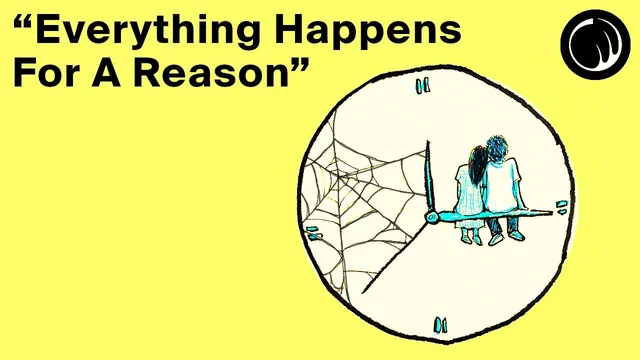
"Everything Happens For A Reason" (Until It Doesn't)
Based on Pursuit of Wonder's video on YouTube. If you like this content, support the original creators by watching, liking and subscribing to their content.
The transcript highlights a sharp mismatch between moral effort and catastrophic outcomes.
Briefing
A life can be built around effort, decency, and “playing by the rules,” yet still end in catastrophe—leaving the comforting idea that everything happens for a reason to feel hollow when it “doesn’t.” The opening frames a stark mismatch between moral effort and outcome: the narrator claims to have worked hard, stayed within the rules, and lived kindly, only to land on a hospital bed with a destroyed home and a future that feels precarious.
That contrast is the core pressure point. The phrase “Everything happens for a reason” functions like a psychological safety net: if someone does the right things, then suffering should be meaningful, deserved, or at least purposeful. But the transcript’s situation—injury or illness paired with loss and the threat of losing one’s life—turns that net into a question rather than an answer. The “reason” no longer reads as moral justice or cosmic order; it reads as something that fails to show up when it matters most.
The emotional logic is direct: when the world delivers consequences that don’t match the effort, the belief system built on fairness and predictability starts to break. The narrator’s insistence on having lived a “good, decent life” isn’t just self-description—it’s an argument for why the outcome feels unbearable. If kindness and diligence don’t protect anyone from disaster, then the usual explanations for suffering—karma, lessons, or divine plans—become harder to accept without sounding like excuses.
The transcript also signals a shift from explanation to confrontation. Instead of offering a tidy moral, it lands on the raw scene: lying in a hospital bed, facing the edge of whether life continues. That placement matters because it removes the comfort of distance. The question isn’t abstract; it’s immediate, bodily, and tied to material ruin.
In short, the transcript sets up a challenge to the idea that suffering always has a reassuring purpose. It highlights the psychological and moral strain that follows when “everything happens for a reason” collides with lived reality—especially when the cost is health, home, and the possibility of survival itself.
Cornell Notes
The transcript centers on a painful contradiction: a person can work hard, follow rules, and live kindly, yet still suffer devastating loss and face death. That mismatch undermines the comforting belief that “everything happens for a reason,” because the outcome doesn’t feel fair, instructive, or protective. By placing the claim of a “good, decent life” beside a hospital bed and a destroyed home, the text turns a common explanation for suffering into a direct emotional challenge. The result is less a philosophical argument than a confrontation with how meaning-making breaks down under extreme harm.
Why does the phrase “Everything happens for a reason” become unstable in this transcript?
What role does the narrator’s claim of living a “good, Decent life” play?
How does the hospital-bed detail change the tone of the argument about suffering?
What does “until it doesn’t” imply about how people use meaning to cope?
What is the central conflict driving the transcript’s emotional force?
Review Questions
- How does the transcript use the contrast between “doing everything right” and being in a hospital bed to challenge a common belief about suffering?
- What emotional or moral expectations are implied by the narrator’s emphasis on kindness, rules, and a “good, Decent life”?
- Why does the phrase “until it doesn’t” matter to the transcript’s critique of “everything happens for a reason”?
Key Points
- 1
The transcript highlights a sharp mismatch between moral effort and catastrophic outcomes.
- 2
It frames “everything happens for a reason” as comforting only until reality contradicts it.
- 3
The narrator’s emphasis on hard work, rule-following, and kindness raises the sense of injustice when disaster strikes.
- 4
The hospital-bed setting makes the suffering question immediate rather than abstract.
- 5
Destroyed home and the threat to life turn meaning-making into an urgent emotional crisis.
- 6
The core tension is between fairness expectations and the apparent randomness or cruelty of harm.