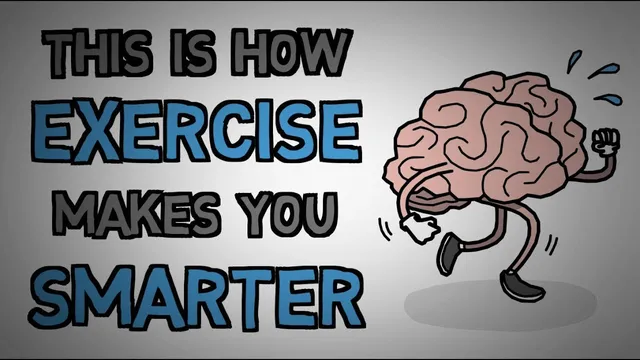
Exercise Makes You Smarter - This Is Why (animated)
Based on Better Than Yesterday's video on YouTube. If you like this content, support the original creators by watching, liking and subscribing to their content.
Exercise is linked to improved learning by increasing brain plasticity, with BDNF highlighted as the key molecular pathway.
Briefing
Exercise is linked to sharper learning because physical activity boosts brain plasticity—especially in the hippocampus—through a surge in BDNF, a protein that supports new neurons and stronger synapses. That biological pathway helps explain why fitter students often perform better academically, and why schools that treat PE as “learning readiness” tend to see gains in both focus and test outcomes.
For decades, neuroscience leaned on the idea that brain cells were fixed: people were born with a certain amount of neurons, and adulthood mainly meant losing them. That view began to shift in the mid-1990s when researchers studying Alzheimer’s disease looked for lifestyle factors that could slow cognitive decline. Over a four-year period, they identified three helpful changes—continuous learning, a growth-oriented mindset (self-efficacy), and physical exercise. The exercise finding was the surprise: it suggested movement could directly influence brain health, not just body fitness.
Carl Cotman and colleagues tested the mechanism in mice. Animals ran on a wheel for about a week, then researchers examined their brains. Compared with non-runners, the exercising mice had a thicker cortex and a larger hippocampus, a region tied to learning and short-term memory. The implication was straightforward but consequential: exercise can promote new neurons and help preserve cognitive function. That discovery helped launch a broader view of the brain as flexible—able to adapt to use and “retrain” itself—rather than a static organ.
The next question was why movement would matter for learning. The transcript frames the brain’s evolutionary purpose as enabling adaptable complex movement, citing neurophysiologist Rodolfo Llinás and the sea squirt example: once the animal attaches and stops moving, it effectively discards its brain. In humans, exercise activates many brain regions at once, but the most important learning-related effect centers on BDNF (brain-derived neurotrophic factor). Exercise raises BDNF levels; a 2013 study reported that 20 to 40 minutes of exercise increased BDNF in blood by 32%. Higher BDNF is associated with faster learning—one cited finding notes vocabulary learning improves by about 20% after physical activity, with learning speed tracking BDNF levels.
Academic outcomes are mixed in some experimental settings, but large-scale patterns align with the biology. A Virginia Tech study found that cutting gym class and reallocating time to academics did not improve test scores—and could reduce them. Meanwhile, California Department of Education reporting repeatedly tied higher fitness scores to higher test scores; a 2001 study reported fit children scoring about twice as well on academic tests as unfit peers, with body mass index and aerobic fitness among the strongest contributors.
The transcript’s most concrete case study comes from Naperville, Illinois (Naperville District 203). Over two decades, the district expanded and refined PE into an early-morning “Learning Readiness” model. The results cited are striking: only 3% of students were overweight, no children were obese, and on TIMSS math and science testing Naperville students placed sixth in math and first in science as a school, with 97% of eighth graders participating. The underlying message is not that exercise makes students smarter automatically, but that it primes attention, mood, and motivation—so learning actually sticks.
Finally, the transcript recommends high-intensity aerobic exercise—aiming for heart rates around 80% of maximum—often in the morning for 20 to 40 minutes, with benefits lasting a few hours for most people. The practical takeaway is conditional: exercise improves the brain’s capacity to learn, but the learning still has to happen afterward.
Cornell Notes
Physical exercise is presented as a direct driver of learning because it increases brain plasticity, particularly in the hippocampus. In animal studies, running for about 7–14 days produced a thicker cortex and a larger hippocampus, aligning with the idea that exercise supports new neurons and synapses. The mechanism highlighted is BDNF (brain-derived neurotrophic factor): 20–40 minutes of exercise increased BDNF in blood by 32%, and higher BDNF correlates with faster learning (including improved vocabulary learning speed). School-level evidence is used to argue that fitness often tracks with better academic performance, especially when PE is treated as “learning readiness.”
What biological change links exercise to better learning in the transcript?
Why does the hippocampus matter for the “smarter” claim?
How does the transcript connect exercise intensity and timing to brain benefits?
What evidence is used to challenge the idea that more academics automatically beats less PE?
How does the Naperville PE program serve as a real-world example?
What does the transcript say exercise cannot do on its own?
Review Questions
- What role does BDNF play in the transcript’s explanation of how exercise improves learning?
- Why does the transcript argue that fitness correlates with academic performance even when PE time is reduced?
- According to the transcript, what exercise dose and intensity are most effective, and how long do the benefits typically last?
Key Points
- 1
Exercise is linked to improved learning by increasing brain plasticity, with BDNF highlighted as the key molecular pathway.
- 2
Animal research cited in the transcript reports that running increases hippocampus size and cortex thickness, both tied to memory and learning.
- 3
BDNF is described as a “brain fertilizer” that supports new synapses and strengthens existing ones; higher BDNF is associated with faster learning.
- 4
Academic performance is presented as often tracking with fitness: cutting PE did not improve test scores in a cited Virginia Tech study, while California reporting links higher fitness to higher test scores.
- 5
Naperville District 203’s PE model is used as a case study, pairing early-morning activity with improved attention and strong TIMSS outcomes.
- 6
The transcript emphasizes that exercise primes the brain, but learning still depends on actively studying or practicing after the workout.
- 7
High-intensity aerobic activity (around 80% of maximum heart rate) and a morning dose of 20–40 minutes are recommended, with benefits lasting a few hours for many people.