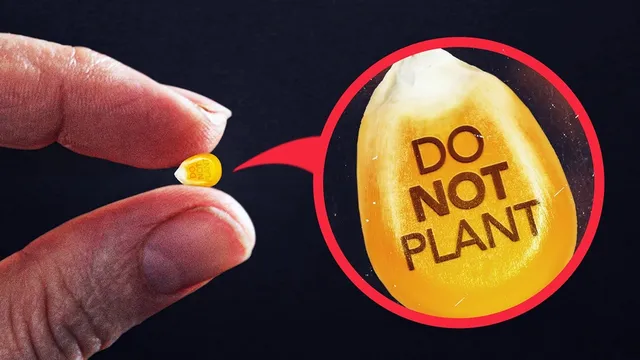
Exposing Why Farmers Can't Legally Replant Their Own Seeds
Based on Veritasium's video on YouTube. If you like this content, support the original creators by watching, liking and subscribing to their content.
Selective herbicides like 2,4-D and 2,4,5-T enabled fieldwide spraying by targeting broad-leaved weeds while sparing many grasses, accelerating rapid adoption.
Briefing
A chain of legal pressure, contract restrictions, and alleged scientific manipulation helped turn Monsanto’s herbicide-and-seed system into a de facto monopoly—then the same chemicals and corporate practices later collided with public health and cancer lawsuits. The core through-line runs from the early promise of “selective” weed killers to the later reality of glyphosate resistance, aggressive patent enforcement, and a long-running fight over whether glyphosate (Roundup’s active ingredient) can cause cancer.
The story begins with the invention of 2,4-D and 2,4,5-T, growth-hormone herbicides that selectively kill broad-leaved weeds while leaving grasses largely intact. After Franklin D. Jones patented the compounds in 1945, herbicides spread rapidly, replacing manual weeding and enabling the modern “green lawn” look. Monsanto scaled up production, including at a plant in Nitro, West Virginia, where an explosion in 1949 released a dark powder and triggered severe skin eruptions among workers. Internal investigations initially failed to identify the cause because both 2,4,5-T and 2,4-D were marketed as safe.
Years later, German dermatologist Karl Schulz traced the problem to dioxin formation as a byproduct of making 2,4,5-T at higher temperatures. Schulz tested contaminated material on his own skin and reproduced the same acne-like lesions seen in factory workers. He then alerted major chemical producers, including warnings sent to Monsanto and Dow. The transcript links this knowledge to the Vietnam War: the U.S. used Agent Orange—made from a 50/50 mix of 2,4-D and 2,4,5-T—under Operation Ranch Hand, spraying millions of liters. The account claims Monsanto and Dow knew dioxin was highly toxic and that even trace amounts could cause incapacitating acne, yet did not warn the U.S. government. The result, according to the narrative, was widespread long-term harm, including cancers and birth defects.
As regulators and public scrutiny threatened profits, Monsanto sought a replacement for 2,4,5-T. After years of failed herbicide research, the company’s breakthrough was glyphosate, marketed as Roundup. Glyphosate works by blocking EPSPS, an enzyme in the plant Shikimate pathway that plants (and some microbes) use to make essential amino acids—while humans and pets lack that pathway. Monsanto also pushed the idea that glyphosate would biodegrade in soil. Roundup’s appeal accelerated with “no-till” farming and a new business lock-in: Roundup Ready crops engineered to tolerate glyphosate.
That lock-in depended on contracts and enforcement. Farmers who bought Roundup Ready seeds were required—via Technology Use Agreements—to avoid saving or sharing seed and to allow Monsanto access for sampling. The transcript argues that Monsanto’s system also created a neighbor-to-neighbor pressure problem: herbicide drift could kill non-resistant crops, pushing communities toward adopting the same resistant seed. It further describes an enforcement apparatus—investigators, surveillance, and a hotline—to identify and sue alleged patent violators. The account culminates in the 2016 murder of Mike Wallace, described as retaliation tied to herbicide-related conflict.
Finally, the transcript pivots to glyphosate’s cancer controversy. In 2015, the International Agency for Research on Cancer classified glyphosate as “probably carcinogenic” to humans, focusing on evidence for non-Hodgkin’s lymphoma. While agencies like the EPA and World Health Organization-affiliated bodies disagreed, lawyers and journalists obtained internal Monsanto documents (“Monsanto Papers”) alleging ghostwriting, data suppression, and behind-the-scenes pressure on regulators and scientific publications. The legal fallout is described as massive: a jury verdict in the first major trial (Dewayne Lee Johnson) awarded $289 million, and by 2025 Bayer—after acquiring Monsanto—had settled more than 100,000 cancer cases for over $10 billion. The transcript ends by noting that glyphosate use has declined in some products and that weed resistance has grown, with Monsanto/Bayer still denying wrongdoing and disputing the cancer link.
Cornell Notes
Monsanto’s rise is traced through two eras: the early weed-killing boom of 2,4-D and 2,4,5-T, and the later dominance of glyphosate (Roundup) paired with genetically engineered “Roundup Ready” crops. The transcript links early herbicide harms to dioxin byproducts formed during 2,4,5-T production, then connects corporate knowledge to Agent Orange use in Vietnam. Glyphosate’s success is explained through its mechanism: it blocks EPSPS in the plant Shikimate pathway, a route humans lack. Monsanto’s market control is attributed to seed contracts and aggressive patent enforcement that discouraged farmers from saving or sharing seed. The glyphosate cancer debate centers on IARC’s “probable carcinogen” classification and alleged internal Monsanto efforts to shape regulatory and scientific outcomes, culminating in large settlements after Bayer acquired Monsanto.
How did 2,4-D and 2,4,5-T become “selective” weed killers, and why did that matter commercially?
What caused the skin eruptions among workers at Monsanto’s Nitro, West Virginia plant?
Why is glyphosate considered targeted to plants rather than humans or pets?
How did Monsanto’s business model aim to control both herbicide use and seed supply?
What is the transcript’s explanation for how glyphosate became a cancer controversy despite agency disagreements?
What happened after Bayer acquired Monsanto, and why did that acquisition become controversial?
Review Questions
- What chemical mechanism links glyphosate to plant death, and why does that mechanism not exist in humans?
- How did dioxin formation arise during 2,4,5-T production, and what evidence tied it to worker illnesses?
- What contractual and enforcement tactics are described as turning Roundup Ready adoption into a community-wide pressure system?
Key Points
- 1
Selective herbicides like 2,4-D and 2,4,5-T enabled fieldwide spraying by targeting broad-leaved weeds while sparing many grasses, accelerating rapid adoption.
- 2
Worker illnesses at Monsanto’s Nitro plant were later attributed to dioxin byproducts formed when 2,4,5-T production temperatures run high.
- 3
Glyphosate’s plant specificity comes from blocking EPSPS in the Shikimate pathway, which plants and certain microbes use to make essential amino acids.
- 4
Roundup Ready crops and Technology Use Agreements were designed to keep farmers buying both seed and herbicide, limiting seed saving and sharing while granting Monsanto inspection access.
- 5
The transcript describes Monsanto’s enforcement strategy as surveillance, lawsuits, and community reporting mechanisms that increased fear and neighbor conflict.
- 6
IARC’s classification of glyphosate as “probably carcinogenic” triggered a major dispute with other regulators and fueled litigation supported by internal Monsanto documents.
- 7
After Bayer acquired Monsanto, large jury awards and mass settlements followed, while Bayer and Monsanto-related entities deny wrongdoing and dispute causation.