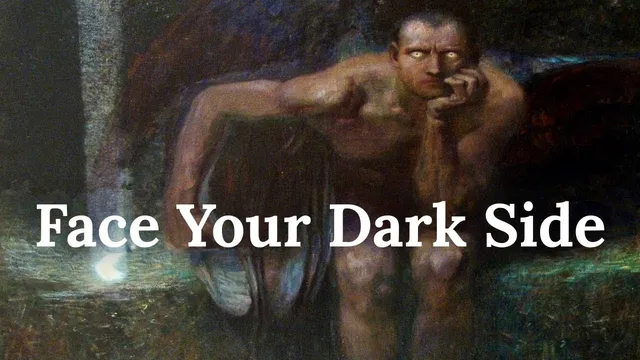
Face Your Dark Side - Carl Jung and the Shadow
Based on Academy of Ideas's video on YouTube. If you like this content, support the original creators by watching, liking and subscribing to their content.
The persona is a socially learned mask that can conceal rejected traits; the shadow forms from what the persona cannot accommodate.
Briefing
Carl Jung’s “shadow” is the part of personality that gets pushed out of conscious life—often because it conflicts with the social mask people learn to wear. It matters because the traits denied in the name of being “good” don’t vanish; they gather in the unconscious and then leak out through projection, mood swings, and destructive behavior, fueling both personal conflict and public scapegoating.
The mechanism starts with the persona: a socially shaped “mask” made to create a favorable impression and conceal the individual’s true nature. As children learn which traits win approval and which trigger rejection, they integrate the acceptable qualities into their persona and hide the rest. Over time, many people identify so fully with that mask that they also hide unwanted traits from themselves. Those rejected elements don’t disappear. They become repressed contents that coalesce into the shadow—an “inferior” but autonomous splinter personality with contrary tendencies that operate behind the spotlight of awareness.
The shadow then expresses itself in two major ways. First, it shows up through projection: people attribute their own faults, weaknesses, and evils to others—individuals, groups, nations, races, or political parties—then criticize and attack them as scapegoats. Jung links this to a familiar pattern of scapegoating that historically shifts from witches and werewolves to modern political targets. Second, the shadow can surface in everyday life by destabilizing moods and behavior. When stress or conflict prevents the conscious mind from keeping the unconscious “closed,” the shadow reveals itself, sometimes through symptoms and “unknown origin” disturbances that undermine relationships and self-control.
Confronting the shadow begins with accepting that the persona and conscious self are incomplete. Honest self-reflection and self-criticism can bring hidden traits into view, letting people “see both sides”—their moral inferiorities alongside their good qualities—reducing self-deception. Yet not everything can be reached by introspection alone. Strong emotional triggers in other people can signal mirrored traits within. Looking at the shadow of someone close can also help, since some shadow material is shaped by social and cultural pressures and may be shared across a community.
The payoff is practical and psychological. Awareness of anger, selfishness, greed, aggression, or compulsions creates an opening for control: dangerous unconscious forces can be rendered harmless—or at least restrained—when they are made conscious and integrated. The shadow also contains energy tied to instinctual drives for sex, power, and aggression. When acknowledged, these drives can be sublimated—redirected toward higher ends—fueling creativity, motivation, and the willingness to take necessary risks.
Crucially, the shadow is not only weakness. Jung describes it as a repository of repressed strengths—intelligence, creativity, resoluteness, and the capacity to defy corrupt authority—that were suppressed by upbringing or a sick society. Integrating the shadow means granting it freedom to participate in life rather than returning it to suppression. That movement toward wholeness makes people more credible and attractive, because a fully integrated character admits both strengths and vulnerabilities.
Finally, shadow work has a social dimension. With projections withdrawn, scapegoating declines. Jung frames the person who confronts the shadow as someone who can no longer outsource blame—who recognizes that whatever is wrong in the world is also within—and who therefore contributes, even if only “infinitesimally,” to solving the larger social problems of division and hostility.
Cornell Notes
Jungian “shadow” work starts with the persona—a social mask built to win approval and hide rejected traits. The traits denied by that mask don’t disappear; they form an autonomous unconscious “splinter personality” that can surface through projection (blaming others) and through stress-driven mood and behavioral breakdowns. Confronting the shadow means accepting the incomplete nature of the conscious self, using self-reflection and emotional triggers in others to identify hidden qualities, and then integrating them rather than suppressing them. Integration can reduce the harm of flaws, make instinctual energy usable through sublimation, and even recover repressed strengths. The result is psychological wholeness and less public scapegoating, helping heal a divided world.
What is the persona, and how does it create the shadow?
How does the shadow show up when it isn’t consciously acknowledged?
Why does confronting the shadow reduce harm in daily life?
What does it mean to integrate the shadow, and why isn’t observation enough?
How can the shadow contain strengths, not just weaknesses?
What social effect does shadow work have according to Jung?
Review Questions
- How does the persona differ from the shadow, and what developmental process leads to their formation?
- Describe two mechanisms by which the shadow can influence behavior without conscious awareness.
- What practical steps are suggested for identifying shadow material, and how does integration differ from suppression?
Key Points
- 1
The persona is a socially learned mask that can conceal rejected traits; the shadow forms from what the persona cannot accommodate.
- 2
Repressed traits don’t vanish; they operate autonomously and often surface through projection or stress-driven breakdowns.
- 3
Projection turns inner faults into external scapegoats, fueling criticism and attacks on individuals or groups.
- 4
Shadow confrontation starts with accepting the conscious self is incomplete, then using self-reflection and emotional triggers in others to identify hidden traits.
- 5
Awareness enables restraint: making destructive impulses conscious can render them harmless or at least controllable.
- 6
The shadow includes usable energy from instinctual drives; sublimation can redirect aggression, power, and sex toward higher ends.
- 7
Integration restores wholeness by allowing repressed strengths to participate in life and by reducing social scapegoating and divisiveness.