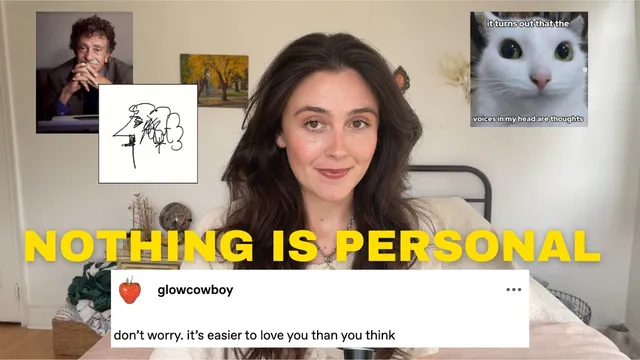
Facing Your Fear of Being Misunderstood IS the Creative Process
Based on Anna Howard's video on YouTube. If you like this content, support the original creators by watching, liking and subscribing to their content.
Misunderstanding is unavoidable when creative work reaches strangers; the goal is to metabolize it without letting it shut down the work.
Briefing
The core insight is blunt: once creative work is shared widely, misunderstanding isn’t a glitch—it’s a built-in feature. The real task isn’t to prevent people from misreading art, but to change how a creator metabolizes that friction so it doesn’t shut down the work or steal time from the “becoming” that makes it. That shift matters because the fear of being misunderstood often turns into over-explaining, perfectionism, and premature posting—behaviors that can drain creativity even when the creator is genuinely trying to be authentic.
A major thread runs through the episode: fear and self-doubt don’t simply threaten creativity; they arrive alongside it. One framing contrasts the idea that fear kills art with the idea that fear is inevitable in the making process. Self-doubt shows up at multiple stages—when an idea feels too small, when it feels too big, and even after completion when the creator wonders how they’ll be seen. The practical takeaway is not to eradicate fear, but to work with it by adjusting the relationship to it. Trying to “muscle away” fear can turn into shame, which then amplifies fear further.
To make that relationship shift, the episode argues for changing language and mindset around what’s being made. “Content” is treated as a product mindset—optimized for clarity so it can be consumed and sold quickly—while “art” is framed as a process of becoming, driven by questions rather than immediate knowability. That distinction is used to explain why creators can feel prickly about calling their work “art”: the word can imply preciousness, and preciousness can breed timidity. Instead, the episode borrows a “make things” stance from painter Brian Rutenberg: framing the work as things keeps it from becoming too precious, and discipline is built through persistence after repeated failure.
Misunderstanding is also reframed as developmental rather than personal. The episode points to the value of misunderstanding in reading and interpretation—getting something wrong at first can lead to new meaning later, especially as life changes. Online, misunderstanding becomes “impersonal” because strangers project their own histories onto the work. Even when a few reactions are devastating, honesty can galvanize a much larger audience that recognizes itself in the creator’s authenticity.
The episode then gets concrete about readiness for feedback. Before opening work to broad scrutiny, it lists four qualities to build: integrity (devotion to truth), neutrality (not letting feedback dictate self-worth), conviction (believing what’s being said, not just that it’s “good”), and curiosity (approaching dissonance as discovery). It warns that waiting for perfect readiness can become a perfectionism trap—described as a desire to be unharmable. The suggested approach is to start making with room to be messy, then protect the work’s sacredness for a while before sharing.
Finally, it offers a practical “curiosity switch” exercise for responding to misunderstanding: instead of freezing, over-explaining, or shutting down, answer a triggering remark with a question back. The goal is to redirect attention outward and interrupt fight-or-flight. For creators already posting, the episode recommends practicing neutrality and awareness—especially because negative comments tend to stick longer than positive ones. For creators not yet sharing widely, it recommends making lots of work and destroying or archiving early drafts, even using anonymity to embrace obscurity until confidence and self-trust are stronger.
Cornell Notes
Sharing creative work invites misunderstanding, and that’s unavoidable. The episode’s main move is to treat fear and self-doubt as part of the creative process rather than a detour—then adjust the creator’s relationship to that fear. It argues for reframing “content” as “art” or “things”: a process of becoming driven by questions, not a product engineered for instant clarity. Before seeking broad feedback, it recommends building integrity, neutrality, conviction, and curiosity so negative reactions don’t hijack self-worth. When misunderstanding hits, it suggests switching from explanation to curiosity by responding with a question back, redirecting attention outward and reducing freeze/fight impulses.
Why does misunderstanding happen even when a creator is being authentic?
How should a creator relate to fear and self-doubt during the creative process?
What’s the difference between “content” and “art” in this framework?
What four qualities should be developed before opening work to broad feedback?
How does the “anxiety-to-curiosity switch” help with negative feedback?
What does the episode recommend for responding to misunderstanding in comment sections?
Review Questions
- What does “neutrality” mean in the episode, and why is it positioned as a prerequisite for handling feedback?
- How does reframing work as “art” or “things” change the way a creator might post, package, or explain their work?
- Describe the curiosity-based response strategy. How does it differ from freeze, over-explaining, or shutting down?
Key Points
- 1
Misunderstanding is unavoidable when creative work reaches strangers; the goal is to metabolize it without letting it shut down the work.
- 2
Fear and self-doubt are treated as recurring parts of making, not proof that the work should stop.
- 3
Reframing “content” as “art” (or “things”) shifts focus from immediate clarity for others to a process of becoming driven by questions.
- 4
Before seeking broad feedback, build integrity, neutrality, conviction, and curiosity so negative reactions don’t hijack self-worth.
- 5
Premature sharing can steal time from the internal process of becoming; protect the work’s sacredness for a while.
- 6
Negative comments tend to stick longer than positive ones; awareness is the first step toward neutrality.
- 7
When misunderstood, redirect from explanation to curiosity by answering with a question back to interrupt fight/flight/freeze.