Fast and Simple Way to Choose Research Topics that Makes Publishing in Q1 Journals EASY
Based on Academic English Now's video on YouTube. If you like this content, support the original creators by watching, liking and subscribing to their content.
Aim for Q1 acceptance by selecting topics with clear, high-impact contributions rather than chasing crowded trends.
Briefing
Top Q1 journals often reject papers for one dominant reason: the work doesn’t offer enough contribution to the field. With acceptance rates around 10%, the path to publication—and later citations—depends on choosing research topics that are both high-impact and genuinely novel, rather than simply following the latest wave of “hot” ideas.
A useful way to think about this is the “lemmings” analogy. In research, breakthrough ideas tend to trigger rapid crowding: once a promising direction appears, many teams move in, producing a flood of papers. Some of those papers become influential, but many fade quickly—sometimes never receiving citations. The transcript points to broader evidence that roughly half of published papers never get cited at all. The practical takeaway is blunt: avoiding rejection and building citation traction requires stepping away from the crowd and finding topics that others haven’t fully explored.
The first ingredient for high-impact topics is looking beyond a researcher’s own discipline. Most scholars become deeply knowledgeable in a narrow area, which can create a “box” that blocks awareness of adjacent problems and methods—even within the same field, let alone across disciplines. The suggested fix is scheduled exploration: set aside time to study adjacent work using systematic reviews, but also lighter sources such as podcasts, YouTube, and non-fiction books. A concrete example comes from professional discrimination faced by non-native English speakers as English teachers. The author credits the book “Invisible Women” for generating multiple unexplored research avenues by reframing discrimination as a broader gendered issue rather than only a teacher-specific one.
The second ingredient is practical experience—getting out of the academic “ivory tower” and observing real-world problems. In a meeting of course book authors and editors, the author noticed that nearly everyone in the room was white and that about 90% were native speakers from the US and the UK. Although literature suggested the idea hadn’t been explored in their field, the insight came from the lived professional context, not from reading papers. That experience then helped shape a publishable study, landing in a top journal (described as number five out of over 1,000 journals in the discipline).
The third ingredient is identifying research gaps—places where the field has holes. Some gaps are small, but the most valuable are “deep” and underpopulated: no one seems to be working on them. The transcript recommends scanning the literature for three gap types: (1) insufficient research on a specific topic, group, material, or methodology; (2) limitations in prior studies, such as weaknesses in data analysis; and (3) lack of consensus, where findings conflict and researchers disagree. Keeping a running record in an Excel sheet or Word table helps maintain clarity.
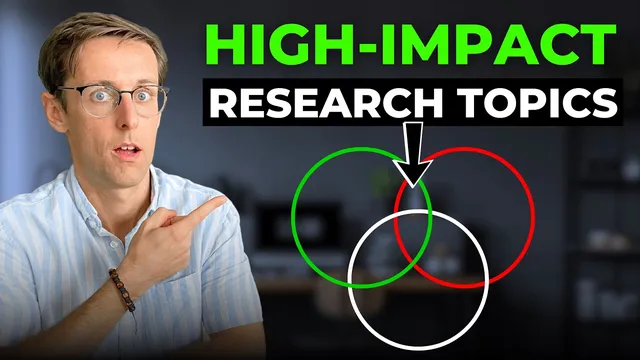
Together, the method is a three-part checklist: look outside the field, use practical experience to spark ideas, and target research gaps. The payoff is not just easier acceptance in top Q1 journals, but also higher citation potential and stronger academic impact.
Cornell Notes
High-impact Q1 research topics come from avoiding “lemming” dynamics—where many papers chase the same fashionable direction and many never get cited. The transcript argues that novelty and contribution matter most for acceptance, and that citations follow when work addresses real gaps. Three ingredients drive topic selection: (1) look outside one’s discipline to import problems and methods from adjacent fields; (2) use practical professional experience to spot issues that literature hasn’t captured; and (3) identify research gaps by checking for insufficient evidence, methodological limitations, or lack of consensus. The approach is operational: schedule time for adjacent-field exploration, track gaps in a table, and translate real-world observations into researchable questions.
Why does “following the crowd” often lead to low citation outcomes?
How does looking outside a discipline generate higher-impact research questions?
What role does practical experience play in creating novel research ideas?
What counts as a “research gap,” and how can it be found efficiently?
What is the combined method for choosing high-impact topics?
Review Questions
- What are the three specific ways to identify research gaps, and how would each translate into a potential paper topic?
- How can adjacent-field exploration change the framing of a research problem compared with staying inside one’s discipline?
- Give an example of how practical experience could reveal a novel research question that prior literature might miss.
Key Points
- 1
Aim for Q1 acceptance by selecting topics with clear, high-impact contributions rather than chasing crowded trends.
- 2
Treat “lemming” dynamics as a warning sign: popularity can produce many papers that still fail to attract citations.
- 3
Schedule time to explore adjacent fields using both academic sources (e.g., systematic reviews) and non-academic sources (e.g., podcasts, YouTube, non-fiction).
- 4
Use practical professional experience to spot real-world patterns that literature may not have captured.
- 5
Identify research gaps by checking for insufficient evidence, methodological limitations, and lack of consensus.
- 6
Track candidate gaps and ideas in a structured table (Excel or Word) to stay organized and avoid losing promising leads.
- 7
Combine outside-field insights, practical experience, and gap analysis to generate topics that are both novel and publishable.