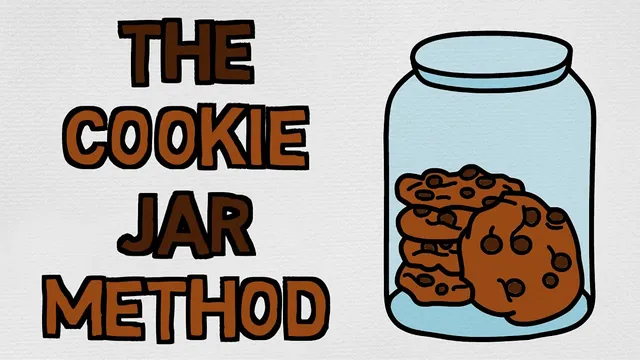
Feel Like Giving Up? Use The Cookie Jar Method by David Goggins
Based on Better Than Yesterday's video on YouTube. If you like this content, support the original creators by watching, liking and subscribing to their content.
The Cookie Jar method treats quitting as a mental resistance problem that can be countered by recalling prior wins.
Briefing
Giving up usually isn’t a lack of ability—it’s a mental shutdown that arrives when discomfort peaks. The “Cookie Jar” method reframes that moment by forcing people to draw immediate strength from their own history of overcoming obstacles, turning past wins (and even small victories) into fuel for the next hard stretch.
The approach is credited to David Goggins, a retired Navy SEAL known for extreme endurance achievements, including competing in more than sixty ultra-marathons, triathlons, and ultra-triathlons, setting course records, and regularly placing in the top five. He also holds a Guinness World Record for completing over 4,000 pull-ups in seventeen hours. Goggins uses the same mental tool for new challenges, and the method is rooted in a specific origin story tied to fundraising for the Special Operations Warrior Foundation, a nonprofit that provides scholarships to surviving children of Special Ops soldiers killed in the line of duty.
To raise awareness and money, Goggins vowed to run Badwater 135, widely described as the world’s toughest foot race—one with strict entry requirements, including completing multiple 100-mile races. He signed up for a qualifying event: a 24-hour race with the goal of running 100 miles. The scale was enormous—100 miles is compared to four marathons in one go. Despite looking fit from SEAL training, he hadn’t run more than a mile in the previous six months, and the race was only three days away, leaving no real preparation.
Early miles went okay, but around mile 25 self-doubt surfaced: could he actually finish with roughly three more marathons still ahead? By mile 50, his thighs felt like they were filled with lead and each ankle movement felt punishing. At mile 70, he reached a breaking point and sat down to rest. The physical toll was severe—bloody urine and diarrhea—marking one of the lowest moments of his life. In that moment, he kept asking “Why” and challenged why he was still doing something that should have ended hours earlier.
Then the turning point came. He remembered the task wasn’t new—he’d faced impossible demands before—and he deliberately tapped into the emotional state from earlier victories. He started walking slowly, step by step, using that stored confidence to keep going until the 100-mile mark. That mental inventory—past achievements and the ability to push through when the body and mind revolt—is what the “Cookie Jar” represents.
The method is then translated into everyday life. When motivation collapses—whether it’s studying through boredom, pushing a side business while exhausted, or going to the gym in bad weather—the solution is to open the “jar” and pull out a relevant “cookie”: a memory of something previously overcome. The transcript recommends creating an inventory on paper, including not only major accomplishments but also smaller wins and personal battles like shyness, depression, or fear. It also stresses a boundary: rest matters, and people should stop when their bodies signal shutdown. The “Cookie Jar” is meant to be used when the mind wants to quit, not to ignore health warnings. With repeated practice, the internal message shifts from “impossible” to “I can do this,” building mental toughness one cookie at a time.
Cornell Notes
The Cookie Jar method turns moments of quitting into moments of recall. It’s based on David Goggins’ experience during a 24-hour race aimed at qualifying for Badwater 135, where severe exhaustion and bodily distress led him to tap into the emotional energy of past victories. The “jar” is an inventory of personal wins—big and small—plus obstacles overcome, written down so it can be accessed quickly when motivation collapses. The practice is paired with a health boundary: rest when the body signals shutdown. Over time, repeatedly pulling strength from past success is meant to build mental toughness and make “impossible” feel less final.
What is the core idea behind the Cookie Jar method?
How did David Goggins’ Cookie Jar originate during his qualifying race?
What counts as a “cookie” for everyday challenges beyond endurance sports?
Why does the transcript emphasize writing an inventory on paper?
What boundary does the method set around rest and health?
Review Questions
- What specific moment in Goggins’ qualifying race triggered the shift from quitting to continuing, and what mental action did he take?
- How would you build a Cookie Jar inventory for a current goal (school, work, fitness) using both major and small victories?
- What signs would indicate that you should rest instead of using the Cookie Jar to push through?
Key Points
- 1
The Cookie Jar method treats quitting as a mental resistance problem that can be countered by recalling prior wins.
- 2
David Goggins’ Cookie Jar is traced to a 24-hour race where extreme exhaustion and bodily distress led him to tap into the emotional state of past victories.
- 3
A “cookie” can be any obstacle overcome, including small daily actions done despite low motivation.
- 4
Creating a written inventory makes it easier to access relevant confidence quickly when motivation drops.
- 5
The method includes a health boundary: rest when the body signals shutdown rather than forcing through indefinitely.
- 6
Repeatedly using past successes is intended to strengthen mental toughness over time, shifting “impossible” toward “I can do this.”