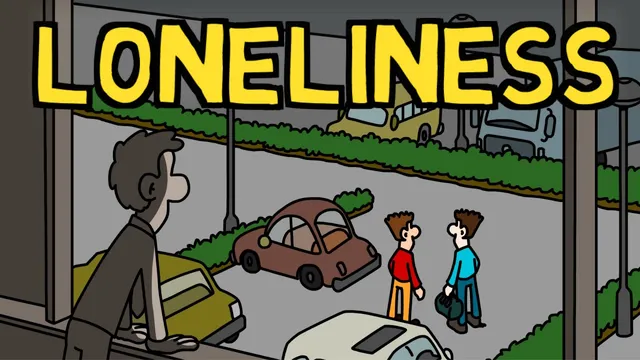
Feeling Lonely? You're Not Alone
Based on Better Than Yesterday's video on YouTube. If you like this content, support the original creators by watching, liking and subscribing to their content.
Loneliness is widespread and rising, with about one in three people reporting little to no friends or feelings of disconnection.
Briefing
Loneliness is a widespread, rising public-health problem—and it isn’t just an emotional metaphor. Roughly one out of three people report having little to no friends or feeling disconnected, and the trend has climbed over the past decade. The stakes are high because loneliness functions like “social pain,” activating the same biological systems tied to physical injury and shaping how people interpret the world.
A key reason loneliness matters is that it behaves like real pain in the brain. In a 2002 fMRI study by Matthew Lieberman and colleagues, participants played a ball-toss game while believing they were excluding or being excluded by two real online partners. Once the computer-controlled partners stopped throwing the ball to the participant, the participants showed strong emotional reactions—depression or anger. Brain scans revealed a stark difference between inclusion and exclusion: the same regions that respond to physical pain lit up during social rejection. The effect intensified as participants reported feeling worse, reinforcing the idea that exclusion hurts in a measurable, bodily way. A further test suggested that taking Tylenol (in controlled lab conditions) blunted these pain-linked responses, underscoring that social pain can be treated as pain, not mere sadness. (The transcript warns not to attempt this outside a medical setting.)
Loneliness also changes cognition and behavior, creating a self-reinforcing spiral. People who feel socially rejected become more pessimistic, interpreting ambiguous cues as threats—like seeing a stick in the woods and assuming it’s a snake. That heightened negativity makes social interactions feel riskier and more negative, which pushes people toward defensiveness: building emotional walls, avoiding contact, and ultimately driving others away. The longer the cycle continues, the harder it becomes to break.
At the same time, loneliness has an evolutionary purpose. Historically, being outcast from a small community could mean death, so the feeling likely evolved as a signal to reconnect. Today, survival doesn’t depend on belonging in the same way, which raises the question of why the signal still deserves attention. The transcript draws a line between occasional loneliness—which is normal—and chronic loneliness, which is linked to serious health risks. Chronic loneliness increases the risk of heart disease by 29% and stroke by 32%, and is described as comparable in harm to smoking a pack of cigarettes a day.
The discussion then distinguishes being alone from being lonely: loneliness is disconnection, not solitude. It also varies by person—introversion and extroversion shape what “enough” social connection looks like. The rise in loneliness is attributed to four overlapping forces: limited time and energy, easy access to technology that reduces face-to-face practice, and social media that replaces authentic interaction with curated comparison and low-effort engagement like likes and comments.
To respond, the transcript recommends reducing passive device time and using technology intentionally rather than letting it absorb attention. It also emphasizes deliberate social maintenance—friendships don’t stay alive automatically once circumstances change. Practical steps include reaching out to old friends, seeking environments aligned with personal interests (not forcing oneself into venues that feel wrong), and forming new connections through hobbies or activities that genuinely fit. Finally, it cautions against staying in toxic relationships “for the sake of it,” arguing that harmful connections can damage health even more than loneliness. The core takeaway: loneliness is real, biologically grounded pain—and treating it as such means investing in relationships as a form of self-care.
Cornell Notes
Loneliness affects about one in three people and has risen over the past decade, but it’s more than a feeling—it behaves like social pain. Brain-imaging work by Matthew Lieberman and colleagues found that social exclusion activates the same pain-related regions as physical injury, and the intensity tracks how bad participants feel. Chronic loneliness is tied to major health risks, including higher rates of heart disease and stroke. The transcript also explains why loneliness can become a downward spiral: pessimistic interpretations lead to defensive avoidance, which then increases disconnection. It concludes with practical guidance: reduce mindless device use, socialize intentionally, maintain friendships over time, and avoid toxic relationships even if they’re familiar.
What evidence links social rejection to “real” pain rather than metaphorical sadness?
How does loneliness turn into a self-perpetuating cycle?
Why does the transcript say loneliness can be useful even though it’s harmful when chronic?
What’s the difference between being alone and being lonely?
What factors drive the rise in loneliness, according to the transcript?
What practical steps are recommended to combat loneliness?
Review Questions
- How did the fMRI findings distinguish social exclusion from inclusion, and what did the pain-related brain regions suggest about loneliness?
- Why might pessimistic interpretations and defensive avoidance make loneliness harder to escape over time?
- Which four factors are presented as drivers of the loneliness rise, and how do they each reduce meaningful connection?
Key Points
- 1
Loneliness is widespread and rising, with about one in three people reporting little to no friends or feelings of disconnection.
- 2
Social rejection can activate pain-related brain regions, linking loneliness to measurable “social pain” rather than metaphorical sadness.
- 3
Chronic loneliness is associated with increased health risks, including a 29% higher risk of heart disease and a 32% higher risk of stroke.
- 4
Loneliness can create a downward spiral through more negative interpretations of social cues and defensive avoidance that pushes others away.
- 5
Being alone is not the same as being lonely; loneliness is disconnection between desired and actual social support.
- 6
The transcript attributes the loneliness increase to limited time/energy, technology reducing face-to-face practice, and social media encouraging comparison and low-authenticity interaction.
- 7
Combating loneliness involves intentional device use, maintaining friendships over time, initiating outreach, and avoiding toxic relationships even if they feel familiar.