Find Research Gap With Three AI Tools (FREE)
Based on Dr Rizwana Mustafa's video on YouTube. If you like this content, support the original creators by watching, liking and subscribing to their content.
Treat a research gap as a missing piece between existing studies, not a brand-new topic with no literature basis.
Briefing
Finding a research gap means spotting a missing piece between existing studies—an unanswered angle that can be addressed in future work. The practical route starts with the “future recommendations” section of a paper; if that’s missing, the “conclusion” section often signals what researchers still need to discover. Doing this well requires deep topic understanding and critical evaluation, but AI tools can reduce the time spent mapping related literature by surfacing connections, limitations, and future directions across papers.
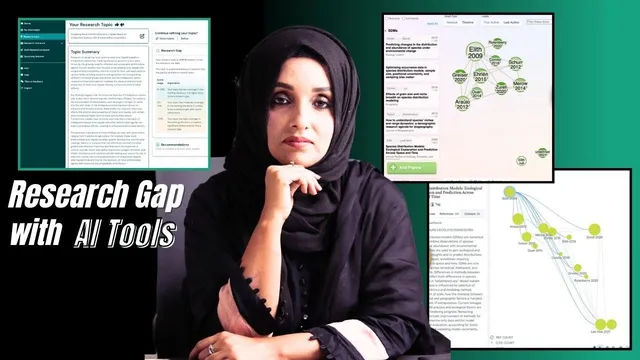
Three free tools can help researchers locate promising gaps and narrow down what to read next. The first is Connected Papers, which builds a visual network of related studies around a chosen “seed” paper. A researcher enters a topic, selects a relevant paper (for example, work on novel machine-learning methods for detecting fake reviews on social media), and then uses the tool’s linked cluster to browse additional papers. By clicking through the connected set, the researcher can open PDFs, assess limitations, and identify future research prospects—then shortlist the most relevant papers, often prioritizing more recent publications to carry the field forward.
The second tool is Litmaps, which also uses a seed paper to generate a literature map, but emphasizes quick access to details like abstracts, references, and citation context. In the example workflow, a 2022 seed paper with multiple citations is linked to other studies, including a 2023 paper that may show fewer or no citations yet. The key insight is that papers can connect indirectly: some studies may not link directly to the seed paper, but they connect through intermediate work. Tracing those interlinks helps reveal variables, factors, and alternative modeling choices that sit within the same research domain—useful for expanding the scope of a study or reframing the research question.
The third tool, named Aana (described as “the most favorite” and requiring the least effort), shifts from manual literature mapping to guided topic selection. After entering the field, interests, and keywords, Aana suggests research topics based on evaluated literature. It can also compare two topics, provide detailed summaries for each, recommend research methodologies aligned with prior approaches, and generate a tailored list of related literature for further review.
Overall, the workflow is straightforward: use Connected Papers or Litmaps to build a map of what’s been done and where the seams are, then use Aana when the goal is faster topic and gap selection with methodology recommendations. The tools don’t replace critical thinking; they accelerate the discovery of which papers and research angles deserve closer scrutiny—so the eventual gap is grounded in the existing literature rather than guesswork.
Cornell Notes
A research gap is a missing piece between existing studies—often signaled by “future recommendations” or “conclusion” sections in papers. AI tools can speed up the hard part: building a map of related literature so researchers can identify limitations and future research prospects more efficiently. Connected Papers and Litmaps use a seed paper to generate networks of connected studies, helping users trace direct and indirect links, then shortlist recent and relevant work. Aana focuses on lower-effort topic discovery: it suggests research topics, compares options, recommends methodologies based on prior literature, and provides a customized reading list. Together, these tools help turn broad interests into a specific, literature-grounded research direction.
What counts as a “research gap,” and where do researchers usually find hints inside papers?
How does Connected Papers help someone move from a topic idea to a focused reading list?
Why does Litmaps’ “indirect connection” idea matter for finding gaps?
What specific information does Litmaps provide when a user clicks a paper node?
What does Aana add compared with Connected Papers and Litmaps?
How should researchers use these tools without losing the “critical thinking” part?
Review Questions
- If a paper lacks a “future recommendations” section, what section should be checked next to find potential research directions?
- Describe how a seed paper is used in Connected Papers and how that leads to a shortlist of papers.
- Give an example of how indirect connections in Litmaps could reveal new variables or modeling choices relevant to a research gap.
Key Points
- 1
Treat a research gap as a missing piece between existing studies, not a brand-new topic with no literature basis.
- 2
Start gap hunting in “future recommendations”; if absent, use the “conclusion” section for suggested next steps.
- 3
Use Connected Papers to generate a linked cluster around a seed paper, then read PDFs to extract limitations and future research prospects.
- 4
Use Litmaps to trace both direct and indirect connections, which can reveal variables, factors, and alternative methods not immediately visible from the seed paper.
- 5
Prioritize more recent papers when narrowing a literature list to keep the research direction current.
- 6
Use Aana when the goal is faster topic selection and gap identification, including methodology recommendations and topic comparisons.
- 7
AI tools accelerate mapping and discovery, but researchers still must apply critical evaluation to confirm the gap.