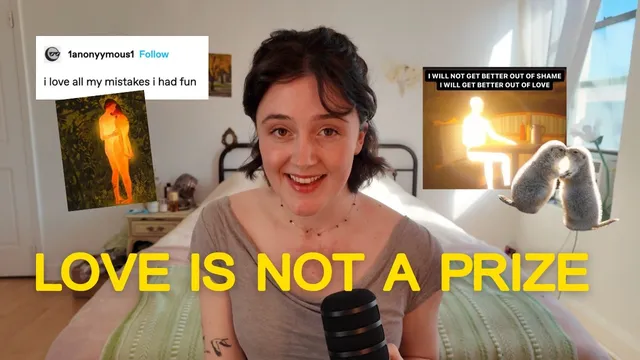
Forget about being lovable. Love will find you anyway.
Based on Anna Howard's video on YouTube. If you like this content, support the original creators by watching, liking and subscribing to their content.
Love is framed as non-transactional: it isn’t a prize owed for goodness or innocence.
Briefing
Love isn’t a reward earned through goodness, innocence, or flawless behavior—it’s something that happens between people, shaped by compatibility and care rather than moral performance. That framing matters because it exposes how “worthiness” narratives turn relationships into a transactional test: if love is treated like a prize, then rejection becomes proof of personal failure, and harm gets processed as shame instead of something to repair.
The episode starts with a blunt critique of transactional language around romance—talking about “high value” people, “the market,” and love as a numbers game. In that worldview, worth becomes measurable, and heartbreak becomes a kind of accounting error. But love and worth aren’t connected, and lots of people who cause harm still find deep attachment. The real question, then, isn’t how to perform to be “owed” love; it’s how to stop tying identity to whether others approve.
Fear of love often isn’t fear of heartbreak itself, but fear of losing social status—especially when someone believes failure would mean they were never lovable in the first place. The episode argues that divorce and unreciprocated feelings are frequently treated like personal indictments, when they’re better understood as outcomes that can be grieved without turning them into self-condemnation. Shame becomes the mechanism that enforces the “innocence prerequisite”: if love requires innocence, then admitting desire, asking for needs, or showing anger risks being labeled unworthy.
To illustrate how cultural scripts infantilize and control, the episode reflects on People We Meet on Vacation (Emily Henry, adapted to Netflix). Poppy’s characterization leans into a “manic pixie dream girl” dynamic—unaware, “innocent,” and ultimately revealed to have desires that were repressed. The internalized takeaway, the episode suggests, is that desirability depends on suppressing wants. That logic echoes older fanfiction tropes that romanticize coercion, including the “kidnapped by One Direction” mythology, and connects to broader puritanical ideologies that seep into romance narratives.
From there, the argument broadens: treating innocence as a requirement for love fuels moral perfectionism and victim complexes. If shame is the price of admission, people either collapse inward (self-esteem damage) or deflect outward (blaming the person who rejected them). The episode also draws on a TikTok perspective that “clean hands” aren’t the goal—what matters is hands capable of helping others, even while acknowledging participation in imperfect systems.
The episode then links interpersonal love to public accountability. It points to activists like Martin Luther King Jr. and Angela Davis, arguing that real change often brings backlash; clinging to innocence would have limited their impact. It also describes “womaned”—a cycle of idolization, degradation, and disposal that punishes women for being visible and then discards them when they’re no longer useful.
Finally, the episode grounds the thesis in poetry and grief. Andrea Gibson’s poem “What Love Is” is used to show love persisting even when someone does wrong—love as “light and sadness,” not a moral ledger. The closing message is practical: love isn’t a transaction to be earned, and people don’t have to accept humiliation or build an identity around being a victim to deserve care. Love is portrayed as a dance—circulating through giving and receiving, changing partners as life changes.
Cornell Notes
Love is framed as something that isn’t earned through goodness, innocence, or moral perfection. Instead of treating love like a prize owed to “good people,” the episode argues that love happens when two people form a good mix and keep choosing care—despite mistakes, shame, and imperfect systems. Cultural scripts often demand innocence, especially from women, turning desire into something to repress and rejection into something to internalize as personal failure. That innocence obsession can produce moral perfectionism, victim complexes, and dishonest people-pleasing. The episode ends by tying love to accountability and grief: Andrea Gibson’s “What Love Is” portrays love continuing even after wrongdoing, and Meg’s writing describes love as a continual choreography of care.
Why does the episode reject the idea that love is “earned” or “owed” based on being good?
How does shame distort romantic outcomes like unrequited love?
What role does “innocence” play in the episode’s critique of romance culture?
How does the episode use People We Meet on Vacation to make its point?
What does “self-respect” mean in this framework, and why might it require being seen as a villain?
How do Andrea Gibson’s poem and the “choreography of care” concept reinforce the episode’s thesis?
Review Questions
- What changes when love is treated as a prize rather than a relationship dynamic between people?
- In what ways does shame function as a “litmus test” in unrequited love, and why does the episode call that unreliable?
- How does the episode connect innocence-based worthiness to public backlash and accountability in activism or online life?
Key Points
- 1
Love is framed as non-transactional: it isn’t a prize owed for goodness or innocence.
- 2
Transactional romance language (“high value,” “market,” and “numbers game”) turns rejection into a moral verdict.
- 3
Fear of love often reflects fear of status loss and social worth, not fear of heartbreak itself.
- 4
Cultural scripts that require innocence can fuel repression of desire, moral perfectionism, and victim complexes.
- 5
Shame after rejection can either crush self-esteem or get redirected into blaming the person who didn’t reciprocate.
- 6
Accountability and activism don’t require “clean hands”; the focus should be on doing harm-reducing work and helping others.
- 7
Love persists through wrongdoing and grief, described as a continuing choreography of care rather than an earned reward.