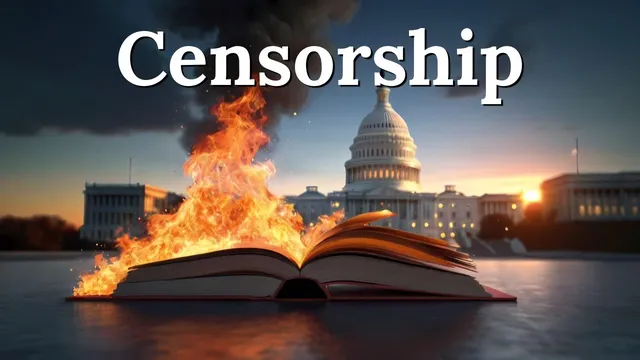
Free Speech, Censorship, and the Threat of Totalitarianism
Based on Academy of Ideas's video on YouTube. If you like this content, support the original creators by watching, liking and subscribing to their content.
Government censorship of misinformation/disinformation requires an authority to decide truth versus deception, turning speech into an instrument of ideological control.
Briefing
Efforts to criminalize “misinformation,” “disinformation,” and “hate speech” are framed as an existential threat to free and prosperous societies—not because speech harms never exist, but because government control over truth and acceptable expression is the mechanism that enables authoritarian rule.
The argument begins with a distinction between basic, long-standing limits on speech—like defamation, threats, incitement to violence, and property-based exclusion—and a more expansive governmental role in policing ideas. In this view, the danger isn’t the existence of constraints; it’s the shift from narrow legal protections to bureaucratic censorship of what officials decide is false, misleading, or hateful. Once governments treat certain categories of speech as punishable, they must create regulatory authority to decide what counts as truth versus deception. That requirement matters because truth judgments are inherently contestable, and the power to make them becomes a lever over society.
The case against government “truth” boards rests on several points. First, there is rarely consensus among experts, so the selection of which experts get authority can determine outcomes. Second, experts are still vulnerable to corruption by money and power. Third, specialization can produce “myopia”: experts may be best positioned to describe current knowledge in a narrow domain, but not to recognize groundbreaking truths that come from outside the mainstream. The argument adds that truth is not discovered by decree; it emerges through open competition among ideas, where even mistaken claims can force clarification and sharpen understanding. Silencing false views, it warns, deprives both present and future generations of the chance to exchange error for truth—or at least to see truth more clearly through collision with error.
A further concern is psychological and civic. When the state claims it must protect people from dangerous ideas, it implicitly treats citizens as incapable of independent judgment, producing an “infantilized” public. That dynamic, the argument says, also undermines dignity: citizens lose moral responsibility when officials decide what they are “fit” to hear.
The most consequential claim is that censorship of “misinformation” and “disinformation” paves the way for totalitarianism. Totalitarian systems, the argument notes, typically allow only ideas aligned with ruling ideology and label dissent as false or dangerous. Granting government the power to determine truth creates a “Ministry of Truth” function in practice: dissent can be reclassified as disinformation, and compliance can be engineered without overt force. The argument treats this as social engineering—re-educating people through official lenses about what is real and what is permissible.
The discussion then turns to hate speech laws. Hate speech is defined as hateful or discriminatory views targeting groups historically subject to discrimination. The justification often rests on the idea that hateful words are a form of violence that causes emotional and mental harm. The counterargument is that this “assaultive speech” framing fetishizes words as inherently destructive, ignoring that harm from verbal attacks depends heavily on the recipient’s psychological constitution. Because the threshold for “hate” is subjective, the state can use hate speech laws to silence criticism of governments, immigration, abortion, climate policy, or war—any topic officials can portray as psychologically harmful.
Finally, the argument warns that censorship creates social division, fosters resentment toward protected groups, and can drive pent-up hostility into physical violence. It also claims hate speech restrictions are unnecessary because societies already rely on informal mechanisms—norms, etiquette, and especially social ostracism—to curb hateful rhetoric. The overall conclusion is a slippery-slope warning: if governments can police speech for “dangerous” ideas, the logic could extend toward restricting thoughts themselves. The remedy offered is more speech and more independent public opinion, paired with ostracism of those complicit in censorship, to prevent a return to mass repression.
Cornell Notes
The central claim is that government censorship and criminalization of “misinformation,” “disinformation,” and “hate speech” threatens free society because it requires officials to decide what is true and what is permissible. That power is portrayed as unreliable—experts disagree, can be selected to produce desired outcomes, can be corrupted, and may miss new truths outside their specialization. The argument also says censorship harms intellectual and moral development by infantilizing citizens and removing their responsibility to judge ideas for themselves. Most importantly, it claims this structure enables totalitarianism: dissent can be relabeled as false or dangerous, allowing a de facto “Ministry of Truth.” The discussion of hate speech adds that subjective thresholds and the “words as weapons” framing can let governments punish criticism, while informal social norms and ostracism can curb hateful speech without criminal law.
Why does the argument treat government “misinformation” regulation as fundamentally different from narrow speech limits like defamation or incitement?
What are the main reasons given for why experts are a poor substitute for democratic judgment about truth?
How does the transcript connect censorship to totalitarianism?
What critique is offered against hate speech laws that treat hateful words as a form of violence?
Why does the transcript say hate speech censorship can backfire socially and psychologically?
What alternative does the transcript propose to criminalizing hate speech?
Review Questions
- What conditions must exist for a government to censor “misinformation,” and why does the transcript treat that as a structural risk?
- How does the transcript argue that open debate benefits truth-seeking even when some views are false?
- According to the transcript, what makes hate speech thresholds especially vulnerable to political misuse?
Key Points
- 1
Government censorship of misinformation/disinformation requires an authority to decide truth versus deception, turning speech into an instrument of ideological control.
- 2
Experts are portrayed as unreliable arbiters because consensus is rare, authority can be shaped by selecting which experts count, and specialization can miss new or outsider-discovered truths.
- 3
Truth is described as emerging from open competition among ideas, where even false claims can force clarification and sharpen understanding.
- 4
Censorship is said to infantilize citizens by implying they cannot be trusted to judge ideas, undermining dignity and moral responsibility.
- 5
The transcript argues that censorship enables totalitarianism by allowing dissent to be reclassified as disinformation and by engineering compliance without overt force.
- 6
Hate speech laws are criticized as relying on subjective thresholds and a “words as weapons” framing that ignores how harm depends on psychological constitution.
- 7
Informal social enforcement—especially ostracism—is presented as a more effective and less dangerous way to curb hateful rhetoric than criminal law.