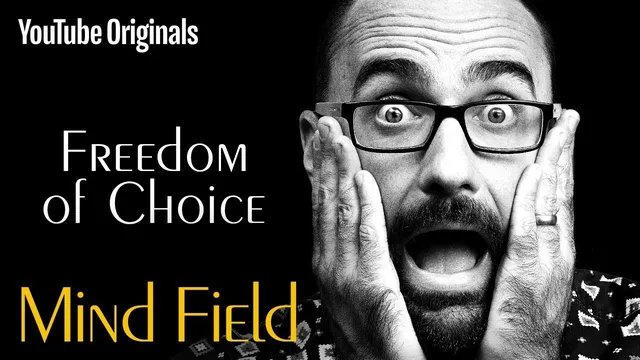
Freedom of Choice - Mind Field (Ep 5)
Based on Vsauce's video on YouTube. If you like this content, support the original creators by watching, liking and subscribing to their content.
Edward Bernays used mass media and coordinated doctor endorsements to promote the idea that a heavy breakfast was healthier, boosting bacon sales for Beech-Nut Packing Company.
Briefing
Bacon-and-eggs isn’t treated as a natural human pairing so much as a manufactured habit: in the 1920s, public-relations pioneer Edward Bernays used mass media to steer doctors, newspapers, and consumers toward the idea that a “heavy breakfast” was best—boosting sales for Beech-Nut Packing Company. The point isn’t that people never like bacon and eggs, but that what feels like collective free choice can be engineered by a small number of actors who know how to shape what society accepts as common sense.
From there, the discussion pivots to how “choice” itself affects people. When shoppers at Venice Beach were offered only two jelly-bean flavors, most people seemed satisfied and made quick selections. But when the options multiplied, many participants started second-guessing—worrying they might miss out on other flavors, regretting their first pick, or feeling unsure they made the “right” decision. That pattern echoes the classic jam study by Sheena Iyengar and Mark Lepper: a display with 6 jam varieties prompted more sampling and produced a 30% purchase rate, while a display with 24 varieties led to “choice paralysis,” with only 3% buying. The takeaway is blunt: more options can increase anxiety and reduce action, even when people say they want variety.
A follow-up “Tea Time” experiment tests whether freedom of choice changes performance and satisfaction. Contestants given a choice between caffeinated black tea and calming herbal tea often chose based on what they thought they needed—energy for the word-scrambling task or calm focus to manage nerves. Yet the results skew toward regret: those who selected their own tea frequently ended up unhappy with their performance and wished they had chosen differently. By contrast, contestants assigned tea at random were more accepting of their outcome, even when their scores were low. The pattern suggests that choice doesn’t just add convenience; it can also create a mental burden that invites doubt after the fact.
The final segment turns from consumer behavior to free will. A “mind-reading” box—built around subconscious brain activity—lights up just before a person presses a button, implying the decision is prepared before conscious awareness. The box is first calibrated by recording brain activity, then it predicts timing rather than which button will be chosen, turning the task into a contest against one’s own awareness. Even when participants understand the mechanism, the experience feels unsettling: it raises the question of whether conscious intention is the driver or merely the narrator of actions already set in motion.
Taken together, the thread runs through breakfast habits, shopping choices, and button-press decisions: what people experience as personal agency can be shaped by forces outside immediate awareness—whether those forces are corporate messaging, cognitive overload, or subconscious neural timing.
Cornell Notes
The material argues that “free choice” often feels real while being influenced by hidden forces. A historical example links the popular bacon-and-eggs pairing to Edward Bernays’ public-relations campaign, where mass media and coordinated endorsements helped sell a “heavy breakfast” promoted by Beech-Nut Packing Company. Experiments with jelly beans and jam show that too many options can trigger “choice paralysis,” reducing the likelihood of purchase. In “Tea Time,” people given freedom to choose between black and herbal tea frequently regret their decision, while randomly assigned tea leads to more acceptance. A final mind-reading box suggests decisions may begin in subconscious activity before conscious awareness, challenging what “free will” means.
How did Edward Bernays help make “heavy breakfast” feel like common sense?
Why can more options make people less likely to act?
What did the jelly-bean experiment reveal about regret and second-guessing?
How did “Tea Time” connect choice with performance and satisfaction?
What does the mind-reading box imply about when decisions start?
How do the “dominoes” metaphor and the free-will question tie the segments together?
Review Questions
- What evidence links bacon-and-eggs to engineered messaging rather than purely natural preference?
- How do the jam and jelly-bean findings explain “choice paralysis” in terms of behavior and emotion?
- What distinction does the mind-reading box make between predicting timing and predicting the specific choice, and why does that matter for free will?
Key Points
- 1
Edward Bernays used mass media and coordinated doctor endorsements to promote the idea that a heavy breakfast was healthier, boosting bacon sales for Beech-Nut Packing Company.
- 2
When options multiply, people can experience “choice paralysis,” leading to fewer purchases and more hesitation rather than greater satisfaction.
- 3
Experiments with jelly beans suggest that larger choice sets increase second-guessing and regret after selecting a flavor.
- 4
In “Tea Time,” giving people freedom to choose between black and herbal tea often produced regret and dissatisfaction, while random assignment led to more acceptance.
- 5
The mind-reading box frames decisions as preceded by subconscious activity, with conscious awareness arriving after the decision process begins.
- 6
Across examples, “free choice” can feel personal while being shaped by external influence, cognitive load, or subconscious timing.