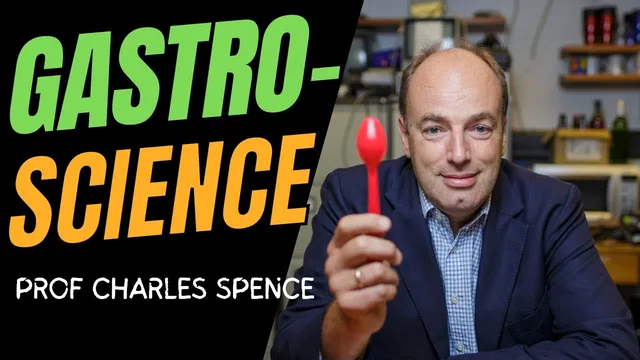
Gastrophysics - the new science of eating / Prof Charles Spence interview
Based on Qualitative Researcher Dr Kriukow's video on YouTube. If you like this content, support the original creators by watching, liking and subscribing to their content.
Sound can change perceived food properties: altering crunch audio made Pringles seem about 15% more crunchy and fresher.
Briefing
Sensory cues—sound, color, and even cutlery—can measurably change how food tastes, and the effects can carry from tightly controlled labs into real restaurants. Charles Spence, a sensory scientist and experimental psychologist, describes “gastrophysics” as the effort to treat eating as a multisensory experience: the brain blends smell, taste, sight, hearing, and touch into flavor, so changing any one cue can shift perceived sweetness, crunchiness, spiciness, and overall liking.
Spence’s best-known work centers on “Sonic seasoning,” including the “Sonic chip” experiment that earned an IG Nobel Prize for nutrition. Hungry undergraduates were given Pringles while researchers altered the crunch sound—making it louder or quieter and boosting or cutting high frequencies. The result was not just a change in how crunchy the chips sounded; participants rated them as about 15% more crunchy and fresher when the audio matched the intended crunch profile. The approach traces back to a classic psychology illusion (the “parchment skin” effect) where changing sound alters perceived touch sensations, then applies the same logic to food.
From there, the research expands beyond the crunch. Spence describes studies showing that the sound of crisp packets—wrinkling and rattling—can also enhance perceived crispness. He then connects sound to broader taste experiences, including ambient soundscapes (airplanes, the sea) and music designed to amplify specific flavors. For spiciness, lab experiments identify “spicy” sound characteristics—high pitch, high tempo, and high energy—and then translate those parameters into music. In restaurant trials, diners eating a spicy mango salad reported higher spiciness ratings when the restaurant played the matched “spicy” soundscape, with the effect appearing in naturalistic settings rather than only in controlled testing.
Color research follows a similar path: visual cues can’t be ignored even when people are told to focus elsewhere. Spence recounts experiments using colored fruit drinks where participants were instructed to ignore color and report flavor; they still couldn’t disregard it. He also describes a major plate-color study at the Alícia Foundation near Barcelona: the same strawberry mousse served on white versus black plates was rated roughly 9–13% higher for sweetness and flavor on the white plates. Over time, that line of work grew into dozens of published studies on how containers—plates, cups, bowls—shape taste judgments.
Gastrophysics then pushes into the “ignored” mechanics of eating. Spence notes that cutlery has rarely been studied scientifically, despite being central to how food reaches the mouth. He also highlights how plate shape and texture can matter, including collaborations with ceramic makers who produce designs intended to bring out sweetness or pungency through tactile and visual properties.
A key theme is experimental design across contexts. Spence describes using both lab settings (paid participants, systematic rating tasks, controlled conditions) and real-world environments (restaurants, cafes, large tasting events). He acknowledges expectancy and priming effects can complicate interpretation at massive scales, so researchers often look for consistency across both controlled and naturalistic settings.
Finally, Spence frames the next frontier as moving from “enhancing” known flavors to engineering extraordinary emotional responses—dishes that can trigger awe, ASMR-like chills, or even tears. He cites a Milan experiment with chef Federico Roy, where a rice pudding dish reportedly made about 60% of diners cry, and researchers are now testing which elements of the experience drive that reaction. The broader implication: multisensory design isn’t just for restaurants and food brands; it extends to retail atmospheres and even automotive safety, where Toyota used sound cues from behind the driver’s headrest to help drivers brake more quickly.
Cornell Notes
Gastrophysics treats eating as a multisensory process: sound, sight, and touch can change perceived flavor. Charles Spence’s work shows that altering crunch audio can make chips seem ~15% more crunchy and fresher, and that matching “spicy” music parameters can raise spiciness ratings in restaurants. Color studies demonstrate that people struggle to ignore visual cues—even when told to—leading to higher sweetness and flavor ratings when desserts are served on white plates rather than black. Across labs and real dining settings, the same sensory manipulations often shift judgments, suggesting flavor is constructed by the brain from many inputs. The field is now aiming beyond enhancement toward designing experiences that provoke strong emotional reactions.
How did the “Sonic chip” experiment demonstrate that sound changes taste perception?
Why do color experiments often find that participants can’t ignore visual information?
What did the plate-color study at the Alícia Foundation find?
How does “Sonic seasoning” connect music to specific tastes like spiciness?
What’s the role of context in these experiments, and why does it matter?
What does the “next step” look like beyond making food taste better?
Review Questions
- Which sensory cue types (sound, color, texture, cutlery) have the strongest evidence in Spence’s examples, and what outcome changes did they produce?
- How do researchers balance controlled lab testing with real restaurant testing when studying multisensory effects?
- What does the “paradox” idea (same wine tasting differently in different contexts) suggest about how gastrophysics should be applied in practice?
Key Points
- 1
Sound can change perceived food properties: altering crunch audio made Pringles seem about 15% more crunchy and fresher.
- 2
Music can be engineered to amplify specific tastes; “spicy” sound parameters increased spiciness ratings for diners eating a spicy mango salad.
- 3
Color cues are hard to ignore even when participants are told they’re irrelevant, and they can shift sweetness and flavor ratings.
- 4
Plate color matters: the same strawberry mousse was rated roughly 9–13% sweeter and more flavorful on white plates than on black plates.
- 5
Container effects extend beyond desserts to drinks and coffee, with many published studies finding consistent color influence.
- 6
Gastrophysics extends to “mundane” eating components like cutlery, shape, and texture—elements often overlooked in traditional food science.
- 7
The field is moving toward designing emotional, high-impact experiences (e.g., tears or awe), not just incremental flavor enhancement.