Gaza is a Testing Ground
Based on Second Thought's video on YouTube. If you like this content, support the original creators by watching, liking and subscribing to their content.
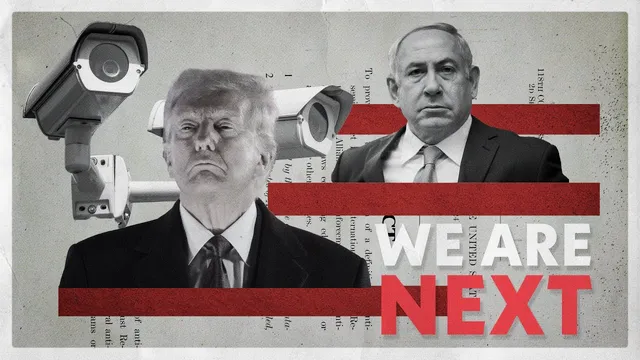
The occupation of Palestine is framed as a long-running “testing ground” for surveillance, repression, and weapons designed to suppress dissent.
Briefing
Israel’s decades-long occupation of Palestine functions as a live “testing ground” for suppressing dissent—developing surveillance, policing, and weaponry that later gets exported abroad, including to the United States. The central warning is that what is normalized against Palestinians under Israeli colonial rule tends to return home: the same playbook for monitoring, pre-empting, and punishing resistance can eventually be applied to other populations elsewhere.
A key thread links on-the-ground repression in Gaza and the West Bank to a broader global pipeline of technology and tactics. Palestinians face pervasive surveillance—phone calls monitored, telecommunications controlled, social media tracked—and arrests often follow “pre-crime” logic, where supportive speech can be treated as a threat even when it does not call for violence. Journalist Anthony Lowenstein, author of *The Palestine Laboratory*, frames the “laboratory” concept as both a method and a motive: Israel seeks the “best answer” to how far an oppressed population can be pushed while keeping control.
That control is increasingly tied to exportable digital tools. Israeli-made spyware and intrusion systems—such as Pegasus from NSO and Paragon’s graphite, described as spy software capable of breaching encrypted messaging apps like Telegram and Signal—are portrayed as part of a wider ecosystem of “battle-tested” repression. Lowenstein connects these tools to targeting of activists and journalists, including human rights defenders, and notes that Israeli firms openly market equipment as proven in Palestine.
The transcript then argues that the United States has long imported these methods. After 9/11, American and Israeli security personnel collaborated through training and operational exchange. Examples include Israeli-linked surveillance systems in U.S. cities: Baltimore’s camera network run through Nice Systems, Atlanta’s police surveillance modeled on Jerusalem’s command-and-control center, and New York’s post-9/11 Muslim surveillance program involving undercover intrusions and information collection. The claim is that Israeli tactics for intimidation and control have been adapted into domestic policing.
To explain why this pattern repeats, the transcript invokes the “Imperial Boomerang effect,” drawing on ideas associated with A.E. Césaire and others: colonial power does not stay contained. Techniques learned abroad to manage colonized populations “boomerang” back, reshaping policing at home into something more militarized, more invasive, and more willing to disregard human life. The transcript points to U.S. examples such as militarized responses at Standing Rock (armored vehicles and tear gas) and Ferguson (heavily armed policing and gassing), and links the growth of police firepower to the U.S. military’s 1033 program, which transfers surplus equipment to law enforcement.
The final argument widens the lens: Israel is presented not only as a supplier of hardware and software, but as a model of ethnoreligious nationalism—an approach that helps states justify escalation by framing dissent as belonging to an out-group. The warning is blunt: once a system proves it can operate with impunity in one place, the “circle of undesirables” can expand. What begins as distant colonial violence, the transcript suggests, eventually becomes a domestic political tool.
Cornell Notes
The transcript portrays Israel’s occupation of Palestine as a “testing ground” for suppressing dissent—using surveillance, pre-crime-style policing, and weaponized digital intrusion. It argues that these methods are exported and adopted elsewhere, especially in the United States, through technology sales and security training ties. The discussion highlights Israeli spyware and surveillance tools (including Pegasus and Paragon’s graphite) and claims they have been used against Palestinians, activists, and journalists. To explain the recurring pattern, it invokes the “Imperial Boomerang effect,” arguing that colonial policing techniques return home in more militarized and invasive forms. The stakes are framed as a warning: systems built to control an out-group tend to expand their reach over time.
What does “Palestine as a laboratory” mean in this account, and what problem is it trying to solve?
How does the transcript connect Israeli surveillance and spyware to real-world targeting?
What is the “Imperial Boomerang effect,” and why does it matter to the argument?
What evidence does the transcript give for U.S. adoption of Israeli policing and surveillance tactics?
How does the transcript explain the militarization of U.S. policing?
Why does the transcript say Israel’s role goes beyond selling weapons and software?
Review Questions
- According to the transcript, what mechanisms make colonial policing techniques return “home,” and what does that imply for future targets?
- How do Pegasus and Paragon’s graphite fit into the broader claim about surveillance exports and pre-crime-style repression?
- What role does the 1033 program play in the transcript’s explanation of why U.S. police became more militarized?
Key Points
- 1
The occupation of Palestine is framed as a long-running “testing ground” for surveillance, repression, and weapons designed to suppress dissent.
- 2
Palestinians are described as facing pervasive monitoring, including phone surveillance and social media tracking, with arrests sometimes justified through “pre-crime” logic.
- 3
Israeli-made intrusion tools (including Pegasus and Paragon’s graphite) are presented as being marketed as “battle-tested” in Palestine and used against activists and journalists.
- 4
The transcript argues that U.S. policing and surveillance have imported Israeli tactics through post-9/11 collaboration and city-level technology deployments.
- 5
The “Imperial Boomerang effect” is used to explain how methods learned abroad to control colonized populations can return as militarized domestic policing.
- 6
Militarization in the U.S. is linked to the 1033 program, which transfers military equipment to police forces.
- 7
The final warning is that systems built to target an out-group can expand their reach, making repression elsewhere a matter of time rather than possibility.