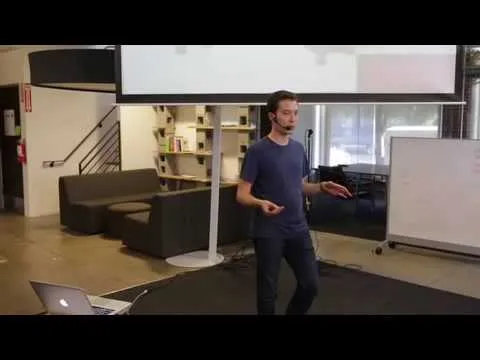
Get Stuff Done: Design Your Workflow and Double Your Productivity class, at Parisoma
Based on Tiago Forte's video on YouTube. If you like this content, support the original creators by watching, liking and subscribing to their content.
Stress in GTD comes from poorly managed internal commitments (“open loops”), not simply from having too much to do.
Briefing
Thiago Forte’s class at Parisoma frames productivity as a system for turning mental “open loops” into clear, actionable next steps—so work stops leaking into anxiety and starts flowing. The core claim is that stress doesn’t come from having too much to do; it comes from managing unfinished commitments poorly. In GTD terms, an open loop is anything unfinished that carries an “ought to / should / must” feeling—emails, voicemails, physical problems like a flat tire, and even mental nagging. Because the brain has no reliable sense of time or place, it keeps treating every open loop as urgent “all the time,” creating cognitive overload.
The class then offers a practical antidote: a five-phase workflow from David Allen’s Getting Things Done. First, collect every open loop into a trusted capture method so nothing has to live in memory. Forte emphasizes three rules for collection containers: capture everything, keep the number of buckets small, and empty them regularly (daily or at least weekly). Second, process items one at a time by asking whether they’re actionable. If they are, the system demands the “real next physical action”—the specific step a person could do immediately—rather than vague to-dos like “clean garage.” If an item isn’t actionable, it goes into categories such as trash, reference, or “someday/maybe.” Third, organize the results into a structured set of lists: a project list (projects are goals with a finish line), project plans/resources, “waiting for” items that depend on other people, and a protected “next actions” list containing only tasks that can be done at any moment.
A key distinction runs through the organizing phase: projects versus areas of responsibility. Projects have goals and a defined endpoint; areas of responsibility are ongoing standards (like being a good father or maintaining health). Forte also stresses hierarchy: every task should belong to an area of responsibility, while only multi-step efforts become projects. “Waiting for” items should be separated from next actions so the system doesn’t turn into a depressing list of things that can’t be done.
Review is treated as the system’s safety mechanism. Forte calls the weekly review the “master key” because it prevents the mind from reclaiming the job of remembering. The review’s purpose is to gather and process leftovers, verify that containers still feel trustworthy, and restore “clean, clear, current, and complete” commitments. He provides example routines: daily checks of calendar and inbox, a short weekly review scanning past and future, and a monthly review of projects, areas of responsibility, and “someday/maybe.” He also argues the time cost can be small—he cites his own time tracking showing about 10 minutes a day (roughly 2% of time).
Finally, choosing what to do next uses David Allen’s four criteria model: context (where you can act), time (what fits the available window), energy (what you can handle mentally right now), and priority last (because it shifts too quickly to manage second-by-second). The class closes by tying GTD to Bruce Lee’s “economy of movement” and Jackie Chan’s more chaotic style: productivity comes from minimal, repeatable actions; self-awareness over brute discipline; and resisting conventional habits like constant email checking. The practical takeaway is simple: build a workflow that makes the easy parts automatic and reserves attention for the hard, creative work.
Cornell Notes
The class argues that stress comes less from having too many tasks and more from unfinished commitments (“open loops”) being managed in the mind. Getting Things Done (GTD) addresses this with a five-phase workflow: collect everything in trusted capture buckets, process items one at a time into actionable next steps (or reference/trash/someday), organize work into projects, areas of responsibility, waiting-for, and a protected next-actions list, review containers regularly (especially weekly), and then do the next action. A major emphasis is on defining the “real next physical action” and separating projects from ongoing responsibilities. The system matters because it restores trust in one’s commitments, reducing mental noise and making it easier to start work immediately.
What counts as an “open loop,” and why does it create stress even when the workload isn’t objectively huge?
How does GTD processing turn vague tasks into something you can actually do?
Why does GTD separate projects, areas of responsibility, and next actions?
What should go into “waiting for,” and why is that separation important?
What is the weekly review supposed to accomplish, and what makes it different from casual checking?
How does GTD decide what to do next when multiple actions are available?
Review Questions
- In your own words, what is an open loop, and what GTD mechanism prevents it from living in your head?
- Give an example of a vague to-do and rewrite it into a “real next physical action.” What changed?
- Why does GTD treat items taking more than two steps as projects, and how does that affect your next-actions list?
Key Points
- 1
Stress in GTD comes from poorly managed internal commitments (“open loops”), not simply from having too much to do.
- 2
Capture every open loop in a trusted collection bucket, but keep the number of buckets small and empty them regularly (daily or weekly).
- 3
Process items one at a time: decide whether they’re actionable; if actionable, define the next physical action in concrete, do-able terms.
- 4
Separate work into the right containers: projects (goals with endpoints), areas of responsibility (ongoing standards), waiting-for (depends on others), and a protected next-actions list.
- 5
Use regular reviews—especially a weekly review—to keep the system “clean, clear, current, and complete” so the mind stops trying to remember everything.
- 6
Choose next actions using context, time, and energy first; treat priority as last because it shifts too quickly to manage continuously.
- 7
Build the system to be simple enough to maintain: the best workflow is the one you actually keep using.