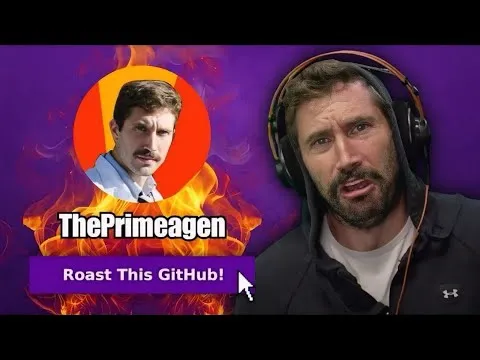
Github Roaster
Based on The PrimeTime's video on YouTube. If you like this content, support the original creators by watching, liking and subscribing to their content.
Follower counts and star counts are treated as weak proxies for real engineering value when repositories accumulate unresolved issues.
Briefing
GitHub “roasting” turns into a broader takedown of online status metrics: follower counts, star counts, and flashy bios get treated as substitutes for maintenance, code quality, and real contributions. The roast starts by mocking the idea of “GitHub social” itself—how following works, why follower numbers feel meaningless, and how inflated public profiles can create a misleading impression of talent.
From there, the roast targets multiple GitHub profiles with a consistent yardstick: not how many repositories someone has, but how many issues they leave open, how active their projects are, and whether their work looks cared for. Lane Wagner gets hit for a blog with few stars, a repo portfolio framed as more “learning Rust and VJs” than shipping, and a general vibe of chasing influence over substance. The critique leans on repeated jokes about “self-imposed exile” from “legitimate code contributions,” plus the mismatch between follower counts and tangible output.
Theo Brown (t3g) is roasted for having a large repository count but “mediocre” results—described as a “cavalcade” of projects lacking substance. The roast points to fluctuating star counts, a meme-like origin story for at least one repository, and a pattern of attention-seeking rather than sustained engineering. The punchline is that the profile reads like a performance of credibility, not a track record of reliable work.
Jeff Delany (fireship) gets the harshest “maintenance” framing. With tens of thousands of followers and a relatively small number of public repositories, the roast argues the projects still look undercooked: open issues pile up, stars are modest, and the “fire” branding is treated as ironic given the state of the codebase. The critique repeatedly contrasts PRs and stickers with the basics of upkeep—suggesting that community engagement and marketing can’t replace responsiveness to bugs and feature requests.
The roast then pivots into a side argument about a different kind of “wrapper” product: a simple domain-based service that wraps ChatGPT functionality, described as raising millions and buying a domain for a large sum. The discussion becomes less about GitHub and more about ego and comparisons—specifically a creator who calls himself “Oppenheimer.” That name triggers debate about intelligence, with the roast pushing back on the idea that IQ is a reliable measure. The conversation argues IQ tests can be gamed or vary, while also acknowledging that intelligence isn’t one-dimensional; language learning and pattern matching are treated as partial signals rather than proof.
By the end, the through-line is clear: online influence and branding can be loud, but real technical value shows up in maintenance, issue handling, and consistent delivery—not in follower graphs, star counts, or self-mythologizing.
Cornell Notes
The roast uses GitHub profiles to argue that online influence metrics—followers, stars, and polished bios—often mask weak engineering fundamentals. Lane Wagner, Theo Brown (t3g), and Jeff Delany (fireship) are criticized through a maintenance lens: open issues, lack of substantive contributions, and projects framed as attention-driven rather than actively improved. The discussion then broadens to “wrapper” products that monetize ChatGPT-like functionality and to the ego behind grand comparisons. It also turns into a debate about intelligence measurement, challenging the reliability of IQ as a single truth and emphasizing that intelligence is broader than one test score.
What yardstick does the roast repeatedly use to judge GitHub profiles?
How does the roast characterize Lane Wagner’s GitHub presence?
What specific angle does the roast take on Theo Brown (t3g)?
Why does the roast focus so much on open issues for Jeff Delany (fireship)?
How does the conversation shift away from GitHub, and what new theme emerges?
What’s the stance on IQ in the later part of the discussion?
Review Questions
- Which maintenance signals (e.g., open issues, responsiveness) does the roast treat as more meaningful than follower counts, and why?
- How do the critiques of Lane Wagner, Theo Brown (t3g), and Jeff Delany (fireship) differ in emphasis—substance, quantity, or upkeep?
- What arguments are made against using IQ as a single measure of intelligence, and what alternative signals are mentioned?
Key Points
- 1
Follower counts and star counts are treated as weak proxies for real engineering value when repositories accumulate unresolved issues.
- 2
The roast repeatedly uses open issues as a practical indicator of maintenance quality and responsiveness.
- 3
Lane Wagner is criticized for a perceived mismatch between influence and tangible output, including a low-star blog and “learning” framing.
- 4
Theo Brown (t3g) is criticized for having many repositories but being characterized as producing “mediocre” work rather than sustained substance.
- 5
Jeff Delany (fireship) is criticized through an upkeep lens: underwhelming project maintenance despite a large audience.
- 6
A separate thread challenges the monetization of simple ChatGPT wrappers and questions the ego behind grand self-comparisons.
- 7
IQ is framed as an unreliable, oversimplified measure of intelligence, with intelligence treated as broader than one test score.