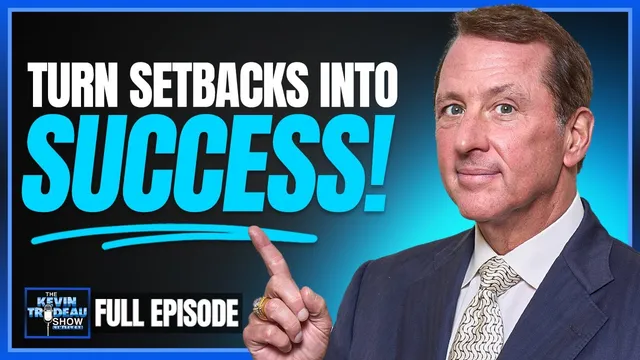
Going Through Tough Times? Watch THIS!
Based on The Kevin Trudeau Show: Limitless's video on YouTube. If you like this content, support the original creators by watching, liking and subscribing to their content.
Adversity is framed as universal, and success is attributed to learning how to respond rather than avoiding hardship.
Briefing
Tough times aren’t treated as detours from success so much as fuel for it: adversity is framed as a universal experience that can be converted into “the seeds of a greater benefit” through mindset, persistence, and deliberate mental training. The core message is blunt—everyone faces problems, and the difference between people who break and people who break records comes down to how they interpret setbacks and what they do next.
The transcript lays out a chain of claims. First, adversity is presented as inevitable and non-unique: successful people aren’t problem-free; they’ve learned to overcome problems. Second, the emotional reaction to hardship is described as trainable. When stress hits, past “energetic imprints” (referred to as samskaras/engram-like triggers) can activate irrational fear or anxiety, so the prescription is to clear and transmute those triggers using techniques such as Thought Field Therapy and other methods previously taught. Third, winners are portrayed as shifting into an “attack mode” rather than self-defense—getting energized, not depleted—so adversity becomes a prompt to act.
A practical “hack” is repeated throughout: keep attention on the goal, not the problem. The transcript cites a mix of motivational and religious framing—quotes attributed to Napoleon Hill, John D. Rockefeller, Robert Schuller, Earl Nightingale, Albert Einstein, and the Buddha—to argue that suffering is optional and that endurance plus focus produces results. Persistence is elevated as the essential lever, with the idea that consistency draws opportunity and that obstacles are often “frightful things” that appear only when the goal is lost.
To ground the philosophy, the transcript uses a series of personal and historical examples. The speaker describes business catastrophes—being bought out after a partner dispute, losing income and being unable to continue teaching live memory training, then later finding a new path through TV infomercials and royalties. Another turning point comes from a Federal Trade Commission lawsuit tied to Coral Calcium; the settlement ends the case without a finding of wrongdoing but bans TV infomercials for that product. The workaround becomes writing and selling a health book, which the transcript claims reached the New York Times bestseller list for 26 weeks and sold nearly 50 million hardcover copies.
Later, a further government judgment of $37 million leads to a plan to protect assets by creating a foundation, resulting in the Global Information Network—described as a private club aimed at teaching success and “secret society” style privileges. The transcript then recounts a contempt of court sentence of 10 years in federal prison, framed as another gift: time for meditation, writing, and producing courses such as the Science of Personal Mastery and “guru Kev” channelled lessons. Even a cold-transfer scene in prison is used to illustrate mind-over-matter, with the speaker describing Breath of Fire and comparing it to well-known cold-exposure practices.
Across these episodes, the throughline stays consistent: adversity can’t always be changed, but the response can. The transcript ends by urging daily mental upkeep—reading positive material, listening to motivational audio, limiting negative inputs, and continually working on the self—so setbacks don’t trigger paralysis. The payoff promised is straightforward: find the gold, take action, and treat obstacles as stepping stones to success.
Cornell Notes
Adversity is presented as unavoidable for everyone, but it becomes a growth engine when people treat it as a gift and keep their focus on the goal rather than the problem. The transcript argues that emotional reactions to hardship can be triggered by past “energetic imprints,” and that techniques like Thought Field Therapy and other mental training can help clear those responses so action becomes possible. Persistence and perseverance are framed as the key “hack” for overcoming obstacles, supported by quotes attributed to figures such as John D. Rockefeller and Napoleon Hill. Personal setbacks—business losses, a Federal Trade Commission case involving Coral Calcium, and later prison—are described as turning points that led to new products, books, a foundation, and training programs. The practical takeaway: control thoughts, welcome challenges, and convert setbacks into opportunities through consistent effort.
Why does the transcript insist adversity is not a special case for “unique” people?
What is the “mindset” mechanism for turning fear or stress into motivation?
What is the repeated “hack” for overcoming adversity?
How do the examples connect adversity to concrete outcomes?
What role does persistence play compared with mindset?
What daily practices are recommended to prevent negative triggers from taking over?
Review Questions
- What does the transcript claim happens when someone focuses on the problem instead of the goal, and how does it propose to counter that effect?
- How are samskaras/energetic imprints described as influencing reactions to adversity, and what techniques are suggested to address them?
- Which examples are used to argue that legal or financial setbacks can become opportunities, and what new path did each setback enable?
Key Points
- 1
Adversity is framed as universal, and success is attributed to learning how to respond rather than avoiding hardship.
- 2
Emotional reactions to setbacks are described as potentially triggered by past “energetic imprints,” which can be cleared or transmuted using mental techniques such as Thought Field Therapy.
- 3
A core strategy is attentional: keep focus on the goal/dream instead of the problem, because problem-focus is said to intensify the problem’s hold.
- 4
Persistence and perseverance are presented as the essential lever for overcoming obstacles, with consistency drawing opportunity.
- 5
The transcript repeatedly links hardship to concrete pivots—new products, books, organizations, and training—rather than treating setbacks as endpoints.
- 6
Daily mental maintenance (positive reading, motivational listening, limiting negativity) is recommended to reduce the chance that adversity triggers paralysis.
- 7
Even when circumstances can’t be changed, the response—thoughts, interpretation, and action—is presented as fully controllable and therefore decisive.