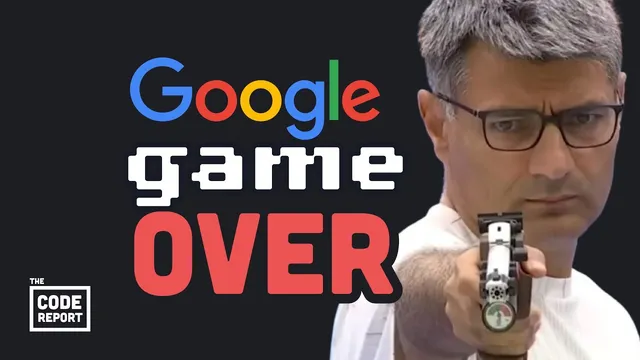
Google takes its biggest L ever... now a convicted monopolist
Based on Fireship's video on YouTube. If you like this content, support the original creators by watching, liking and subscribing to their content.
A judge agreed with the U.S. DOJ that Google violated Section 2 of the Sherman Act by willfully maintaining monopoly power through exclusionary tactics, not just by offering a better product.
Briefing
Google’s biggest antitrust loss is now official: a U.S. judge agreed with the Department of Justice that Google violated the Sherman Act by maintaining monopoly power through exclusionary tactics, not just by offering a better product. The ruling matters because it targets the mechanics of how Google protects its dominance—especially deals that keep Google Search as the default—rather than treating market leadership as automatically lawful. With Google controlling about 88% of the domestic search market, the case turns on whether dominance was achieved “outside of building a better product,” a standard tied to Section 2 of the Sherman Act.
The government’s theory centers on two elements: possession of monopoly power and willful maintenance or acquisition of that power. Google’s defense—described as pushing back on the government’s characterization as “outrageous” and “salacious”—did not carry the day. The judge found that Google’s exclusivity arrangements crossed legal lines, including requirements that its search engine be the default on Android devices, a deal with Mozilla Firefox, and a particularly consequential agreement with Apple. That Apple arrangement reportedly pays Apple about 36% of search revenue, amounting to roughly $20 billion per year, effectively rewarding Apple for keeping Google as the search provider.
The immediate fallout is not yet fully quantified, but the transcript frames it as “to be continued” in a separate trial over remedies. Possible outcomes range from large fines to contractual restrictions that limit Google’s ability to lock in defaults and distribution. Breakup—divestiture into multiple entities—is presented as possible but complicated. The core complication is economic: Google’s search business generates enormous cash that can subsidize other “free” services such as Gmail on Android. If those services were spun out, the transcript suggests users might face direct costs, potentially undermining the current free model.
Even so, the ruling could still reshape Big Tech’s incentives. If remedies restrict Google’s payments and exclusivity deals, Apple may lose a major revenue stream for maintaining its own gatekeeping position. The transcript also argues that this could be a net positive for competition even if Google remains intact.
The broader antitrust picture is widening. Apple faces a separate U.S. DOJ case for maintaining a monopoly, with critics pointing to privacy as an “elastic shield” for allegedly abusive practices. The EU has already required Apple to open its payments service to competitors such as Epic Games, and Fortnite is described as returning to the App Store. Meta is also named in a lawsuit tied to monopolizing social media through anti-competitive acquisitions like Instagram and WhatsApp. Amazon’s case focuses on alleged anti-discounting measures and contracts that favor its own products over sellers.
Taken together, the transcript portrays a shift from one-off legal fights to a sustained regulatory campaign aimed at the business structures that entrench dominance. The practical takeaway is that remedies—whether fines, forced changes to contracts, or structural breakups—could materially alter how these platforms monetize distribution and control access, with knock-on effects for consumers, developers, and competitors across the tech stack.
Cornell Notes
A U.S. judge ruled that Google violated Section 2 of the Sherman Act by willfully maintaining monopoly power through exclusionary deals, not merely by delivering a superior product. The decision hinges on Google’s dominance in search—about 88% of domestic search—paired with practices that keep Google as the default across major distribution channels. Key examples include default search requirements on Android, arrangements with Mozilla Firefox, and a reported Apple deal paying about 36% of search revenue (roughly $20 billion annually). Remedies are still being litigated, with possibilities ranging from fines and contractual restrictions to potential divestiture, though breakup is portrayed as difficult because search revenue subsidizes other services like Gmail. The ruling fits a broader wave of antitrust cases targeting Apple, Meta, and Amazon.
What legal standard did the DOJ use, and what did the judge find Google did wrong under it?
Why are Google’s “exclusivity deals” portrayed as the core problem rather than search quality itself?
How large is Google’s search dominance, and what does that imply for antitrust scrutiny?
What is the Apple deal, and why does it matter for competition?
What remedies are possible after the ruling, and why is breakup described as complicated?
How do other current antitrust cases fit into the same pattern?
Review Questions
- How does Section 2 of the Sherman Act distinguish between winning through product quality and maintaining monopoly power through exclusionary conduct?
- Which specific distribution partnerships (Android defaults, Firefox, Apple revenue share) are cited as mechanisms for keeping Google Search dominant?
- Why might contractual restrictions be a more likely near-term remedy than breakup, given how search revenue subsidizes other services?
Key Points
- 1
A judge agreed with the U.S. DOJ that Google violated Section 2 of the Sherman Act by willfully maintaining monopoly power through exclusionary tactics, not just by offering a better product.
- 2
Google’s dominance is described as about 88% of domestic search, making the legality of its conduct central to the monopoly-power analysis.
- 3
Exclusivity and default-search arrangements—Android defaults, a Firefox deal, and a major Apple revenue-share agreement—were highlighted as anti-competitive mechanisms.
- 4
The Apple agreement is reported as paying Apple about 36% of search revenue, roughly $20 billion per year, tying Apple’s incentives to keeping Google as the default.
- 5
Remedies are still being determined in a separate trial, with possibilities including fines and contractual restrictions; breakup/divestiture is presented as possible but difficult.
- 6
The antitrust push extends beyond Google, with DOJ/EU actions and lawsuits involving Apple, Meta, and Amazon over alleged monopoly maintenance and anti-competitive practices.