GPT 4 - hype vs reality
Based on AI Explained's video on YouTube. If you like this content, support the original creators by watching, liking and subscribing to their content.
GPT-4 release timing is framed as safety- and responsibility-driven rather than rumor-driven.
Briefing
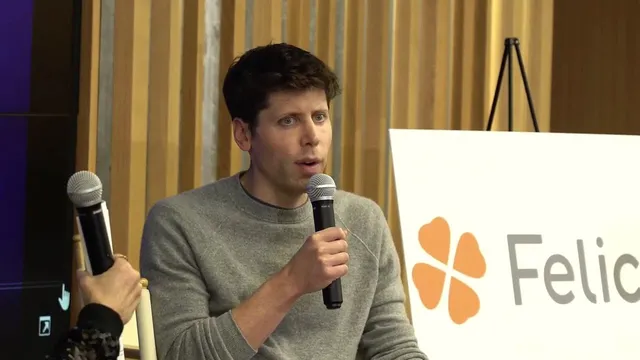
Rumors that GPT-4 is imminent—and that it will instantly dwarf GPT-3’s capabilities—are being met with a more cautious message: release timing will be slower than hype demands, and early performance gains won’t automatically translate into robust, reliable intelligence. In remarks attributed to Sam Altman, GPT-4 is expected to launch only when teams are confident it can be deployed “safely and responsibly,” with development paced to reduce risk rather than satisfy quarterly expectations. The same logic applies to capability growth: instead of a sudden, exponential leap, progress is framed as incremental upgrades over time—“a little better this year, a little better later this year, a little better next year”—because the economic and societal stakes make gradual improvement preferable to shipping something “weak and imperfect” and hoping it catches up later.
That stance directly challenges the rumor mill’s tendency to treat viral comparisons as forecasts. A widely shared graphic contrasting GPT-3.5 with an expected GPT-4 performance level is dismissed as inaccurate and “scary,” with Altman describing the GPT-4 rumor cycle as a “ridiculous thing” that has persisted for months. The hype dynamic, he suggests, is partly self-defeating: people build expectations around an outcome that resembles AGI, then feel entitled to be disappointed when reality arrives as a more measured upgrade.
The transcript also pushes back on the idea that a new model will “put Google out of business.” The core counterpoint is that major tech companies can respond with their own counter-moves, and that end-of-an-era claims are usually wrong. As an example of how progress tends to look in practice, the discussion references Palm, described as a 540 billion parameter transformer model. The comparison emphasizes that scaling parameters can produce striking results—such as performance approaching what an average 9–12-year-old can solve—but still falls short of AGI. Even if Palm can solve roughly 58% of problems that a typical 12-year-old can solve (the transcript cites 60% for the human baseline), that gap matters: it signals capability gains without guaranteeing general, dependable reasoning across the full range of tasks.
Finally, the transcript distinguishes between impressive demos and long-term reliability. These systems can look extraordinary in a first showcase, then reveal weaknesses after repeated use. That pattern—high wow-factor paired with limited robustness—sets expectations for GPT-4: early buzz may be “amazing,” but the real test is whether weaknesses shrink enough to make the model dependable across many interactions. Critics who highlight failures are framed as partly right about the limitations, while critics who dismiss concerns as mere “fake news” are also portrayed as missing the nuance. The bottom line is a tempered forecast: GPT-4 is likely to bring meaningful improvements, but the path to something like AGI—and to consistently robust behavior—won’t arrive on a hype timeline.
Cornell Notes
The transcript argues that GPT-4’s release and capabilities will not match hype timelines or “instant AGI” expectations. Altman emphasizes slower, safety-driven deployment and incremental upgrades rather than a sudden exponential jump. Viral performance charts are treated as unreliable, and claims that GPT-4 will instantly end competitors are dismissed as usually wrong. The discussion uses Palm (a 540 billion parameter transformer) to illustrate how scaling can boost performance toward human-like levels on some tasks while still not reaching AGI. It also highlights a recurring issue with these systems: impressive demos can mask weaknesses that appear after repeated use, so robustness—not just early wow-factor—will determine real impact.
Why does Altman’s timeline for GPT-4 conflict with common rumor expectations?
What does “incremental upgrade” mean in the context of GPT-4’s expected capability growth?
How does the transcript treat viral GPT-4 performance graphics circulating online?
What counterpoint is offered to claims that GPT-4 will “put Google out of business”?
What does the Palm example suggest about the difference between strong performance and AGI?
Why does the transcript emphasize robustness over early demonstrations?
Review Questions
- What safety and economic considerations lead to slower GPT-4 release expectations?
- How does the transcript use Palm’s performance to argue against equating strong benchmarks with AGI?
- Why might early GPT-4 demos create a false impression of robustness?
Key Points
- 1
GPT-4 release timing is framed as safety- and responsibility-driven rather than rumor-driven.
- 2
Capability improvements are expected to be incremental over time, not an immediate exponential jump.
- 3
Viral GPT-4 comparison graphics are treated as unreliable and can distort expectations.
- 4
Predictions that one model will end major competitors are dismissed as usually wrong because rivals can respond.
- 5
Scaling models (e.g., Palm at 540 billion parameters) can raise performance on many tasks but still fall short of AGI.
- 6
Early “wow” demos can mask weaknesses that appear after repeated use, making robustness the key metric.